


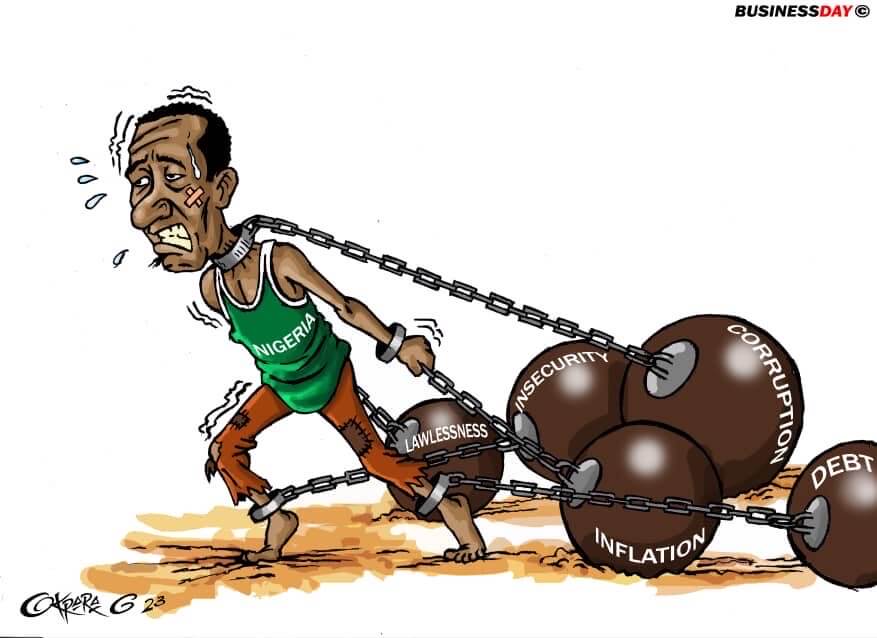
Daily Struggles of Nigerian Families
Survival has become an everyday challenge for many families in Nigeria. Once able to sustain themselves on a single income, households are now diversifying their sources of revenue, taking on multiple jobs, freelance work, and informal ventures to maintain a standard of living that seems increasingly out of reach. Parents are cutting household expenses, young professionals are clocking in longer hours, and small business owners are adapting to the rapidly changing economic landscape. What was once viewed as a structured financial plan has now transformed into a crucial quest for financial survival.
The Resilience Amidst Economic Challenges
The experiences faced by Nigerian families highlight deeper obstacles within the national economy. While they display remarkable resilience and creativity in their daily lives, the harsh realities remain undeniable. Despite their hard work, many Nigerians find it challenging to make tangible progress, underscoring a troubling economic climate.
The Growing Disparity Between Income and Living Costs
At the core of these challenges is a widening gap between income levels and the escalating cost of living. Prices for essentials—such as food, transportation, housing, medical care, education, and utilities—continue to strain household budgets. Although some incomes have marginally increased, rising inflation has significantly diminished purchasing power, leaving families grappling with insufficient resources to meet their basic needs.
A Shift in Family Financial Structures
This economic environment has fundamentally altered the structure of family finances in Nigeria. The once common notion of a single income earner supporting the entire household is fading. Now, financial survival often hinges on multiple income streams, with civil servants launching small businesses, teachers offering private tutoring, experts taking on consulting roles, and students providing digital services. Across the country, families are creatively leveraging all available skills and opportunities as avenues for income generation.
Entrepreneurship: Opportunity or Necessity?
The proliferation of side jobs and informal businesses is frequently celebrated as a testament to Nigeria’s entrepreneurial spirit. However, this trend exposes a concerning reality. While entrepreneurship should thrive from a pursuit of innovation and growth, it becomes alarming when individuals are compelled to engage in additional income-generating activities merely to cover basic living expenses. This dynamic raises important questions about wage adequacy, work quality, productivity, and economic inclusivity.
The Declining Middle Class
These struggles are particularly pronounced within Nigeria’s shrinking middle class. Families that once enjoyed a degree of financial security now face difficult decisions, often diverting savings towards daily expenses while postponing major purchases. Choices related to education and healthcare are increasingly driven by affordability rather than preference. The erosion of the middle class poses significant concerns for policymakers, as a stable middle class underpins consumption, investment, entrepreneurship, and overall economic confidence.
The Role of Women in Economic Resilience
Women play a vital role in the financial survival of their families across Nigeria. Many contribute significantly to household incomes through diverse means, including business, agriculture, professional services, trade, and digital enterprises. This uptick in economic participation showcases both the resolve of women and the necessity for households to capitalize on all available resources.
The Growing Importance of Technology
Technological advancements are also reshaping economic participation. Digital platforms and fintech services have broadened access to payments, savings, investment opportunities, and entrepreneurial initiatives. For numerous Nigerians, technology has opened new avenues for income generation and enhanced economic engagement. Yet, while recognizing this resilience, it is crucial to stress that adaptability should not replace effective economic management. Citizens should not be expected to bear the weight of structural economic issues indefinitely.
Shifting Economic Priorities for Lasting Prosperity
A pivotal question remains: why has survival become such an overwhelming burden? The complexity lies partly in the disconnect between governmental economic policies and the everyday realities of households. While authorities may tout reforms and fiscal adjustments as indicators of progress, citizens gauge the economy based on tangible experiences, such as food prices, job accessibility, and the ability to provide for their families with dignity. Economic growth loses its validity if it does not translate into improved living standards.
Addressing Structural Economic Issues
Nigeria’s economic strategy must transition from mere stabilization efforts to prioritizing household prosperity. Initiatives aimed at reducing inflation, supporting small and medium-sized enterprises, enhancing access to affordable credit, improving infrastructure, and bolstering skill development are essential to alleviate economic pressures on families. The ultimate objective should be to foster an environment where hard work cultivates genuine progress, productivity is rewarded, and opportunities are available for all.
Nurturing a Thriving Economy
The narratives of Nigerian families offer both motivation and cautionary tales. Their capacity for adaptation has enabled them to mitigate severe hardship and sustain community cohesion. However, such resilience should not be the sole solution to national economic challenges. Building lasting prosperity requires a commitment to creating conditions where fewer individuals face the burden of enduring hardship. The objective is not merely survival—it’s to forge an economy that allows families to thrive.
