


The FIFA World Cup Final is renowned as the most-watched sporting event globally. An estimated 1.5 billion viewers tuned in to watch the 2022 final in Qatar, and anticipation suggests that this Sunday’s match between Spain and Argentina in New Jersey may draw even larger crowds.
Soccer enthusiasts will gather in homes, bars, and outdoor screenings across footballing strongholds like London, Paris, and Buenos Aires. However, the excitement also reaches those in some of the world’s most isolated locations.
Among the millions of viewers are devoted soccer fans residing in remote and hard-to-reach places, proving that the spirit of the World Cup transcends geographical barriers.
In Antarctica, World Cup Unites the Isolated Community
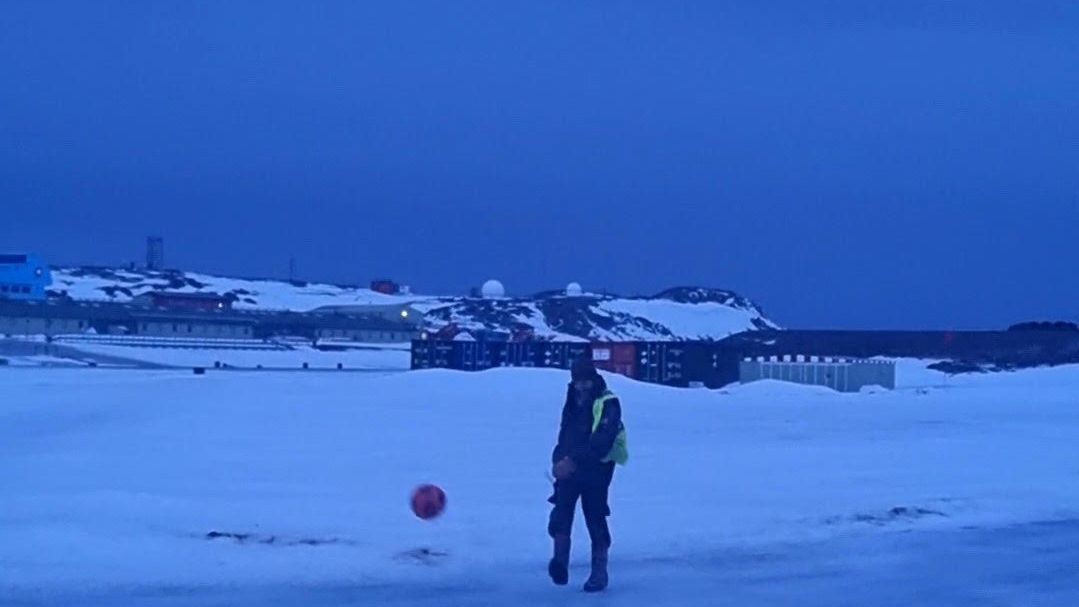
Rothera Research Station in Antarctica exemplifies true isolation, with fewer than 1,000 people spread over 5.48 million square miles, including just 26 staying through the harsh winter months. For those at Rothera, the World Cup serves as a rare highlight, drawing together those separated from the world.
The tournament has become a cherished event for this resilient community, with many residents making a point to watch significant matches, particularly those involving England and Scotland. “It feels like home,” said Martin Kibble from the British Antarctic Survey. His small circle of fellow fans fosters a lively atmosphere reminiscent of a hometown pub.
Despite the challenges of being away from family, Kibble appreciates how the World Cup fosters social connection. “Football is the only thing that really brings people together here,” he noted, explaining how calls home following England’s games are bittersweet moments he cherishes.
For Scott Kelly, a fan from Scotland, watching his country’s World Cup journey from Rothera after nearly three decades was a mixed experience. “I would have gone to the World Cup,” he reflected, highlighting the unique story he now holds of witnessing it from such an extraordinary location.
With the finals approaching, Rothera is planning a celebratory event that includes 3D-printed decorations and traditional British food, making the occasion one to remember amidst the icy landscape.
Experiencing the World Cup on Ascension Island
Ascension Island, located in the South Atlantic Ocean, is a remote outpost often described as the “Mars of the Mid-Atlantic.” This volcanic island, roughly 1,000 miles northeast of Liberia, is home to a tight-knit community of soccer fans.
Residents like Tristan Hudson, an avid Arsenal supporter, have access to UK broadcasts via the BBC and ITV. Sporting events draw fans to local bars or the NAAFI complex, where camaraderie thrives as people cheer for their favorite international teams, including England and Brazil.
This remote island location presents one of the furthest public viewings of the World Cup final, illustrating the diverse experiences of fans across the globe.
The Most Remote World Cup Celebration at Tristan da Cunha
About 3,300 miles south of Ascension is Tristan da Cunha, confirmed as the most remote inhabited archipelago. Accessible only by boat—often once a month—this island faces difficulties that significantly impact viewing options.
Typically, the 200-plus residents watch matches from home due to the early closing time of the island’s only bar, the Albatross Bar. Community support runs strong, especially for England, as Islander Leon Glass indicated the diverse fanbase also includes supporters from Scotland and Brazil.
In light of recent storms causing damage, residents are concerned about the reliability of the British military broadcaster’s stream. Yet, gathering to watch the World Cup remains a vital social event in this distant community.
World Cup Viewing Experience in Svalbard
On the northern edge of the globe lies Longyearbyen in Svalbard, Norway, known for its dramatic landscapes and the Global Seed Vault. Even in these challenging conditions, the World Cup draws in viewers, aided by Norway’s competitive spirit in the tournament.
The Tio Monchos restaurant serves as a central hub for fans, where an international community comes together to celebrate. Owner Andreas Stilsel remarked on the unique atmosphere that arises from such a diverse crowd sharing their love for soccer. Despite Norway’s exit from the tournament, residents plan to host the World Cup finals, setting the stage for an exceptional celebration at what may be the northernmost public viewing event.
Kiribati Engages with the World Cup via Technology
The Republic of Kiribati consists of 21 atolls in the central Pacific Ocean and is considered one of the least-visited nations globally. Although not a FIFA member, the islands possess a fervent passion for soccer, as demonstrated by the Te Lunga competition, a multi-sport event held every four years.
With the introduction of Starlink, residents are now able to stream World Cup matches even from their most remote locations. Kiribati Islands Football Federation president Eliati Ribo noted a shift towards creating communal viewing experiences, such as screenings planned at the Betio Sports Complex. This initiative highlights their dedication to embracing global sports culture.
