


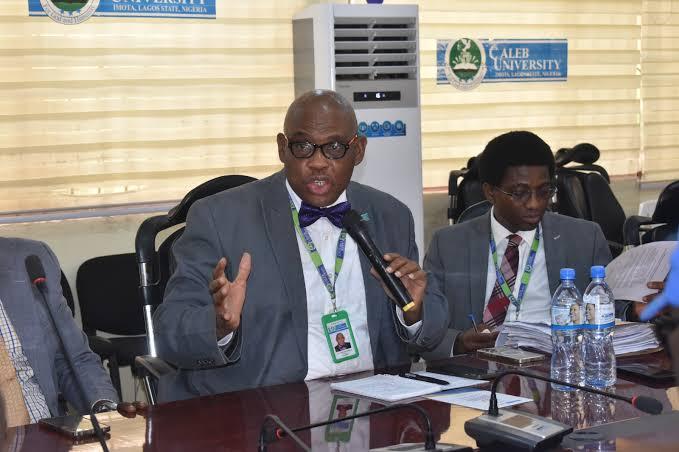
Human Resource Management Drives Nigeria’s Workforce Towards Innovation
Discussions on the transformative power of Human Resource Management (HRM) in navigating disruption and fostering innovation were central to the Caleb University HR Space Conference 2026. The conference themed “Rethinking HR for Business Resilience and Growth: Leading the Nigerian Workforce Through Disruption and Innovation,” aimed to equip HR managers with strategies to utilize technology for workforce enhancement and business sustainability.
Navigating Economic Challenges Through Workforce Development
During the conference, Olalekan Asikia, vice-chancellor of Caleb University, emphasized the inadequacy of outdated HR strategies. He pointed out that as the world evolves, so too must the methods used to manage talent. “If we do not innovate, we risk being left behind,” Asikia remarked, underscoring Nigeria’s struggles with economic instability, talent shortages, and technological advancements. He urged the necessity of upskilling and reskilling the workforce to adapt to an AI-driven economy.
Redefining the Role of Human Resources
University officials voiced concerns that traditional HR functions are outdated, advocating for a shift towards a more strategic role in driving innovation and competitiveness. “We questioned whether HR remains relevant in its traditional form. The response is evident: HR must be radically reimagined,” Asikia declared. The conference sought to bridge academia, industry, and policy to cultivate solutions that enhance organizational resilience and talent development.
Engagement of HR Leaders and Industry Experts
The HR Space Conference, organized by Caleb University’s Business School in conjunction with the Chartered Institute of Personnel Management of Nigeria, the Chartered Institute of Secretaries and Administrators of Nigeria, the University of Cambridge, and the University of Manchester, specifically targeted Chief HR Officers, HR Directors, CEOs, and industry leaders. This gathering aimed to galvanize discussion around the essential evolution of human resources.
Attaining a Collaborative Approach for Future Workforce Needs
Asikia advocated for a strategic repositioning of human resources as a vital component of business growth. He also highlighted the importance of collaboration between universities and employers to prepare graduates with the necessary skills for today’s job market. “We possess the talent and intelligence; what we require is a unified effort to place HR at the heart of business strategy,” he stated, emphasizing Caleb University’s initiatives to close the skills gap through exposure to practical business challenges.
Adapting Leadership Models for a Changing Workforce
In a keynote address, Ahmed Ladan, chairman of the Governing Council of the Chartered Institute of Personnel Management of Nigeria, stressed that the future of work will encompass a diverse range of employment types—including freelancers, contractors, and remote workers. “Organizations must adapt their leadership models to oversee this intricate workforce landscape,” he noted. As the nature of work evolves, Ladan highlighted the need for inclusive and accountable management practices that extend beyond traditional employment models.
Promoting Continuous Learning in the Workforce
Christian Harrison, a professor at the University of Greater Manchester, reinforced the importance of lifelong learning in enhancing employee retention. He cited research indicating that 94% of employees are willing to stay with organizations that invest in their development. However, he noted a gap in managerial support for learning initiatives in Nigeria, stressing the necessity for HR leaders to foster a culture of continuous growth and vulnerability within their teams.
The Strategic Role of HR in Business Resilience
Jens Jensen, a research fellow at the University of Cambridge, discussed the transition of HR into a strategic partner in organizational transformation. His findings revealed that effective talent management now hinges on shared responsibilities among leadership rather than resting solely with HR departments. “Successful HR begins with leadership; managers must take on the responsibility of managing people, with HR providing essential insights to achieve organizational goals,” he concluded.
