


Government’s Duty to Prioritize Citizen Welfare
Chapter 2, Section 14(b) of the 1999 Nigerian Constitution emphasizes that the primary purpose of government is the safety and welfare of its citizens. Thus, it is imperative that the welfare of Nigerians remains a paramount concern for leadership. However, there are growing indications that Nigeria is veering into precarious territory, where political maneuvering increasingly overshadows genuine governance. This troubling trend is underscored by escalating insecurity, pervasive poverty, and widespread social despair, which undermine the nation’s very foundations.
Leadership Distracted by Political Maneuvering
Amidst calls for effective governance, millions of Nigerians yearn for empathetic leadership and decisive action. Instead, the political elite appear to be engrossed in strategic negotiations, coalition formations, and electoral calculations for the upcoming 2027 elections, while criminal activities persistently expand their reach.
The School Kidnappings Spotlight Security Failures
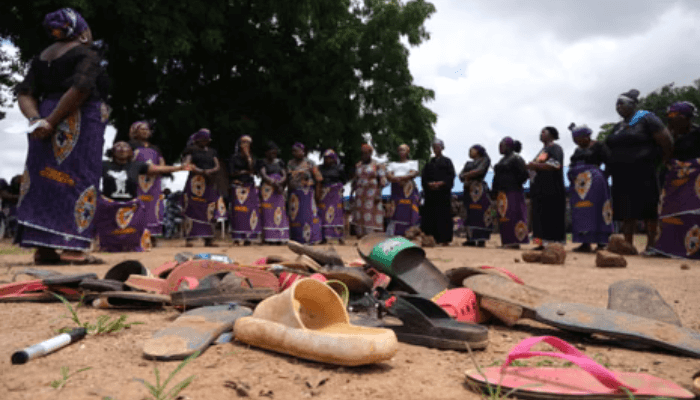
The recent, harrowing abduction of students, teachers, and staff in Oyo State has emerged as an excruciating symbol of Nigeria’s deteriorating security crisis. Armed groups have repeatedly invaded educational institutions, with incidents in Akolo-Esinlu and Yawota communities highlighting an alarming trend. Though not unprecedented, the sheer number of victims, including young children, intensifies the distress surrounding these kidnappings.
A Teacher’s Life Tragically Cut Short
In a particularly devastating example of the violence enveloping the nation, the brutal murder of Michael Oyedokun—a math teacher—illustrates the grave risks faced by educators. Having departed for work one Friday morning to fulfill his role in shaping young minds, he was tragically beheaded in captivity by terrorists in May 2026. His death reflects a broader indictment against a state seemingly ill-equipped to safeguard its citizens.
A Widening Chasm of Insecurity
The attacks in Oyo State are part of a disturbing pattern of insecurity that has been escalating nationwide. Following the school kidnappings, another assault occurred in Kwara State, where gunmen targeted local leadership and abducted residents. This relentless cycle of violence extends beyond specific regions, engulfing states such as Benue, Plateau, and Borno, where stories of killings and abductions fill daily headlines.
Societal Normalization of Insecurity
Nigeria is at a critical juncture where the abnormal has become normalized; schools are under siege, highways have become perilous, and communities are increasingly turning into refugee camps. Compounding this crisis is a prevailing sentiment that governance is being overshadowed by political interests. As families grieve, the national attention appears fixated on the 2027 electoral landscape rather than urgent security needs.
The Economic and Educational Fallout
This precarious environment is inflicting lasting damage on Nigeria’s education sector. Parents who once focused on academic achievements are now primarily concerned about their children’s safety during school hours. The threat of violence not only hampers educational outcomes but also compels parents to prioritize safety over their children’s education, potentially lowering enrollment rates in vulnerable areas. This creates a dire cycle where denied education breeds future socio-economic liabilities, pushing an entire generation closer to poverty and exclusion.
Insecurity as an All-Encompassing Challenge
The abduction of schoolchildren is not just a security concern—it represents an assault on Nigeria’s future. Even those who are rescued may carry psychological scars that last into adulthood, reshaping their lives in ways that jeopardize national prospects. Amid worsening inflation and economic challenges—including rising food prices and faltering agricultural output due to insecurity—Nigeria grapples with an increasingly turbulent landscape. Bandits are now effectively acting as de facto authorities in northern rural areas, further undermining the agricultural economy and exacerbating urban food insecurity.
A Call for Urgent Change
The current climate demands urgent action, not merely as a response to tragic incidents like the death of Michael Oyedokun but as a proactive stance towards governance reform. As political actors prepare for the 2027 elections, the imperative remains clear: prioritizing security is essential for establishing a stable and sustainable future. Without a commitment to securing the nation, other aspirations for economic reform and democratic stability will remain unattainable. Nigeria possesses the resources and capabilities to reverse the tide, but this potential is contingent on a genuine political will to tackle these multifaceted challenges head-on.
