


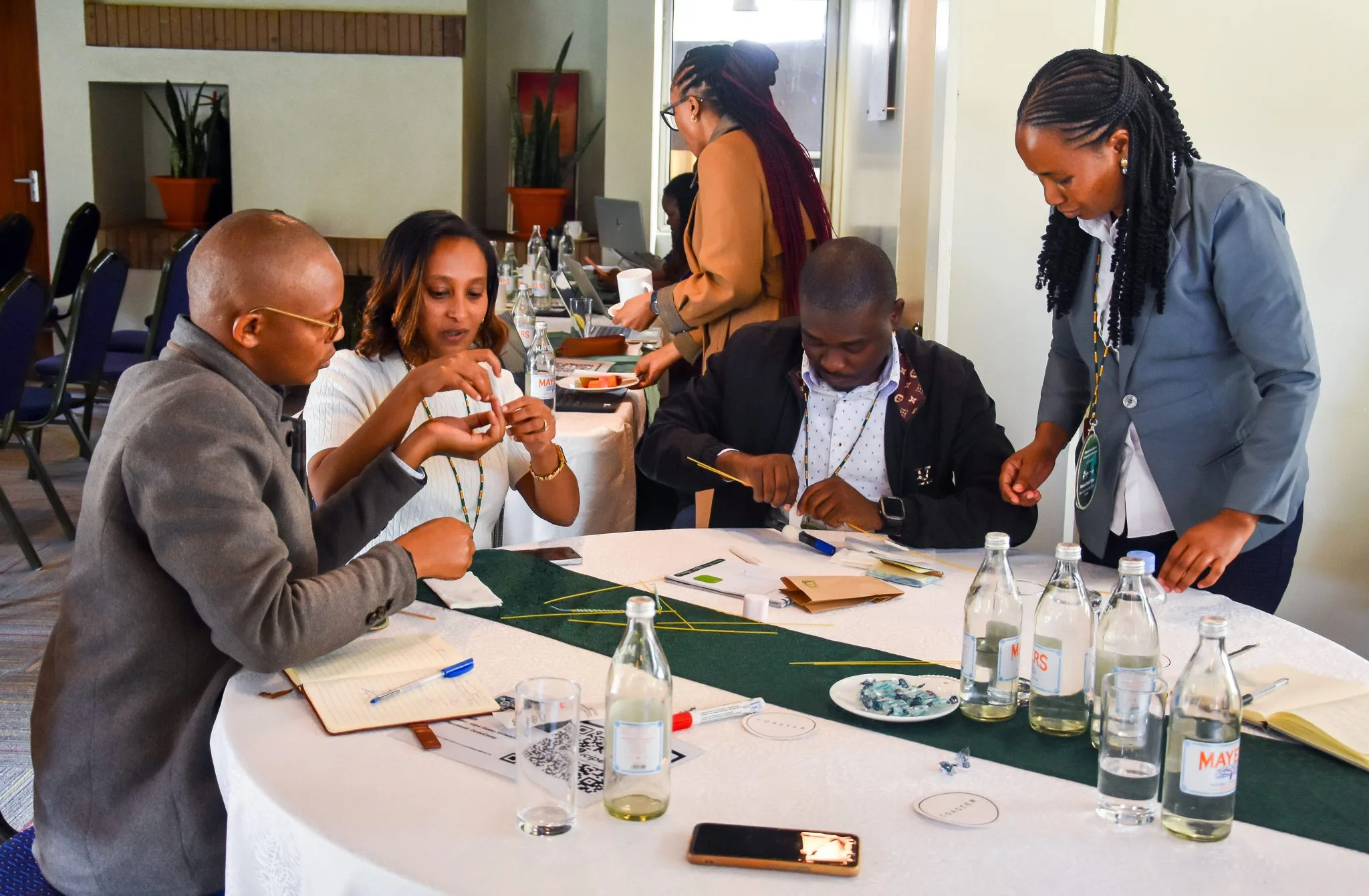
Thirteen Young Innovators Complete Entrepreneurial Bootcamp in East Africa
NAIROBI, Kenya, July 25 — A diverse group of thirteen young scientists from various East African countries has successfully completed a rigorous 10-day entrepreneurial bootcamp geared towards transforming laboratory research into investor-ready businesses. This initiative targets critical challenges in agriculture, food security, public health, and sustainable manufacturing within the region.
The participants, primarily master’s and doctoral candidates or recent graduates, presented their pioneering solutions during the Bio-Based Innovation and Entrepreneurship Bootcamp (BIEB), hosted by BioInnovate Africa at the International Center for Insect Physiology and Ecology (icipe) in Nairobi.
A final pitching event will enable participants to showcase their commercially viable concepts to a panel of judges composed of investors and industry experts. It is anticipated that seven to ten of the most promising projects will secure seed funding along with ongoing mentorship.
BioInnovate Africa Manager Julius Ekuru emphasized that the annual program aims to bridge the persistent divide between academic research and the private sector by imparting essential entrepreneurial skills to emerging scientists. “This bootcamp serves as a vital component of our overarching BioInnovate Africa initiative. Participants are recruited from universities, research institutions, and private enterprises within our network,” Ekuru noted.
This year’s cohort was selected from 54 applicants across the BioInnovate Africa network. Initially, 15 innovators were chosen, but two were unable to attend, resulting in a final group of thirteen. Notably, women comprised the majority of the cohort, with eight out of the thirteen participants being female.
The bootcamp attracted aspiring innovators from Kenya, Uganda, Tanzania, Ethiopia, Burundi, and the Democratic Republic of Congo, while Rwanda and South Sudan were absent this year despite being part of the regional network. Selection criteria for applicants focused on originality, scientific rigor, commercial viability, and team commitment.
Unlike typical research conferences, this program is designed to facilitate the transition of scientific discoveries into market-ready products capable of attracting investment. Over the course of seven days at icipe, participants refined their innovations, identified potential customers, validated market opportunities, and strengthened their business models. This was followed by a three-day learning tour in Arusha, Tanzania, where they visited institutions such as the Nelson Mandela African Institute of Science and Technology (NM-AIST) to understand how universities contribute to innovation and economic growth.
The innovators also explored large-scale manufacturers like A-to-Z Group and Envsol Technology Limited, a startup previously supported by BioInnovate Africa, enabling them to gather practical insights into the commercialization of scientific research. The program wrapped up with a visit to the East African Community (EAC) headquarters, where participants learned how regional policies, cross-border collaborations, and shared scientific resources can expedite innovation among member states.
“The ideas being developed are transnational. Solutions conceived in Uganda can be applicable in Kenya, Tanzania, and Ethiopia. We aim for them to grasp the local contexts while fostering partnerships beyond their national borders,” Ekuru remarked.
This fellowship, fully funded by the Swedish International Development Cooperation Agency (Sida), encompasses travel, accommodation, training, and mentorship for all participants. The showcased innovations highlight the increasing diversification of Africa’s emerging bioeconomy, with ventures comprising locally produced biofertilizers, natural livestock probiotics, and climate-smart agricultural solutions that convert waste into valuable products.
BioInnovate Africa views the bootcamp as part of a broader strategy to enhance East Africa’s bioeconomy by empowering scientists to convert their research into businesses that can generate jobs, attract investment, and address regional development challenges. The program also promotes collaboration among academia, industry, and policymakers through a “triple helix” model of innovation, facilitating the transition of scientific discoveries into commercially viable offerings.
The ventures receiving recognition from this year’s group will benefit from financial backing and specialized mentorship, providing a crucial foundation for young innovators aiming to commercialize their scientific solutions.
