


Nigeria Launches Major Lithium Processing Facility in Nasarawa State
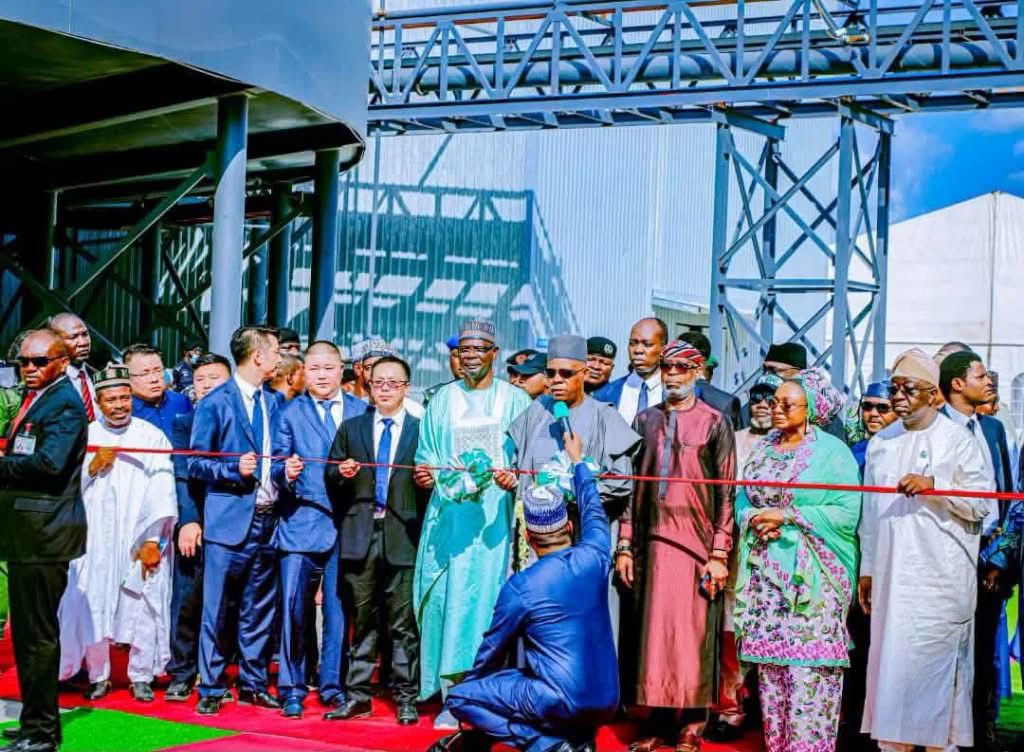
President Bola Tinubu has inaugurated what the Federal Government claims to be West Africa’s largest lithium processing plant in Nasarawa State. The initiative aims to shift Nigeria’s focus from merely exporting raw minerals to fostering domestic processing, thereby creating jobs and stimulating industrial growth.
Located in the Endo Community of the Nasarawa Local Government Area, the facility boasts a daily production capacity of 6,000 tonnes and an impressive annual capacity of 3 million tonnes. During the opening ceremony on Thursday, Vice President Kassim Shettima represented the President and emphasized the government’s dedication to enhancing the solid minerals sector through local value addition.
According to Shettima, countries flourish not merely due to the abundance of natural resources but by effectively converting these resources into economic opportunities. He noted, “Natural resources may be a blessing, but only vision can transform them into wealth.” This underscores the necessity of institutional frameworks, industrial development, and human input in maximizing the benefits of these resources.
The focus on expanding from raw mineral extraction to domestic processing is pivotal. Shettima articulated, “What will transform a nation is a deliberate move from extraction to processing, from potential to production, from raw materials to value-added products, and from isolated investments to integrated industrial ecosystems.” This approach is aimed at creating a more sustainable economic landscape for Nigeria.
Highlighting the strategic importance of lithium, Shettima pointed out its critical role in battery production, electric vehicles, and renewable energy technologies. He remarked that a factory represents more than infrastructure; it symbolizes the transition of governmental policy into job creation, investment into production, and hope into tangible outcomes.
The operating company has reported that since its inception, the plant has generated over 1,000 direct jobs and 2,000 indirect jobs, illustrating its significant impact on local employment. This launch follows the recent announcement by Minister of Solid Minerals Development, Dele Arake, regarding the discovery of world-class polymetallic mineral deposits in Kaduna State. This breakthrough marks a significant advancement for Nigeria’s mining sector, enhancing the country’s potential in the critical minerals market.
Emphasizing Regional Value Addition
Minister Arake expressed that the opening of the lithium plant signifies the federal government’s commitment to regional value addition in the mining industry. He indicated that this initiative not only reflects the President’s vision but also underscores the Ministry’s dedication to transforming Nigeria’s solid minerals sector.
With a firm stance, Arake asserted that Nigeria will no longer promote raw mineral exports without domestic processing, stating, “Local value addition has become a pillar of the Ministry of Solid Minerals’ policy.” He further noted that neighboring African countries are adopting similar strategies to boost domestic mineral processing.
Arake laid out ambitious plans for Nigeria, aiming to produce lithium batteries, electric vehicles, solar panels, and other equipment reliant on lithium locally. The vision involves establishing a fully integrated supply chain, creating high-value manufacturing jobs within the country.
Attracting Further Investment in the Mining Sector
Nasarawa State Governor Abdullahi Sule emphasized that this project signifies a substantial investment in the state’s economy and called on other investors to explore opportunities in the mining sector. He highlighted the state’s rich resources, which include not only lithium but also lead, zinc, copper, gold, iron ore, gemstones, and marble, as well as vast agricultural potential.
Governor Sule expressed gratitude to the executive leadership of Diamond New Energy for selecting Nasarawa State for this significant project. Yu Chongqiang, speaking on behalf of the company, highlighted its investment strategy extending beyond just mining. The firm is committed to developing necessary processing facilities, infrastructure, workforce training, and fostering partnerships with local communities.
Chongqiang outlined the company’s long-term vision to create an integrated industrial platform that bolsters local manufacturing, fortifies supply chains, and supports Africa’s transition to clean energy solutions. This collaborative effort underscores not only a commitment to economic empowerment but also to environmental sustainability in the region.
