


In our quest for clarity on everyday health questions, we frequently turn to experts who can provide authoritative answers. This series addresses crucial topics such as the safety of lip balm, optimal hair washing frequency, and the rising trend of early deodorant use among children.
Traditionally, children began using deodorant as they approached their teenage years. However, a noticeable shift has occurred, with many children now reaching for deodorant before turning 10. In response, brands have developed specialized formulations aimed at younger users, focusing on gentler ingredients suitable for sensitive skin.
Dermatologists note that these changes coincide with biological shifts in early puberty. Dr. Christina Collins, a board-certified dermatologist in Texas, highlights that early body odor can signal the activation of apocrine sweat glands. When children experience body odor that impacts their comfort and self-esteem, using a mild deodorant may be beneficial.
Evaluating the Safety of Deodorants for Kids
Generally, deodorants are safe for children and early teenagers, particularly when body odor first emerges. Nevertheless, the sensitivity of children’s skin necessitates careful consideration of product formulations. Dr. Collins notes that strong fragrances can cause irritation, while alcohol-based formulas may dry out the skin. Parents should carefully review ingredient labels to ensure they select a suitable product for their child.
Determining the Right Age for Deodorant Use
There is no specific age for children to begin using deodorant; it largely depends on individual development and activity levels. Dr. Debra Jaliman, a New York-based board-certified dermatologist, explains that most children start to notice body odor between ages 8 and 10. Observing changes in odor post-physical activity, like after gym class or on hot days, can indicate the right time to introduce a gentle deodorant.
Recommended Deodorants for Children
To assist parents in selecting the best deodorants for their children, we consulted dermatologists and identified products that are safe for younger skin. Our recommendations highlight well-rated brands with at least four stars from numerous consumer reviews.
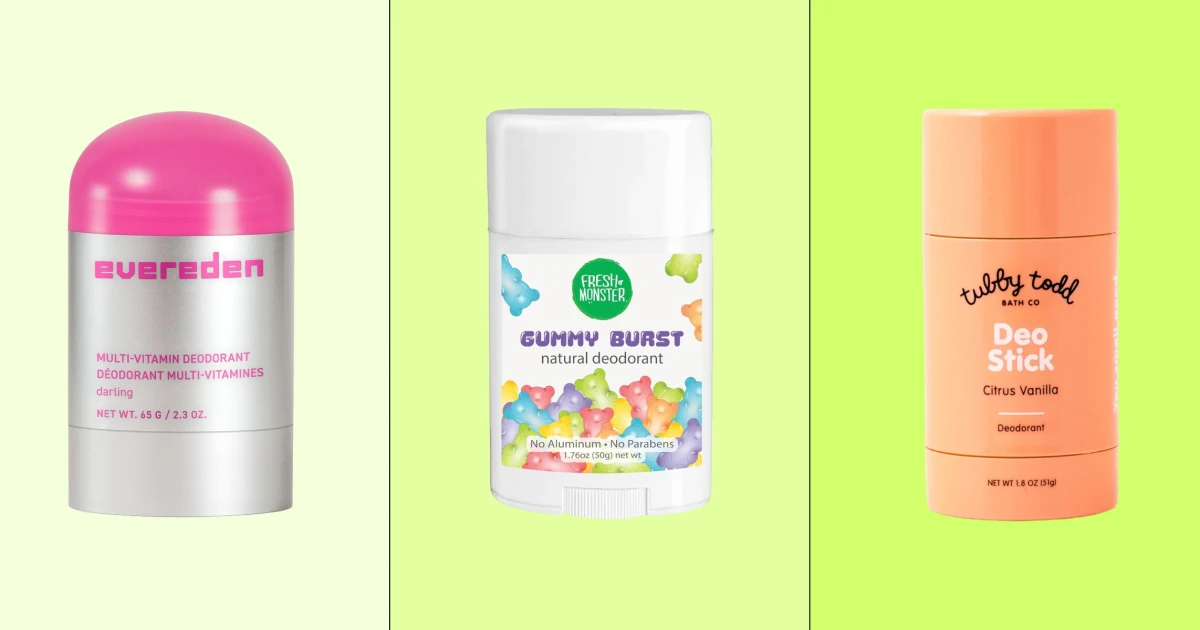
One notable choice is Tubby Todd’s Deo Stick, designed for sensitive skin. Free from aluminum and baking soda, it contains tapioca starch and magnesium hydroxide to absorb moisture and combat odor. Parents can find reassurance in its gentle formulation, suitable for kids aged six and up.
How to Choose Deodorants for Children
Experts like Collins and Jaliman suggest that parents start with deodorants instead of antiperspirants, as children mainly need odor control rather than sweat management. They recommend seeking gentle formulations composed of recognizable ingredients. For children with sensitive skin, it’s advisable to select unscented or lightly scented options to minimize the risk of irritation.
Do Children Require Antiperspirants?
While deodorants and antiperspirants are often mistaken for one another, they serve distinct purposes. Deodorants mask odor, while antiperspirants reduce sweat. Collins advises that for most children, deodorants will suffice unless excessive sweating impacts their daily lives. If such a situation arises, discussing concerns with a pediatrician or dermatologist is essential to find the most appropriate solution.
Insights from Skin Care Experts
At NBC Selected, we prioritize collaboration with professionals possessing relevant expertise. Dr. Christina Collins and Dr. Debra Jaliman offer insights based on their extensive training and experience in dermatology.
As the Commerce Editor for NBC Select, I provide journalistic coverage on health, beauty, and parenting topics. Drawing from my experiences as a mother of two and unfolding knowledge about grooming for adolescence, I ensure that we present reliable information regarding children’s deodorants based on expert consultations.
