


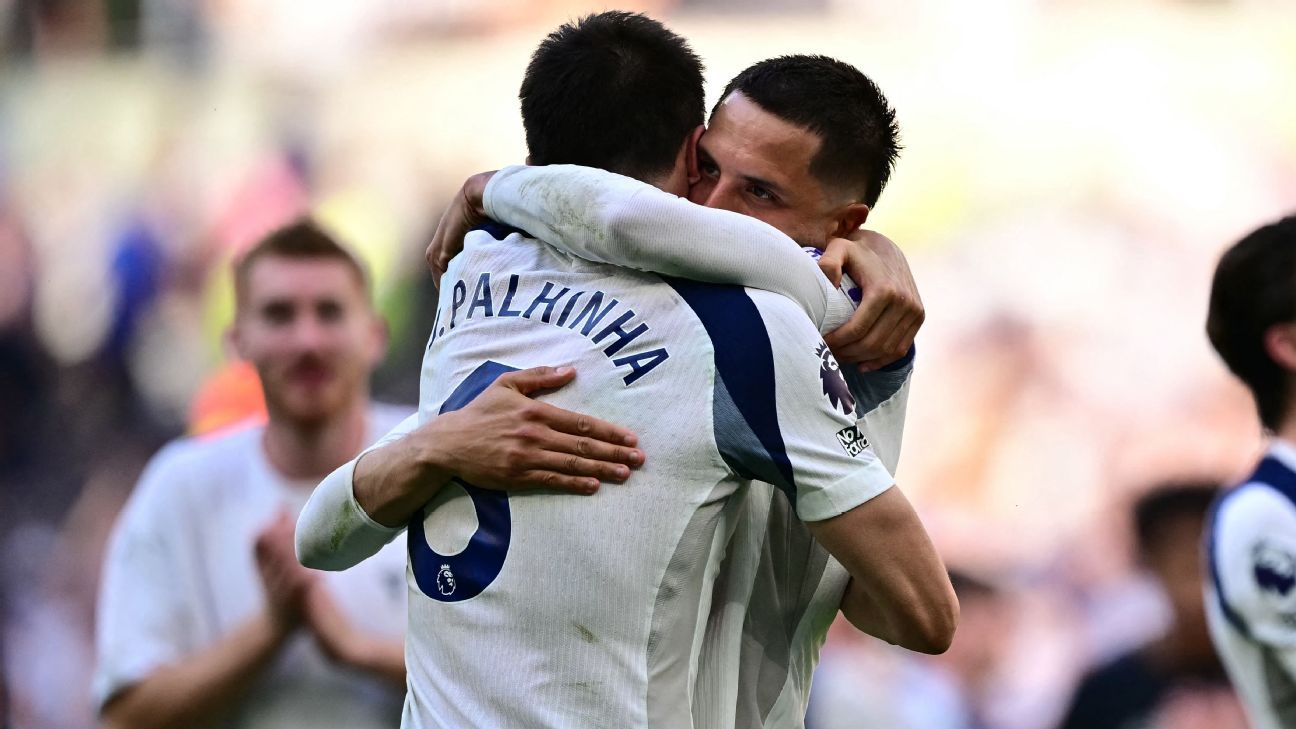
LONDON — Tottenham Hotspur has finally regained its footing. Just as the team seemed destined for relegation, manager Roberto De Zerbi and on-loan midfielder Joao Palinha deftly turned the tide, ending what had been a turbulent season.
Following a hard-fought 1-0 victory against Everton on the final day, the Spurs players celebrated as if they had clinched the Premier League title. While the win marked their third home league success of the season and secured their status in the top flight, it also raised critical questions about how the club found itself in such a perilous position. As the initial euphoria fades, the team must introspect on its past missteps and formulate a plan to prevent a recurrence next season.
For a club historically recognized as one of the Premier League’s ‘big six,’ finishing 17th for the second consecutive year is far from a triumph. Although fans could breathe a sigh of relief upon escaping relegation, the sobering reality is that those who oversee the club need to reflect on the wrong decisions taken over the years. Instead of celebrating with champagne, executives should have been quietly analyzing their choices while seated in the director’s box.
Performance Reflections
In the past week, Spurs fans have been reminded through the club’s official channels of last year’s Europa League win with Athletic Bilbao. With a 17th place finish attributed to injuries and managerial changes, it seemed the summer held a promise of renewal. However, the departure of Ange Postecoglou and the arrival of Thomas Frank—at a cost of £220 million—did not translate into the anticipated success in their Champions League campaign.
Despite the excitement, the reality remained harsh. Injuries persisted, recruitment stalled, and dwindling confidence cast a shadow over the team. By February, Frank was out, and interim manager Igor Tudor attempted to stabilize the situation but instead exacerbated the issues, leaving after just seven games and securing only one point for the club. It was then that the unsettled De Zerbi came on board to restore order.
The initial stern approach failed to yield results, necessitating a more nurturing strategy. Meanwhile, frustrated supporters watched with despair as the club’s reality clashed with its aspirations, often left to contemplate lower-tier away games instead of grand matches.
When Sunday arrived and the sun beat down on London, Spurs fans understood that a draw would offer them reprieve. Arsenal supporters paraded nearby, mocking with chants about relegation. Yet, despite the bleak season, Spurs fans recognized that a point against Everton could secure their top-flight status for another year, thus delaying Arsenal’s celebration.
Following a loss to Chelsea earlier in the week, De Zerbi reflected on the significance of the occasion, emphasizing the need for dignity over trophies. He recognized the supporters’ desperation for a performance that would redeem a season marred by disappointment.
Match Dynamics
The team’s fervent response was palpable as they took to the pitch. De Zerbi made his tactical shift by starting Jed Spence instead of Randal Kolo-Muani, aligning Matisse Tell and identifying Jake O’Brien as a target on the opposite wing. Although Everton had little left to contest but pride, it was Tottenham who played with urgency and determination, with several early opportunities arising.
During a previous match against Wolves that had already been relegated, Spurs nearly suffered a historic low, managing a win only in the dying minutes. Against Everton, Palinha scored a crucial goal by redirecting a rebound into the net, marking a pivotal moment for the team. His effort energized the players and the crowd alike, providing a much-needed morale boost in a season overshadowed by struggles.
The emotional stakes were evident as the match progressed. Tottenham maintained solid defensive coordination, with players like Kevin Danso proving crucial in thwarting Everton’s attempts. As the game stretched into nine minutes of stoppage time, the crowd erupted as news of another match in West Ham flashed across the screens, indicating that all Spurs needed to do was hold on.
As the final whistle blew, players sank to the ground in a mixture of relief and disbelief. For those involved, keeping Spurs in the Premier League marked a temporary victory; they acknowledged the nerves and the resolve that drove them through a tumultuous season.
In that moment, some Spurs supporters cautiously sang “We are staying up!”—a chant that had long been viewed with skepticism by older fans. The celebration reflected something deeper: the lessons learned through hardship and a collective hope for a brighter future. Ultimately, this match served as an expression of dignity and resilience that the club desperately needed.
