


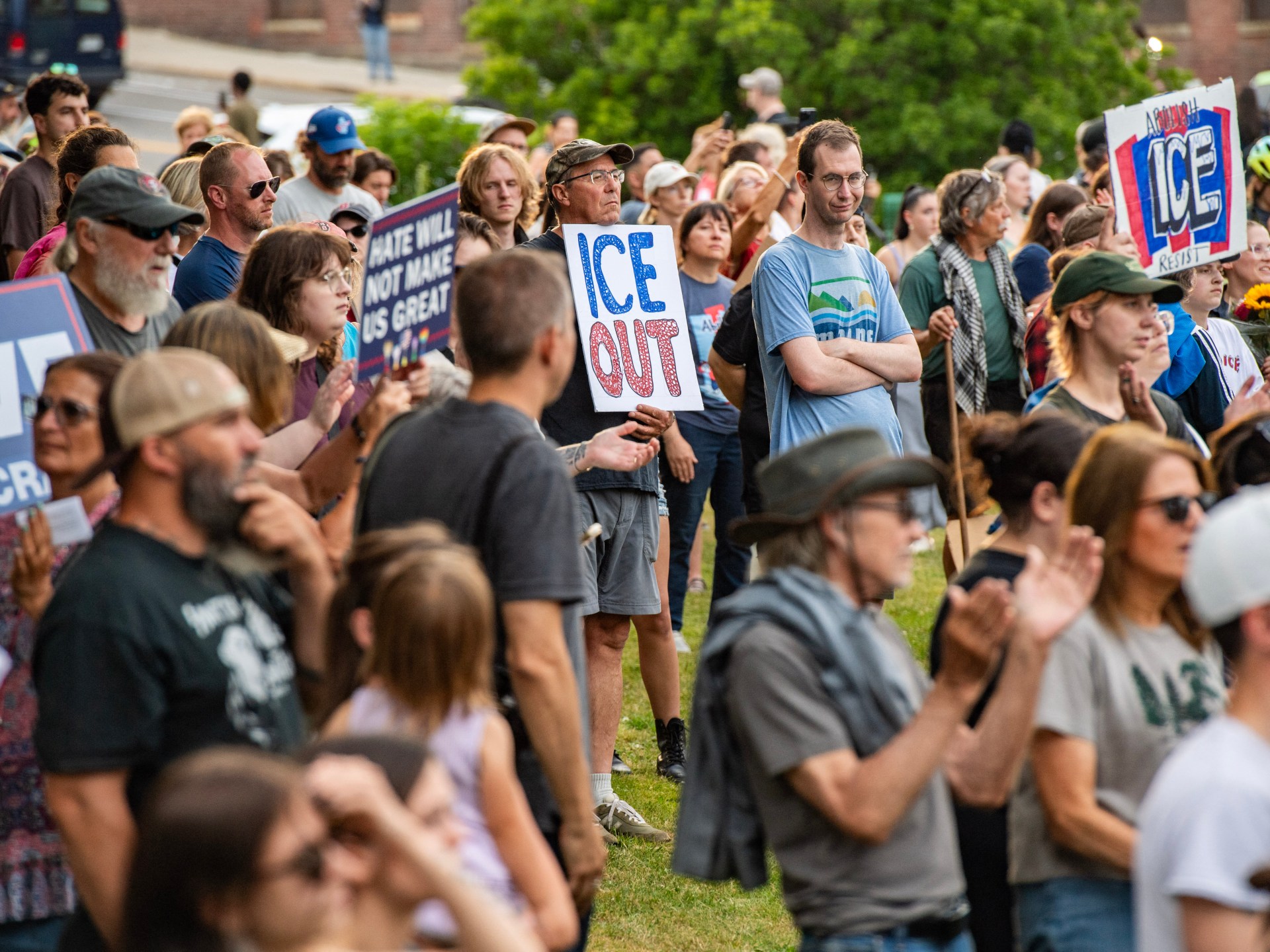
The shooting death of a 26-year-old Colombian man by U.S. Immigration and Customs Enforcement (ICE) agents in Maine marks another significant moment in President Donald Trump’s intensified crackdown on foreign nationals.
Human rights organizations have identified the deceased as a Colombian national who was legally authorized to work in the United States. The Colombian embassy has confirmed its communication with U.S. authorities and is providing consular assistance to the victim’s family.
Growing Concerns Surround ICE Operations
This incident comes at a time of heightened immigration arrests, escalating protests, and increasing scrutiny over the rising number of deaths occurring during ICE operations. Advocates are urging further examination of fatalities in immigration detention centers.
The Department of Homeland Security (DHS), which oversees ICE, indicated that its agents conduct surveillance on addresses associated with individuals facing final deportation orders. The shooting took place in Biddeford, located approximately 24 kilometers (15 miles) southwest of Portland, the largest city in Maine.
DHS stated that officers attempted to intercept a vehicle leaving the monitored location. When the driver allegedly tried to flee, an officer discharged their weapon, citing concerns for public safety. Maine Senator Angus King reported that Homeland Security Secretary Markwayne Mullin informed him that the officer involved in the shooting had been terminated, as the driver supposedly targeted the agents with the vehicle.
Additionally, King mentioned that the officers were not equipped with body cameras and had arrived in Biddeford intending to apprehend someone other than the individual who was shot. While DHS did not provide details about the weapon involved or clarify whether the victim was the intended target, advocacy groups confirmed that the slain man had authorization to work in the U.S.
The Maine Attorney General is conducting a separate investigation and has indicated preliminary evidence suggesting the driver was attempting to evade capture during the shooting. The officer involved has since been placed on administrative leave. The DHS Office of Inspector General is also collaborating with the FBI on the investigation.
The Controversial Role of ICE
ICE, as the largest federal law enforcement agency within DHS, has traditionally maintained immigration law enforcement and deportation duties. However, under President Trump, the agency has adopted a more aggressive and prominent stance on deporting foreign nationals.
Civil rights advocates and immigration reformers have criticized ICE operations, which often involve masked agents, unmarked vehicles, and large-scale raids. These tactics, including arrests made outside immigration courts and other public areas, create a climate of fear in immigrant communities. This is particularly evident in cities like Minneapolis, where federal immigration efforts have intensified, leading residents to describe the environment as “under siege.”
The attention surrounding ICE operations intensified after the shooting deaths of two Americans, Alex Preti and Renee Goode, during separate immigration crackdowns earlier this year, prompting nationwide protests and international condemnation. Gregory Bovino, the senior Border Patrol agent leading the operation in Minneapolis, faced additional scrutiny after posting videos of the raids on social media, which many perceived as reflecting an authoritarian style.
Recent Trends in ICE Arrests and Deaths
Following the events in Minneapolis, arrests by ICE experienced a temporary decline, dropping to approximately 1,057 daily by February. Nonetheless, this decline was short-lived, with about 10,000 arrests occurring over five days at the end of June—an average of approximately 2,000 per day. Concurrently, the number of individuals held in ICE detention facilities increased to approximately 39,000 that month.
As arrests continue to mount and fatalities related to ICE increase, demonstrators gathered in Biddeford on Monday evening, wielding anti-ICE signs and calling for its abolition. Protests were fueled further by a deadly shooting just days prior, in which ICE agents fatally shot 52-year-old Lorenzo Salgado Araujo. Araujo, who had applied for residency but lacked legal permission to stay in the U.S., was targeted while driving a construction worker to a job site.
Deaths Linked to Recent Immigration Enforcement Efforts
The incident in Maine marks at least the ninth death associated with federal immigration enforcement since Trump’s administration intensified its focus on immigration policies, though not all fatalities occurred during ICE operations. For instance, an off-duty ICE officer shot a man in California, while another incident involved a Customs and Border Protection officer killing a man who had opened fire during a Border Patrol operation in Texas. Notably, the deaths of Alex Preti and Renee Good in Minnesota have drawn significant media attention, highlighting the potential dangers surrounding these enforcement actions.
Recent reports have uncovered additional incidents, including the tragic shooting of Silverio Villegas Gonzalez, a 38-year-old Mexican cook, who was killed during a traffic stop after dropping off his child. Similarly, ICE agents shot and killed Ruben Ray Martinez, a 23-year-old U.S. citizen, during a pursuit, while Jaime Alaniz, a 57-year-old farmworker, died after a fall during an immigration operation in Southern California.
Conditions Within ICE Detention Centers
Recent reports from organizations such as Human Rights Watch indicate that 52 people have died in ICE detention during the first 500 days of Trump’s second term, representing the highest death rate in over a decade. This rate of mortality is nearly four times higher than that experienced during the Biden administration and more than 2.5 times higher than during Trump’s first term.
These alarming statistics have incited renewed criticism of conditions within immigration detention facilities, coupled with calls for greater oversight. In a concerning development, ICE recently rescinded a policy introduced under the Biden administration mandating that Congress be notified and that investigations ensue whenever a detainee dies within 30 days of release. Advocates argue that many deaths occur after detainees are transferred to hospitals, where their health often deteriorates dramatically.
