


Nigeria’s Ambitious Vision for a $1 Trillion Economy Takes Shape in Fashion
President Bola Tinubu’s declaration of a $1 trillion Nigerian economy initiated expectations of typical political rhetoric. However, his administration’s proactive measures across diverse sectors convey a commitment to change. In the realm of fashion, the government is quietly transforming the landscape, setting the stage for a significant shift that the global clothing industry has yet to fully recognize.
Expanding Clothing Hubs Across Nigeria
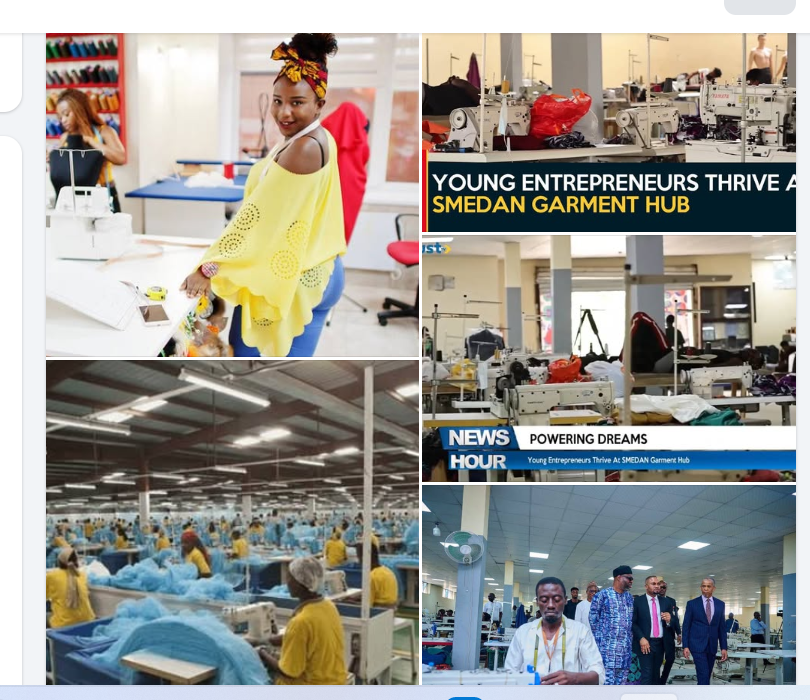
Nigeria currently hosts nine operational clothing and fashion hubs under the SMEDAN Shared Facilities Scheme. These hubs represent more than mere symbolism; they are industrial clusters equipped with over 150 machines and sustainable solar power. Access to these resources is remarkably affordable, costing just ₦300-₦500 per day. Notably, Abuja’s flagship hub has recently partnered with the UNDP to install solar infrastructure, ensuring uninterrupted power supply for local tailors.
Impressive Capacity and Human Capital Ready for Action
The Eco Fashion Hub in Lagos serves 380 seamstresses each day while Imo’s Owerri hub accommodates 350 tailors daily, equating to significant annual throughput. These figures reflect real operational capabilities rather than theoretical projections. Beyond infrastructure, Nigeria benefits from a skilled workforce ready to engage with it. The ₦3.6 billion ITF SUPA program has trained 200,000 seamstresses nationwide, marking one of Africa’s largest coordinated artisan upskilling initiatives. This initiative is projected to generate up to 1 million direct and indirect jobs within two years, injecting valuable skilled labor into the informal economy.
Building a Comprehensive Manufacturing Ecosystem
What Nigeria is creating transcends a mere fashion program; it is establishing a sophisticated manufacturing ecosystem. The hubs provide essential industrial infrastructure, while SUPA cultivates a skilled workforce. Moreover, the Cotton, Textiles and Clothing Roadmap ensures a steady supply of raw materials. The revitalization of historic factories like the Kakuri Hub in Kaduna adds foundational strength to the industry. The convergence of these elements aims to transition Nigeria from a consumption-driven importer to a robust production powerhouse.
Enormous Economic Opportunities on the Horizon
The economic implications are staggering. Currently, Nigeria loses approximately $6 billion annually due to textile imports, a defensive stance in its trade strategy. Conversely, the potential for offensive growth is even more significant. Bangladesh generates $38.8 billion from clothing exports, while India records $37.8 billion. Capturing just 10% of this global market could yield nearly $4 billion in fashion exports annually for Nigeria, complementing its oil revenue, which fluctuates between $3.5 billion and $5 billion per month. Thus, fashion is positioned to serve as a vital macroeconomic equalizer.
Paving the Way for a Transformative Economic Shift
Currently, Nigeria earns less than $100 million each year from fashion and textile exports, a figure that hardly makes a dent in the national balance sheet. However, with the successful implementation of initiatives like SMEDAN hubs, the SUPA program, and the revitalization of textile factories, external revenue from fashion could escalate to $4 billion annually, marking a staggering increase of approximately 4,000%. This would also halve the reliance on textile imports, resulting in a combined economic uplift of $10 billion per year, paralleling and eventually surpassing Nigeria’s volatile oil revenues.
Strategic Shifts and Global Attention
Nigeria is transitioning from bespoke tailoring to bulk ready-to-wear clothing, resulting in a 400% increase in production speed. Standardized size charts are enabling Nigerian clothing to meet international retail standards in markets such as the US, UK, and EU. Corporate contracts for uniforms and workwear are also providing predictable revenue streams. As labor costs rise in Asia, Nigeria is becoming increasingly appealing to global brands. The establishment of deep-sea ports could reduce transit times to major markets like New York and London to a mere 10 to 14 days, positioning Nigeria as a competitive player alongside established manufacturing powerhouses.
Strategic Incentives to Attract Investment
To further bolster private investment, Nigeria is implementing robust financial incentives. Policies include zero tariffs on industrial machinery, corporate tax exemptions for companies in pioneer status, and concessions within free trade zones that free businesses from a range of federal, state, and local taxes. Additionally, single-digit intervention funding from the Bank of Industry and the Central Bank of Nigeria serves as a structural accelerator designed to attract substantial investments in manufacturing.
A Quiet Revolution in Fashion and Beyond
Nigeria’s ambition is not merely to participate in the global fashion industry but to assert control over it. The infrastructure is real. The training initiatives are substantive. The incentives are strategically designed. The market potential is monumental. Together, these elements present a clear, consistent roadmap for growth, making Nigeria poised for transformation. As this quiet revolution matures, the prevailing question won’t be how Nigeria entered the fashion space but rather how it came to dominate it.
