


Devastating Earthquakes Hit Venezuela, Leaving 32 Dead and Over 700 Injured
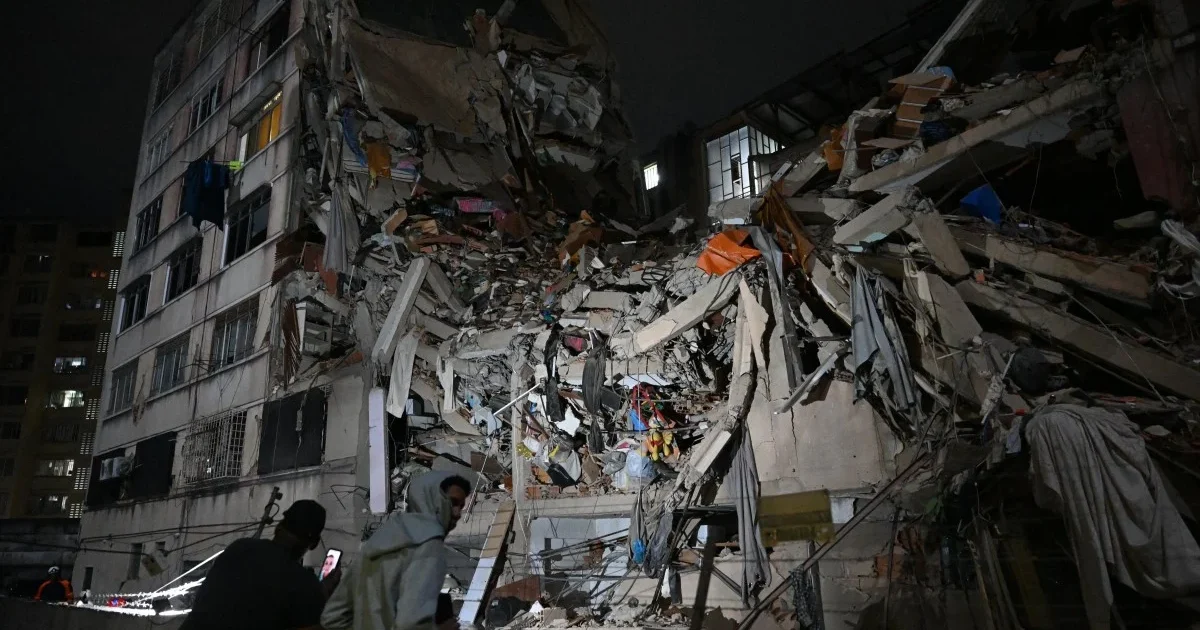
Two powerful earthquakes struck Venezuela on Wednesday, leading to a death toll of 32 and more than 700 injuries, as announced by the interim president on Thursday. The massive tremors caused widespread destruction, resulting in the collapse of buildings and widespread panic among residents.
In the wake of the disaster, both authorities and community members are sifting through the rubble in search of survivors. The severity of the situation prompted leader Delcy Rodriguez to declare a state of emergency. According to the United States Geological Survey (USGS), the earthquakes, registering magnitudes of 7.2 and 7.5, damaged structures in the capital and led to the closure of Venezuela’s main airport.
Speaking to the nation early Thursday, Rodriguez highlighted the gravity of the situation, noting, “as of now, we have reports of 32 people dead” and “more than 700 injured.” He also mentioned that he had yet to gather information from La Guaira, the area hardest hit by the quakes. Rodriguez reported that the region experienced 20 aftershocks following the initial tremors.
During the earthquake, panic ensued in the capital, as many took to the streets. Witnesses described the chaos, with one bank employee, Odalys Escalona, recounting, “The stairs came off, and the whole wall was cracked. Things were falling from the ceiling. It was terrible.”
Internationally, U.S. President Donald Trump expressed condolences and readiness to assist. He stated, “The United States is ready and willing to help! I have directed all agencies of the government to be prepared to act quickly,” using his Truth Social platform to convey this support.
In the Altamira district of the capital, an AFP reporter noted a 22-story building completely destroyed. Volunteers rushed to the scene, searching for trapped individuals amid the debris, with one calling out for a flashlight. The first quake, registered at 2:04 p.m. Japan time, was centered 21 kilometers (13 miles) west of Moron, followed closely by a 7.5 magnitude tremor.
As residents grappled with the aftermath, Interior Minister Diosdado Cabello urged citizens to evacuate their homes due to concerns about gas leaks and further casualties. Maiquetia International Airport, located near Caracas, was closed due to significant infrastructure damage.
Panic Grips Caracas
The earthquakes, which reached depths of 22 km and 10 km respectively, sent shockwaves throughout the capital. Shopping centers erupted in chaos, as individuals fled to safety. Store owner Heidi Romero described the experience: “It was unbelievable. I don’t even know how long it lasted.” Following the tremors, many chose to remain outside of buildings, hesitant to return indoors.
For residents like Carmen Guedes, the tremors were terrifying. “It got stronger and stronger,” she recounted, having shielded herself and her bedridden sister during the quake. Guedes remained alert that night, like many others, with neighbors choosing to sleep outside for fear of further aftershocks.
Aftershocks Felt Across Borders
The impact of the earthquake was felt far beyond Venezuela, reaching as far as Colombia’s capital, Bogotá, where alarms prompted building evacuations. Freddy Tovar, coordinator of Colombia’s National Earthquake Network, reported receiving over 200 tremor reports, adding that aftershocks could continue to be felt widely throughout the country.
Fortunately, Colombia’s disaster management agency, UNGRD, indicated that there was no threat of a tsunami, a sentiment echoed by the U.S. National Tsunami Warning Center. Historical data reveals that Venezuela has a troubled history of earthquakes, including a 1997 quake that resulted in 73 deaths and a devastating 1967 earthquake in Caracas that claimed 236 lives.
In an intriguing coincidence, just after the twin earthquakes in Venezuela, a separate magnitude 7.2 tremor shook northern Japan, although no casualties or significant damage were reported there, as confirmed by Japan’s meteorological authorities.
