


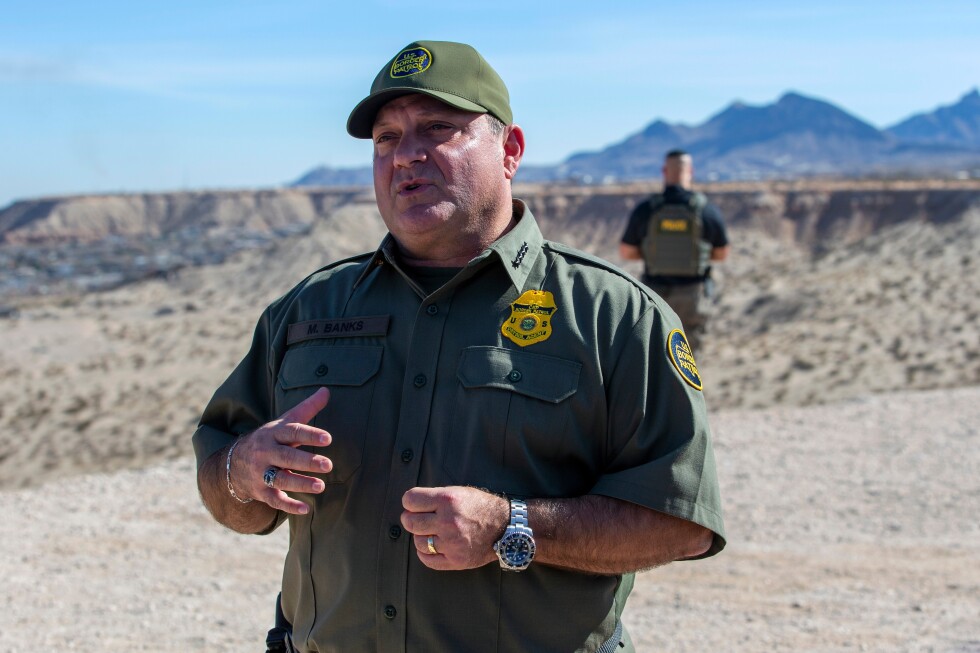
U.S. Border Patrol Chief Announces Resignation Amid Policy Shifts
The head of the U.S. Border Patrol, Michael Banks, has announced his immediate resignation, marking a significant moment for an agency increasingly prioritized by the Trump administration. His decision was disclosed during a Fox News interview and later confirmed by the Department of Homeland Security.
Banks’ resignation reflects ongoing changes in leadership as the administration implements its rigorous immigration policies. Under President Donald Trump’s guidance, the focus on mass deportation has become a central tenet, seeking a reformulation of immigration strategies across the nation.
Rodney Scott, Commissioner of U.S. Customs and Border Protection, commended Banks for his service during what he described as “one of the most challenging times for border security.” As of now, there is no information regarding Banks’ successor, leaving uncertainty around the agency’s future direction.
Banks played a pivotal role amid heightened immigration enforcement efforts steered by the Trump administration, becoming more of a background figure compared to his colleagues. While Banks was in charge, Gregory Bovino, a retired commander, emerged as a more visible representative in discussions about immigration enforcement.
CBP’s Role in Immigration Enforcement in Urban Areas
The U.S. Customs and Border Protection (CBP) agency has been actively engaged in major immigration enforcement operations across various cities, particularly those with Democratic leadership. This has resulted in a notable increase in arrests and some tragic incidents, including the deaths of two Americans at the hands of federal immigration agents in Minneapolis.
Banks’ resignation occurs just two months after former Republican Senator Markwayne Mullin took the helm as Secretary of Homeland Security. The Department of Homeland Security, which oversees both CBP and U.S. Immigration and Customs Enforcement (ICE), is currently navigating a leadership transition as well.
ICE will soon see a new leader, as Acting Director Todd Lyons is set to retire, with David Venturella stepping in after years in the private sector. This shift in leadership comes at a time of heightened scrutiny and debate over immigration policies.
Banks’ Career and Impact on Border Security
Established in 2003, CBP is responsible for enforcing customs and immigration laws to safeguard the United States’ borders. The agency employs over 20,000 individuals, tasked with monitoring more than 6,000 miles of borderlands, supported by an annual operating budget of approximately $1.4 billion.
Throughout his tenure as CBP director, Banks was at the forefront of the Trump administration’s efforts to reshape immigration enforcement. He spearheaded initiatives that increased prosecutions for illegal border crossings, enhanced collaboration between Border Patrol and ICE, and managed extensive domestic enforcement operations.
Banks’ Journey and Departure from CBP
After a lengthy career with the Border Patrol, Banks returned to the agency last year but did not attain a top leadership role. He previously gained recognition as the border czar for Texas Governor Greg Abbott during a period of escalating illegal immigration, which set the stage for clashes with the Biden administration over immigration enforcement policies.
Despite being central to ongoing immigration challenges, Banks maintained a relatively low profile, especially as illegal crossings reached their lowest numbers since the mid-1960s, a trend correlated with the tail end of the previous administration. This week, Banks notably skipped the Border Security Expo in Phoenix, a key event for updates on border security and immigration enforcement strategies.
Born in Warner Robins, Georgia, Banks’ early experiences, including working with migrant farm workers, profoundly shaped his outlook on immigration issues. In previous statements, he expressed a commitment to enforcing federal laws while emphasizing the importance of compassion and humility in dealing with immigration matters.
