


Justice Department Challenges Kansas’ In-State Tuition Law
The Department of Justice under President Donald Trump has initiated a legal challenge against the state of Kansas, seeking to overturn a law permitting college students lacking legal immigration status to qualify for in-state tuition. This lawsuit was filed in federal court on Wednesday.
Kansas Attorney General Joins Federal Lawsuit
Kansas Attorney General Kris Kobach has quickly aligned with the Justice Department, asking the court to halt the enforcement of a 2004 law that allows certain Kansas students to access in-state tuition. To qualify, students must have been accepted into a Kansas university, attended high school in the state for at least three of the previous four years, and either graduated from an accredited high school or earned an equivalent certificate in Kansas.
Allegations of Discrimination and Encouragement of Illegal Immigration
In its court filings, the Justice Department contends that the Kansas law discriminates against U.S. citizens, promotes illegal immigration, and allocates scholarships unavailable to American citizens who reside in other states. Assistant Attorney General Brett Shumate characterized the law as “unconstitutional and un-American,” asserting that it should have never been enacted.
Support for the Law Faces Political Opposition
Democratic Governor Laura Kelly has filed a motion to intervene, arguing that Kobach has neglected to defend the law that has established in-state tuition guidelines for over twenty years. She stated, “Many ways exist to collaboratively address our country’s flawed immigration system, but targeting Kansans who were brought here as children will not resolve the underlying issues.” Kelly emphasized that higher education enables these young individuals to contribute significantly to the state’s economy.
Proposed Legislation and Political Divisions
This year, State Senator Mike Thompson, a Republican from Shawnee, introduced a bill aimed at preventing Kansas residents without legal immigration status from receiving state and local benefits. This proposal specifically targets students without legal status and passed both legislative chambers without the votes necessary to override a veto. Consequently, Kelly vetoed the bill.
Concerns About Legal Ramifications
Thompson criticized lawmakers on both sides of the aisle who voted against his bill, arguing that their decisions were driven by the number of illegal immigrants in their districts. Expressing doubt about the outcome of the federal lawsuit, he indicated, “The Supremacy Clause always prevails,” and announced intentions to reintroduce the bill in the next legislative session to align with federal law.
Federal Officials Praise State Cooperation
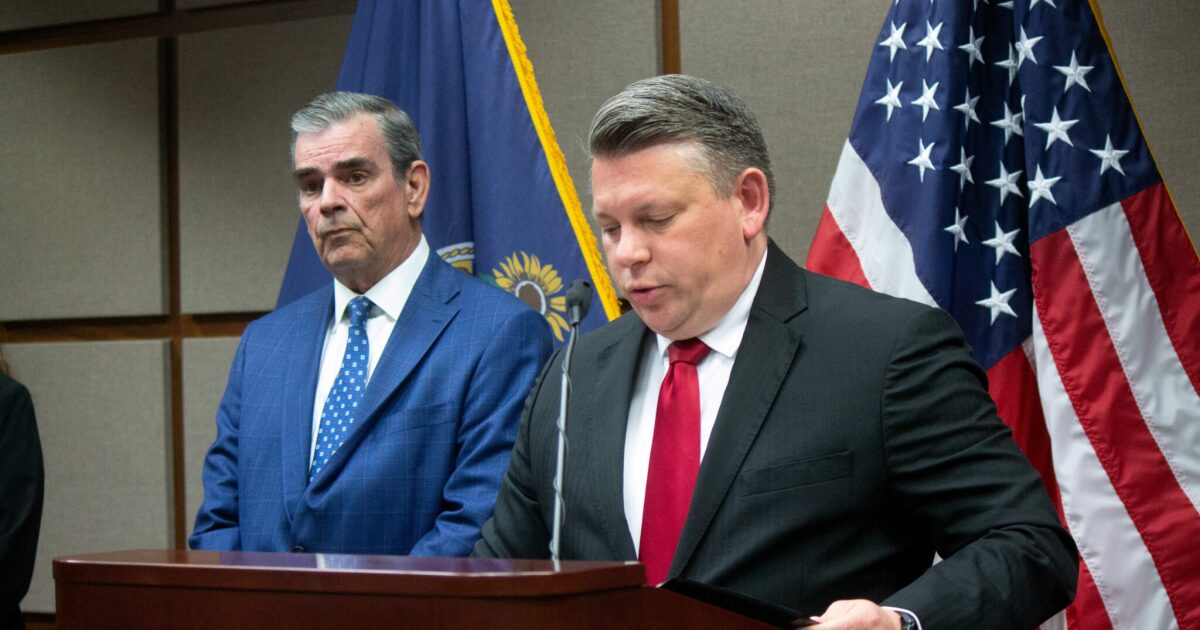
Federal officials lauded Kobach’s collaboration in this legal action. Deputy Attorney General Stanley Woodward remarked on the sensible nature of Kobach’s involvement, while Ryan Kriegshauser, the U.S. Attorney for the District of Kansas, emphasized the partnership between state leaders and the Justice Department in preventing discrimination against legal citizens in Kansas.
ACLU Condemns Federal Actions as Targeted Attack
Micah Kubik, executive director of the American Civil Liberties Union of Kansas, condemned the Justice Department’s lawsuit as a coordinated assault on Kansas children, accusing Kobach of colluding with federal authorities to undermine state laws. He lamented the implications of this legal action on young Kansans aspiring to contribute positively to society, stating, “This aggressive attempt aims to shut doors and punish those trying to pursue their dreams.”
