


Progress in U.S.-Iran Negotiations Amid Tensions
High-level discussions between Iran and the United States have yielded significant advancements, according to Vice President J.D. Vance. He made the remarks as he left Switzerland on Monday, following an agreement to establish a roadmap aimed at reaching a formal deal to conclude hostilities within the next 60 days.
Foundation for a Comprehensive Agreement Established
Vance emphasized the groundwork laid during negotiations, stating, “We have laid a very good foundation for a successful final deal.” At a press conference prior to his departure, he likened the agreement to constructing a home, noting that while the foundation is in place, there is still much work ahead to secure a favorable outcome for the American populace.
Intensive Discussions Take Place at Bürgenstock
Following a lengthy initial round of talks, discussions between the two nations continued at the scenic mountaintop resort of Bürgenstock. The negotiations faced early disruptions, including a cancellation due to external pressures, which escalated tensions further.
Threats and Response Shape Negotiation Climate
Vance acknowledged that Iran had considered withdrawing from discussions in response to comments made by President Donald Trump. However, he defended Trump’s stance, explaining that when provocative statements are made, a response is to be expected. “You cannot expect the president of the United States not to respond or not to correct the record,” Vance remarked.
Positive Developments and Joint Statements
Despite the rocky start, the talks ended on a hopeful note. A joint statement from mediators Qatar and Pakistan described the atmosphere as “constructive,” with both governments agreeing to enhance communication channels. This collaboration aims to ensure the safety of the vital Strait of Hormuz and to address ongoing conflicts in Lebanon.
IAEA Inspections and Leadership Changes
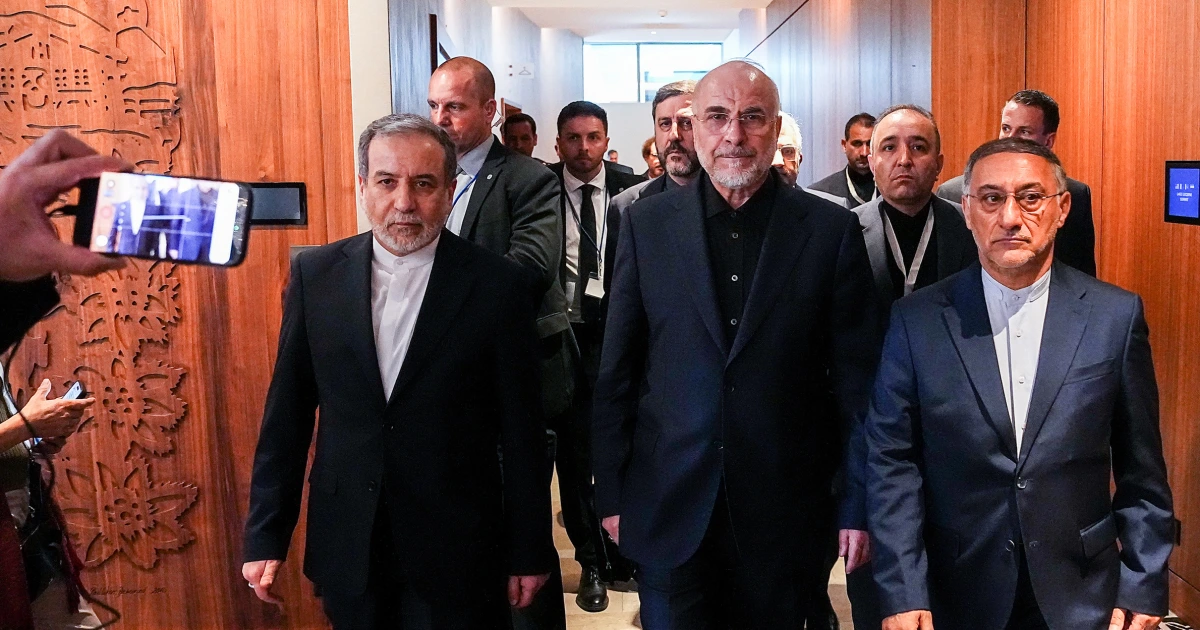
In a significant concession, Iran agreed to permit International Atomic Energy Agency (IAEA) inspectors to return. Reports indicate that Iran’s delegation, led by Parliament Speaker Mohammad Berger Ghalibaf, concluded approximately 18 hours of intense negotiations in Switzerland, although Deputy Foreign Minister Kazem Gharibabadi will spearhead ongoing technical consultations.
Aiming for Resolution on Key Issues
The current round of negotiations focuses on resolving contentious issues, particularly concerning Iran’s nuclear program. One notable outcome from the discussions was the establishment of a “high-level committee” tasked with overseeing the mediation process. This committee developed a roadmap designed to lead to a final agreement within 60 days, addressing sanctions, nuclear development, and ongoing conflicts.
Safety Measures in the Strait of Hormuz
The discussions also resulted in the formulation of a deconfliction line between Iran, the U.S., and Lebanon to mitigate potential conflicts. Despite the progress made in Switzerland, hostilities persist in southern Lebanon, where Iran-supported Hezbollah continues to engage in clashes with Israeli forces. Additionally, new communication channels have been implemented to avoid miscommunication, thereby ensuring that commercial shipping can navigate safely through the strategically crucial Strait of Hormuz.
