


US Calls for UN Action Against Iran’s Maritime Threats
The United States has urged the United Nations to foster a unified international response against Iran while ensuring secure navigation through the crucial Strait of Hormuz. This appeal follows rising tensions marked by attacks on vessels in the area.
Iran’s Actions Prompt Concern from US Officials
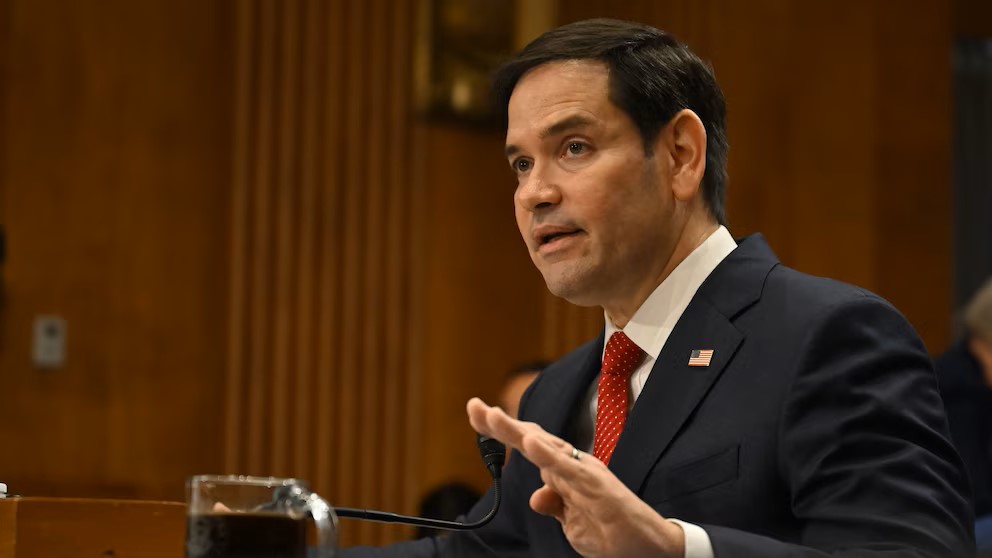
In a press briefing on Tuesday, U.S. Secretary of State Marco Rubio emphasized that Iran should not dictate access to this vital maritime route. Reports from U.S. Central Command indicated that Iran had launched cruise missiles and drones, as well as deployed small boats targeting U.S.-flagged ships. Fortunately, no injuries or confirmed attacks on vessels were reported.
Escalating Narratives Around Maritime Incidents
Responding to these accusations, Iran referred to its military actions as a “warning shot” towards enemy ships. This statement followed claims that a U.S. naval destroyer approached Hormuz Island, an act Iran deemed a breach of the ceasefire.
International Reports of Maritime Attacks
On the same day, South Korea and the United Arab Emirates reported incidents involving attacks on ships in the Strait of Hormuz. Further complicating the narrative, Iran alleged that recent U.S. operations resulted in the deaths of five civilians and insisted that their forces targeted a passenger ship, countering U.S. claims of an assault on an Islamic Revolutionary Guards Corps vessel.
Significance of the Strait of Hormuz
Approximately one-quarter of the world’s oil trade, alongside substantial quantities of fuel and fertilizers, traverses this narrow waterway, highlighting its global importance. Despite its geographical positioning that suggests control over the strait, Iran’s claims are contested by the United States, especially following Washington’s joint military initiatives with Israel against Iran earlier this year.
US Naval Response and Security Strategies
In response to these maritime tensions, President Donald Trump had earlier implemented a naval blockade against Iran, reinforcing U.S. military operations in the region. He notably instructed the U.S. Navy to act against any vessels attempting to deploy mines in the strait, reaffirming the U.S. commitment to safeguarding international shipping lanes.
Seeking UN Support for International Waters
Rubio criticized Iran’s actions as illegal and called for international solidarity. He labeled Iran’s tactics, such as targeting merchant ships and planting underwater mines, as both outrageous and unacceptable, urging the United Nations to take decisive action. Rubio articulated a clear request: condemnation of Iran’s actions, cessation of attacks on ships, removal of planted mines, and unhindered humanitarian aid passage through the strait.
Diplomatic Tensions and US Arms Sales
Iran had recently signaled a willingness to reopen the Strait of Hormuz and resolve ongoing conflicts, contingent upon the lifting of U.S. sanctions. While President Trump acknowledged this proposal, he did not indicate any intent to accept it. Concurrently, the U.S. government is advancing multi-billion-dollar arms sales to Israel, Qatar, the United Arab Emirates, and Kuwait, underscoring the ongoing dynamics of military support and regional strategy in the face of rising tensions.
