


Federal Government Defends Lagos-Calabar Coastal Road against Flooding Criticism
In response to growing concerns about flooding in various areas of Lagos following recent heavy rains, the Federal Government has staunchly defended the Lagos-Calabar Coastal Road. Officials assert that this multi-billion naira project plays a critical role in mitigating flooding rather than exacerbating it.
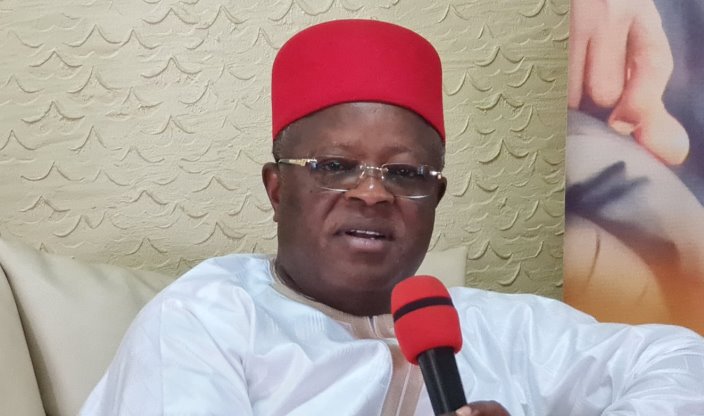
During a site visit on July 6, 2026, Minister of Works David Umahi explained that a thorough technical assessment has identified poor urban planning, insufficient drainage systems, indiscriminate garbage disposal, and climate change as the primary drivers of persistent flooding in communities like Alpha Beach.
Umahi addressed members of the National Assembly, officials from the Federal Ministry of Environment, representatives of the Lagos State Government, community leaders, and journalists as they evaluated flood-prone regions along the highway corridor. He refuted claims circulating on social media that the new coastal expressway was responsible for the flooding in surrounding areas.
The Minister explained, “The Lagos-Calabar Coastal Road is not a source of flooding. Instead, it facilitates the evacuation of floodwaters through well-designed culverts and drainage channels while also shielding the region from storm surges.” He emphasized that many housing developments along the corridor occupy low-lying areas without careful consideration of historical flood patterns or adequate environmental assessments.
Additionally, he highlighted that the highway features modern drainage systems that enable rainwater to flow naturally between low-lying regions. He noted that parts of the project involved extensive land reclamation efforts aimed at safeguarding coastal zones from the Atlantic Ocean.
In light of public concerns regarding flooding, President Bola Tinubu has mandated inspections to ensure that environmental issues are addressed. Umahi underscored the administration’s commitment to meeting global technical standards for crucial infrastructure projects while tackling genuine environmental challenges.
The Minister also called for enhanced collaboration with the Lagos State Government to develop an internal drainage network that would connect the adjacent properties to the expressway’s drainage system. He mentioned that inspection teams discovered blocked manholes and culverts along certain sections of the project and attributed worsening flooding to the careless disposal of waste into drainage systems.
Supporting the Minister’s perspective, Rofika Adebukola, Director of Environmental Services at the Lagos State Ministry of Environment, described flooding in Lagos as a multifaceted environmental issue arising from climate change, rising sea levels, rapid urbanization, and insufficient wastewater management. He further affirmed that the environmental and social impact assessments conducted for the Lagos-Calabar Coastal Highway adhered to regulatory guidelines and involved comprehensive stakeholder consultations prior to approval.
Representatives from Hitech Construction Company, the project’s contractor, committed to swiftly clearing any clogged culverts and drains along the route. Concurrently, parliament members present at the inspection urged residents to cease the practice of disposing of waste in waterways and to support government initiatives aimed at combating flooding across Lagos.
