


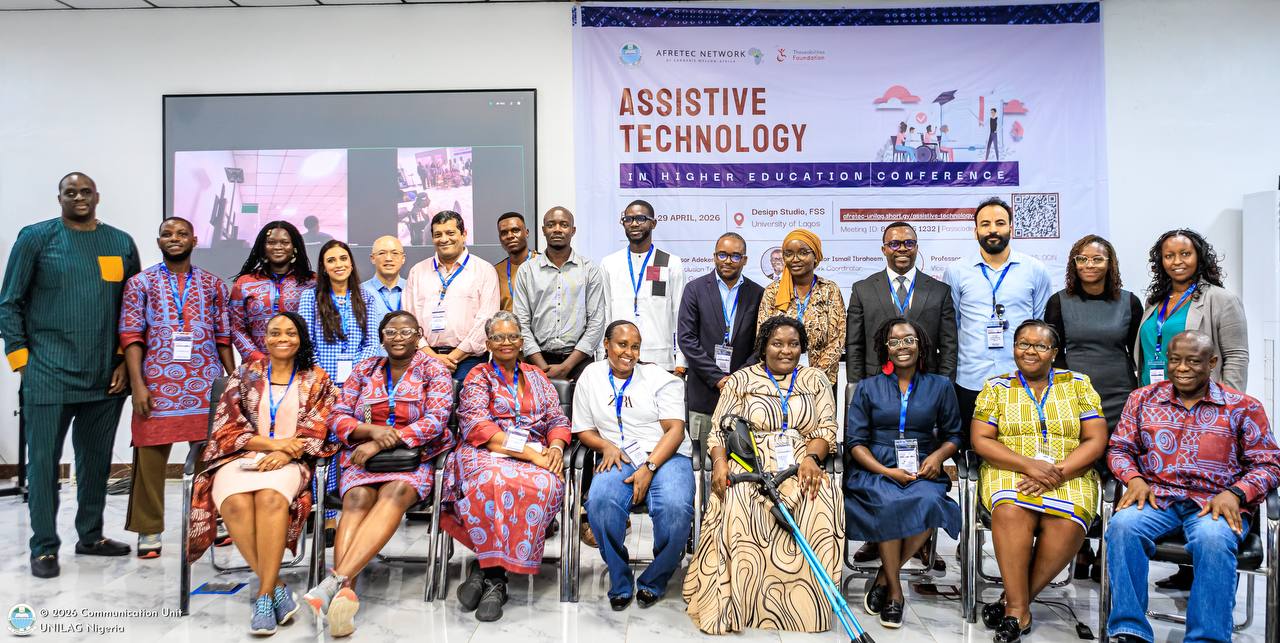
Assistive Technology Paves the Way for Inclusive Education in Africa
Stakeholders from the realms of higher education, technological innovation, and disability inclusion are emphasizing the importance of assistive technology as a transformative tool for fostering inclusive and equitable learning environments across Africa. They advocate for increased collaboration among institutions, augmented research funding, and innovation spearheaded by students to bridge accessibility gaps and mitigate inequalities within universities.
Highlights from the Pan-African Workshop and Conference
This critical perspective was articulated during a two-day Pan-African Workshop and International Conference on Assistive Technology, hosted by the University of Lagos under the auspices of the AFRETEC network. The conference took place on April 28 and 29, 2026, at the UNILAG Faculty of Social Sciences’ Design Studio, revolving around the theme of “Fostering Inclusive Societies Through Research and Innovation in Digital Transformation and Assistive Technologies in African Higher Education.”
Collaboration Across Diverse Stakeholders
The event attracted a wide array of participants, including students, researchers, innovators, educators, and advocates for disability rights from various African nations. Their collective focus was on fostering dialogue and developing actionable solutions for inclusive higher education and sustainable development.
Participating Institutions Showcase Commitment to Inclusion
Institutions joining the workshop included the University of Rwanda, Carnegie Mellon University in Africa, University of Nairobi, Al Akhawein University, and several others from various countries. Notably, Lagos-based institutions like Lagos State University, the Lagos State University of Science and Technology, and the Federal College of Education (Technology) in Akoka also participated, reinforcing a local commitment to advancing educational inclusivity.
Dynamic Agenda of Activities
The workshop’s agenda featured a keynote address by Professor Eric Umuhoza from Carnegie Mellon University in Africa, discussing “Assistive Technology in African Higher Education: Gaps, Opportunities, and Collaboration Pathways.” The conference also engaged participants in rigorous discussions through Q&A sessions, a showcase on assistive technologies developed by the University, and entrepreneurial training for aspiring innovators.
A Strong Affirmation of Institutional Purpose
Speaking on behalf of the FAS Vice-Chancellor, Prof. Folasad T. Ogunsola, Professor Foluso Ebun Afolabi Lesi, Vice-Chancellor for Development Services, heralded the conference as a substantial declaration of the university’s commitment to inclusion. He urged African universities to fulfill their responsibility as drivers of social inclusion and sustainable development, emphasizing a collaborative approach that empowers persons with disabilities as innovators and leaders.
Innovation Challenge Addresses Real-world Disability Issues
One of the conference’s highlights was the Innovation Challenge, where 66 student innovators from four local institutions worked with mentors to devise assistive technology solutions for practical challenges faced by individuals with disabilities. Their projects ranged from navigation applications for the visually impaired to platforms supporting the deaf and hard-of-hearing communities, showcasing how innovative thinking can significantly enhance accessibility and inclusivity.
Recognition and Future Collaborations
Prof. Adekemi Sekoni, leader of the AFRETEC UNILAG Inclusion Technology Working Group, underscored the necessity of collaborative efforts to tackle shared challenges in accessibility for persons with disabilities across Africa. The initiative underscored the importance of partnerships between researchers, investors, and development agencies in driving forward inclusive technology solutions that yield tangible benefits.
Promoting Sustainable Impact Through Innovative Solutions
The concluding sessions featured award announcements for the Innovation Challenge, with the winning teams, Team Audio Reality, Team SIGIL, and Team Amebo, receiving recognition for their impactful solutions. UNILAG officials celebrated the initiative as a platform for visibility and commercialization, aimed at fostering cross-sectoral collaborations that can significantly influence the landscape of assistive technology in Africa.
