


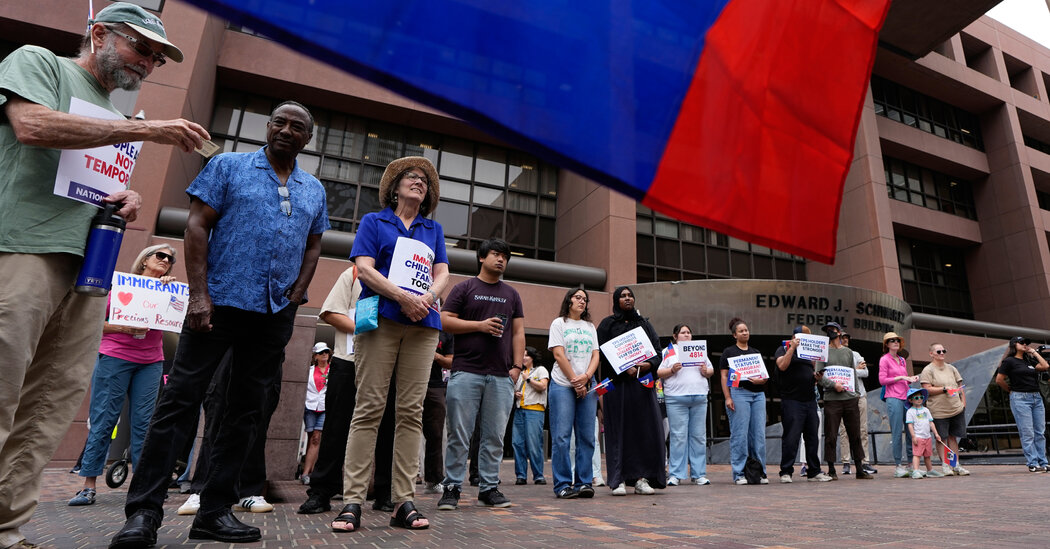
Department of Homeland Security Mandates Layoffs for Foreign Workers
The Department of Homeland Security (DHS) informed employers on Friday that they must prepare to lay off hundreds of thousands of foreign workers residing in the United States under humanitarian programs, which the Trump administration has sought to dismantle. This directive comes as protection measures for many workers are set to expire.
Upcoming Expiration of Work Permits
Work permits for Haitians under Temporary Protected Status (TPS) are due to expire on July 24, while permits for individuals from Ethiopia, Myanmar, Somalia, South Sudan, Syria, and Yemen will end on July 17, according to notifications from U.S. Citizenship and Immigration Services (USCIS), which manages the legal immigration system for each affected country.
Impact of Supreme Court Ruling
This guidance follows a recent Supreme Court ruling that upheld the Trump administration’s authority to terminate protections for TPS holders specifically from Haiti and Syria. Once these protections lapse, affected individuals face the risk of deportation. Currently, approximately 330,000 Haitians and 6,100 Syrians benefit from this program, which is designed to protect individuals from returning to their home countries during crises such as natural disasters or civil unrest.
Numbers of TPS Holders in Other Affected Countries
The total number of TPS holders from the additional five countries mentioned is roughly 20,000, as stated by the advocacy organization National Immigration Forum. These programs have become a vital lifeline for many, allowing them to contribute economically while providing a safe haven.
Confusion Over Layoff Notices
USCIS has been extending work permits in short intervals, recently pushing the expiration date from July 1 to July 10 for all countries, with yet another extension announced last Friday. However, this inconsistency has created confusion among employers, leading to premature layoffs for some, while others retained employees with the expectation that the Supreme Court’s ruling would not take effect immediately.
Concerns from Employers and Advocates
Jacob Monti, general counsel for the American Business Immigration Coalition, expressed concerns over the confusion surrounding the expiration dates and the potential penalties for hiring employees who may soon be ineligible to work in the U.S. He emphasized that the legal framework surrounding TPS is still active, implying that further clarification from USCIS could have aided many employers in avoiding unnecessary layoffs.
Broader Implications for TPS and Immigration Policies
As the government moves to terminate TPS for individuals from Haiti and Syria, it has also signaled intentions to end these protections for individuals from five additional countries. While a federal court had previously halted these layoffs, the Supreme Court’s ruling may serve as a precedent, paving the way for lower courts to allow layoffs to proceed. Critics argue that the decision was politically motivated and rooted in racial animus, reflecting a significant turning point in U.S. immigration policy.
Context of the Temporary Protected Status Program
Since its inception in 1990, the Temporary Protected Status program has undergone regular extensions but has faced scrutiny from the Trump administration, which has labeled it a de facto permanent immigration system. Advocates warn that conditions in many countries remain precarious; nations such as South Sudan, Somalia, and Yemen continue to grapple with internal conflict, deteriorating infrastructure, and severe reductions in international assistance.
