


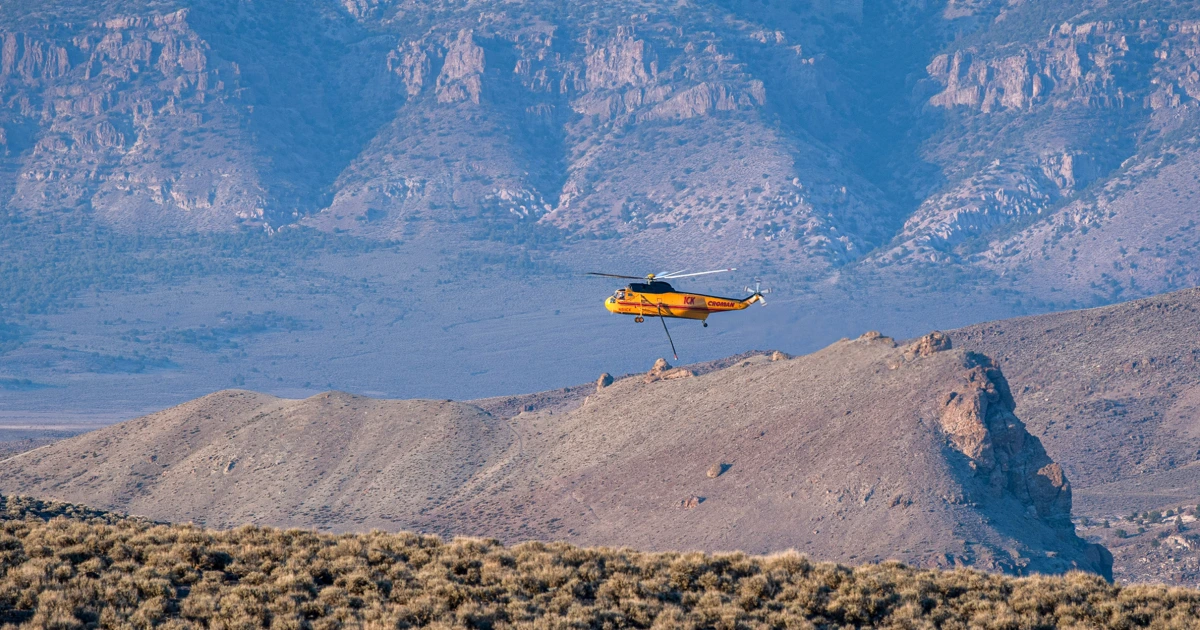
Elevated Fire Risks Threaten Multiple States in the Southwest
Fire conditions in the Southwestern United States are extremely precarious, with Utah, Nevada, and New Mexico facing intensified threats this weekend. Many areas are on high alert as the risk of wildfires continues to rise.
Warnings from the National Weather Service
On Saturday, the National Weather Service issued a warning, characterizing the current situation as an “extreme risk” for fire weather. This designation represents the agency’s highest threat level and particularly affects the Great Basin and Four Corners regions. The presence of dry thunderstorms heightens concerns, as they can lead to numerous lightning strikes, igniting fires in vegetation that is already parched and conducive to rapid flame spread.
Cottonwood Fire Escalates Without Containment
The Cottonwood Fire in Beaver County, Utah, has expanded beyond 92,000 acres and remains completely uncontained after five days. Factors such as low humidity and strong winds accelerated the fire’s spread on Friday. While conditions may improve slightly on Saturday, rising temperatures and increasing winds are expected to exacerbate the situation further.
Air Quality Warnings in Affected Areas
Residents in the Marysvale area should anticipate air quality reaching unhealthy levels by the afternoon and evening. Vulnerable populations, including children, pregnant women, the elderly, and individuals with heart or lung conditions, are advised to limit outdoor activities.
Uncertain Timeline for Containment Efforts
Alyssa Mason, spokesperson for the local fire management team, indicated that a timeline for controlling the fire has yet to be established. She explained that the region’s vegetation has remained dry since March due to exceptionally high temperatures and low snowfall during the previous winter, which has significantly contributed to the current fire outbreaks.
Impact on Local Communities and Infrastructure
The Cottonwood Fire has already caused damage to Eagle Point, a popular ski resort, leading to evacuations earlier in the week. Resort owners announced via social media that the area will remain closed for an extended period as recovery efforts begin.
Multiple Fires Outbreaks Lead to Additional Emergency Measures
Several smaller fires have erupted across Utah, prompting evacuations, road closures, and power outages. The Wild Goose Fire in Millard County has extended to 1,000 acres, while firefighters work to protect highway access. The Cherry Fire in Juab County covers over 19,000 acres and remains uncontained, while the Iron Fire—spanning parts of Juab and Tuere counties—is approximately 38% contained over an area exceeding 40,000 acres.
Statewide Restrictions and Ongoing Challenges
In response to the escalating fire activity, Utah Governor Spencer Cox announced fireworks restrictions across the state until July 5, affecting Fourth of July celebrations in certain areas. The governor expressed that this decision was challenging but necessary, noting that fire conditions are unparalleled, even for seasoned firefighters.
Continued Challenges in New Mexico and Nevada
The Macquarie Springs Fire in Sandoval County, New Mexico, has burned for several days with no containment, spreading to 722 acres. The Jemez Ranger District has been temporarily closed to campers and tourists, with YMCA summer camps evacuated. Similarly, in Lincoln County, Nevada, the Grapevine Fire has also shown no signs of containment, affecting approximately 26,000 acres and leading to the temporary closure of Beaver Dam State Park.
Worsening Conditions Across the Region
A pocket fire near Sedona, Arizona, has persisted for over a week, showing little indication of relief. Clyde England, a member of the incident management team, shared concerns about the continued presence of strong winds, which could hinder firefighting efforts. Arizona Public Services warned of potential temporary power outages in high-fire-risk areas, including Flagstaff and the Grand Canyon, if conditions do not improve significantly.
