


African Business Driving Change Amid Global Energy Crisis
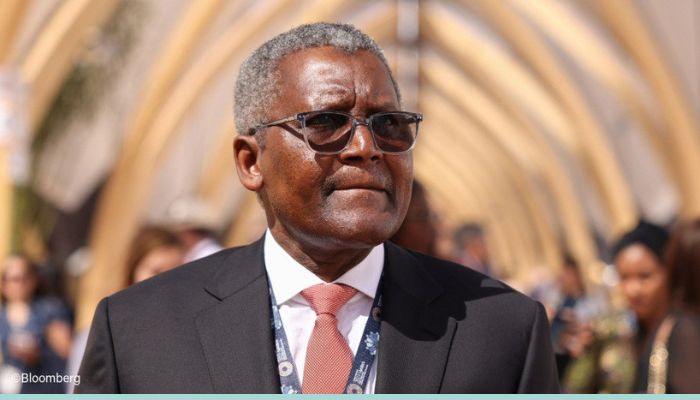
In a recent interview with The Economist, Aliko Dangote, Africa’s wealthiest businessman, expressed his astonishment at the volatility of oil prices, which surged by 10% due to escalating tensions in the Gulf. “It’s crazy right now,” he remarked from his office in Lagos, Nigeria, emphasizing this unpredictability could persist for some time. Despite the global turmoil, Dangote stands as a beacon of resilience in the African business landscape.
The Launch of Africa’s Largest Refinery
In 2023, nearly a decade after its proposal, Dangote inaugurated the continent’s largest oil refinery on the outskirts of Lagos, a site approximately half the size of Manhattan. This facility has a staggering capacity of 650,000 barrels per day, and Dangote is already receiving substantial offers from potential buyers. He noted, “People are ready to pay for anything now,” illustrating a robust demand that underscores the refinery’s significance to both his fortune and Africa’s economic independence.
Symbol of Wealth and Industrialization
This refinery not only signifies Dangote’s personal wealth—estimated at $28.5 billion, making him the only African listed among the world’s 100 richest, according to Forbes—but also represents a crucial juncture for Africa’s self-sufficiency. He firmly believes, “Africa will never industrialize unless we Africans lead the industrialization of Africa,” positing that true progress must come from within the continent rather than relying on foreign investors.
From Trading to Manufacturing
Dangote’s journey began in trading, mirroring his family’s background. He entered the marketplace as an importer of soft goods such as salt and sugar. However, a pivotal shift occurred around the turn of the century, when with the encouragement of Nigeria’s then-president, he transitioned from importing to manufacturing cement. This decision became a cornerstone of Dangote’s empire, establishing a solid foundation for his subsequent ventures, including the new refinery.
Refinery: A Scale Unmatched
The refinery’s massive scale marks a transformative step not only for Dangote but also for Nigeria’s economy. It is a complex undertaking, incorporating intricate systems for processing and storage, and even including plans for an airstrip to facilitate operations. The potential economic impact is notable, with the IMF estimating that full capacity could boost Nigeria’s non-oil GDP by 1.5% and increase official dollar reserves by $5.5 billion annually.
Future Aspirations and Regional Expansion
Looking ahead, Dangote aims to expand the refinery’s profile by potentially listing parts of it on the Nigerian Stock Exchange and increasing production capability significantly within three years. His aspirations extend beyond Nigeria; he is currently active in 16 African nations, with recent ventures in Ethiopia for a new fertilizer plant and significant plans for cement and power projects in Zimbabwe.
Challenges and Competitive Landscape
Despite his triumphs, Dangote acknowledges the challenges facing local entrepreneurs. He highlights a pervasive “oil mafia” in the region that creates obstacles to investment by complicating regulatory frameworks. While his achievements invite comparisons to global industrial magnates like India’s Mukesh Ambani, he emphasizes that true development in Africa requires collective effort from homegrown capital rather than dependence on foreign investment.
