


Supreme Court Reviews Trump’s Birthright Citizenship Proposal
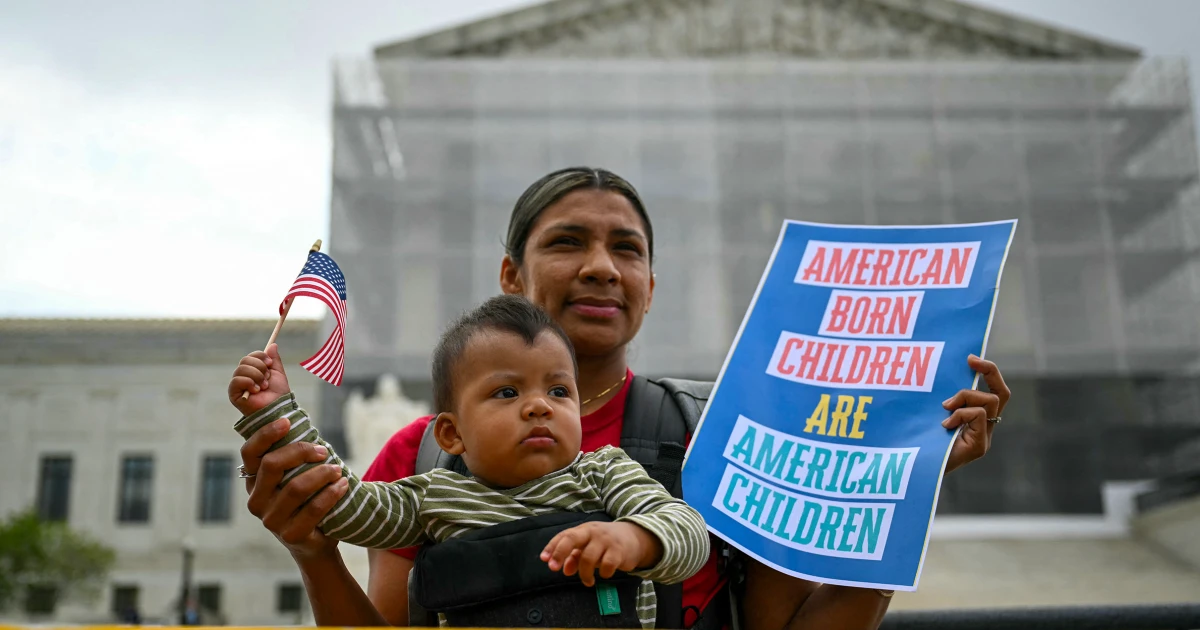
WASHINGTON – The Supreme Court is currently evaluating President Donald Trump’s controversial proposal aimed at restricting the constitutional guarantee of birthright citizenship for individuals born within U.S. borders. This significant case highlights ongoing debates surrounding immigration policies and the interpretation of constitutional rights.
Controversial Executive Order on Birthright Citizenship
The executive order under consideration was unveiled on the inaugural day of President Trump’s second term, forming a critical part of his broader immigration agenda. The policy seeks to limit birthright citizenship to children with at least one parent who is either a U.S. citizen or a permanent resident, effectively excluding infants born to temporary visa holders or undocumented immigrants from automatic citizenship.
President’s Unprecedented Court Appearance
In a notable departure from presidential norms, Trump announced his intention to attend the oral arguments in person, marking the first instance of a sitting president doing so in this context. The administration’s move represents both a commitment to its immigration policy and an effort to shape public perception regarding this contentious issue.
Challenging Established Interpretations of the Fourteenth Amendment
This executive order directly challenges long-standing interpretations of the Fourteenth Amendment, particularly the Civil Rights Clause. The amendment clearly states: “Every person born or naturalized in the United States and subject to the jurisdiction of the United States is a citizen of the United States.” Traditionally, this clause has been understood to encompass nearly all individuals born on U.S. soil, irrespective of their parents’ immigration status.
Legal Implications for Thousands of Families
Should this policy take effect, it could significantly affect thousands of newborns annually across the nation. One expectant mother from Argentina, currently residing in Florida on a student visa, expressed her concerns about the status of her child due to this executive order. She began preparations to secure her son’s citizenship even before his birth, illustrating the anxiety and uncertainty families face amidst changing immigration policies.
Legal Arguments Surrounding the Citizenship Clause
The administration’s legal rationale centers on the phrase “subject to jurisdiction” within the citizenship clause, arguing that its interpretation must be broadened. Attorney General D. John Sauer contended that this clause was primarily intended for children born to freed slaves, asserting that individuals must demonstrate direct allegiance to the U.S. to qualify for citizenship. He referenced the 1884 Supreme Court case, Elk v. Wilkins, which denied birthright citizenship to Native Americans at the time, as a foundational precedent.
Opposition from Civil Rights Organizations
The American Civil Liberties Union (ACLU), leading the challenge against Trump’s executive order, countered these arguments, asserting that the language of the 14th Amendment is clear and historically well-defined. They pointed to the landmark 1898 case of United States v. Wong Kim Ark, wherein the Supreme Court affirmed the citizenship of a man born in the U.S. to Chinese immigrant parents. This ongoing legal battle reflects deep-seated divisions regarding immigration policy and constitutional rights, raising critical questions about the future of birthright citizenship in America.
