


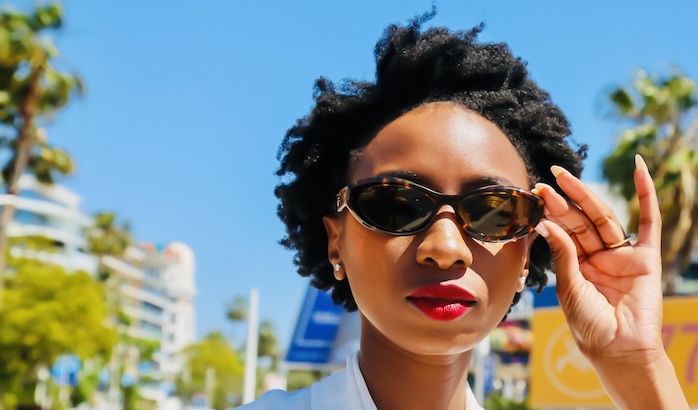
Zoe Ramsch’s Journey to Transform Film Production
For her first major production at Netflix, Zoe Ramsch insisted on having at least one woman in each department. The reaction from her line producers was unsettlingly silent, as if her request were unreasonable. This moment served as the catalyst for creating Wrapped.
Ramsch, a filmmaker and technology entrepreneur based in Cape Town, has recently been nominated for the Impact Leadership Award at the Global Production Awards 2026, an event organized by Screen International. The awards ceremony is set to occur on May 18, 2026, during the esteemed Cannes Film Festival, which will run from May 12 to 23 in Cannes, France.
Innovative Solutions for Industry Hiring Practices
Wrapped is a cutting-edge global production technology platform designed to transform how the film and television industry approaches hiring and talent development. The platform empowers crew members to visualize and present their portfolios, availability, and experiences, facilitating more efficient and standardized hiring and onboarding processes for productions.
The introduction of innovative search filters allows the industry to identify the right talent with diverse backgrounds in any department—capabilities that were previously unavailable. Following its launch, Wrapped attracted over 600 sign-ups within just three days in South Africa, highlighting the industry’s long-standing demand for such a solution.
Recognition Among Industry Peers
Ramsch is competing against nominees from prominent studios and film commissions in Europe and North America. Her consecutive nominations at the Global Production Awards position her as one of the few African founders to achieve this milestone. While her story has evolved, the core message remains the same.
During her time on set at Netflix, she oversaw a team of approximately 120 individuals. The quest to find one qualified woman for each department led to weeks of outreach, phone calls, and frustrating setbacks.
Navigating Challenges in Recruitment
Ramsch found that most respondents were not opposed to hiring women; rather, they lacked awareness of available talent. One individual remarked that finding a female sound technician he had previously worked with felt akin to searching for a unicorn. Although they eventually succeeded in filling every department, the time and financial costs were significant, and Ramsch believed the process could be less cumbersome.
“Recruiting in the film industry can be highly fragmented, often relying on spreadsheets, word of mouth, and collective memory,” Ramsch explained. “The same individuals are rehired repeatedly, not necessarily due to their talent, but often because they are the most recognizable names. Wrapped was created to address this imbalance, providing freelancers the visibility they deserve and enabling producers to hire from a wealth of talent rather than a limited pool.”
Positive Industry Response and Global Recognition
Even before Wrapped was fully developed, it garnered attention at the Berlin International Film Festival, where it was featured as the EFM Startup of the year in the European Film Market. Remarkably, it was the only African technology solution showcased alongside established global platforms like Letterboxd.
Feedback from clients who engaged with the product has been overwhelmingly positive. Ramsch noted, “Every time we presented our product, the reaction was consistent: ‘Thank you. This is incredible. I can’t fathom doing it any other way now.’
A Decade of Dedication to Diversity
Ramsch, a graduate of Columbia University and a fellow at the Reuters Institute in Oxford, has invested over a decade consulting on issues related to diversity. Her strong Christian faith has informed her career, which spans law, journalism, filmmaking, and now technology. Her body of work has been recognized with nominations for prestigious accolades like the Student Oscars and BAFTAs, and has even reached Netflix’s top 10.
Wrapped is the culmination of years of dedication, passion, and experience. Ramsch pointed out the historical biases inherent in technology, stating, “When cameras were first developed, they were calibrated predominantly for white skin, and remnants of this bias persist in aspects like ‘white balance.’ As technology evolves faster than ever, it reshapes our industry, enhancing efficiency.”
She advocates for a collective role in this transformation, asserting, “Women, Africans, and individuals of color should not just be users of these systems—we must take the lead in creating them.” Africa has not waited for an invitation to participate; it has forged its own path, arriving at Cannes on its own terms.
