


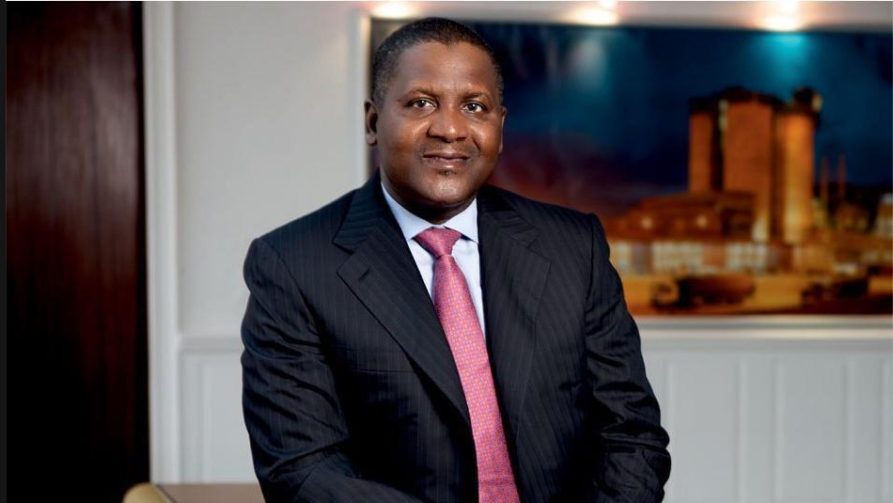
Dangote Highlights China’s Dominance in African Business
Aliko Dangote, the prominent African billionaire and industrialist, has emphasized that China’s influence in Africa has surpassed that of the United States and Europe, largely due to its aggressive provision of long-term financing and credit support for significant industrial and infrastructure projects.
During a candid discussion with Nicolai Tangen, CEO of the Norwegian Sovereign Wealth Fund, Dangote assessed the intricacies of Africa’s business relations with global superpowers.
China’s Competitive Edge in Financing
When asked to compare the level of business support from China, the U.S., and Europe, Dangote did not hesitate: “Absolutely, it’s China.” He explained that Chinese companies have established a stronghold in Africa, leveraging a robust system of state-backed financing. This structure facilitates the implementation of large-scale projects by African investors and governments.
He elaborated that Chinese suppliers frequently offer equipment backed by credit from export insurance agencies, allowing African firms to distribute their payments over several years instead of bearing the burden of upfront costs. For instance, in the cement industry, buyers can finance projects over a four to five-year period, giving Chinese companies an edge over their European counterparts.
Dangote illustrated this advantage with a hypothetical scenario involving a $500 million power plant. He noted that if an Italian firm requires full payment upfront while a Chinese company offers to finance 80% of the deal over five years, the choice is clear. “Obviously, you choose the Chinese option,” he remarked. This financing model not only maintains cash flow but also allows companies to expand their operations without being financially constrained by individual projects.
Aspiring for Rapid Expansion
Dangote underscored the importance of financing in achieving his company’s ambitious growth strategy, revealing plans to invest approximately $45 billion in expansion initiatives from 2026 to 2030. “We want to move forward with the project… we plan to spend $45 billion between 2026 and 2030,” he stated.
He emphasized that substantial industrial growth necessitates strategic leverage rather than an over-reliance on direct cash payments. He remarked, “To achieve this growth, I need leverage. I don’t wish to over-leverage, but I require a solid foundation to reach my objectives.”
U.S. Interest in African Infrastructure Grows
Despite his praise for China’s role, Dangote noted a renewed interest from the United States in financing infrastructure projects across Africa. He highlighted his recent interactions with the U.S. International Development Finance Corporation (DFC), indicating that the agency is becoming increasingly proactive in supporting infrastructure and industrial investment.
“During my recent visit to the DFC, they demonstrated a strong appetite for infrastructure projects and expressed their willingness to lend,” he shared. This shift may pave the way for enhanced U.S.-Africa business partnerships.
Furthermore, Dangote conveyed to a visiting Japanese delegation that Japan could miss out on significant investment opportunities in Africa unless it adapts its approach. He suggested that foreign partners must arrive equipped not only with proposals but also with the capacity to raise funds. “Japan is going to be left behind for a long time unless they reassess their strategy,” he warned. “When you approach Africa today, place your balance sheet on the table, as we have multiple options from other countries.”
His insights underscore the intensifying competition among global powers for influence in Africa’s industrial and infrastructure sectors, where favorable financing terms often outweigh technological advantages.
