


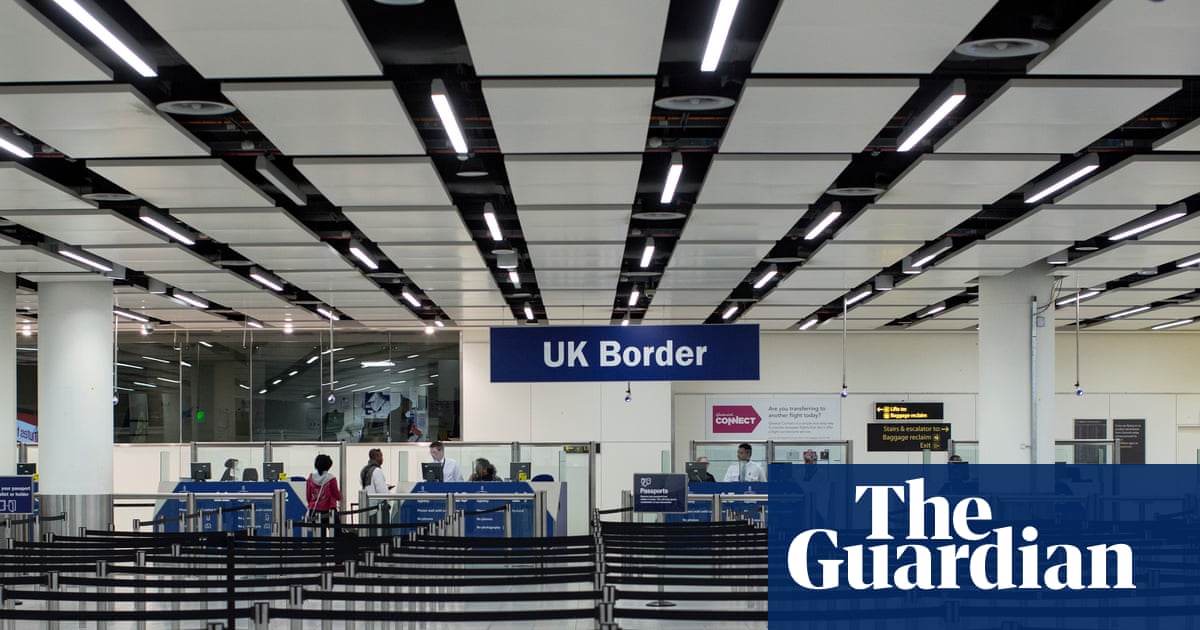
Public Perception of UK Immigration Misaligns with Reality
Recent research by British Future highlights a significant disconnect between the actual levels of net immigration in the UK and prevailing public perceptions. Despite a marked decline in net immigration, many individuals mistakenly believe that the numbers are on the rise.
Declining Net Immigration Figures
According to government statistics, net immigration fell from a peak of 944,000 in the year ending March 2023 to 204,000 in the year ending June 2025. Anticipated figures due for release on Thursday are expected to show a further decline.
Survey Reveals Skepticism on Immigration Trends
The British Future survey revealed that 67% of those with skeptical views on immigration believe that net immigration will increase in 2025. This contrasts sharply with the 37% of respondents holding more liberal views. Notably, 60% of individuals advocating for reduced immigration still perceive an ongoing increase in numbers, while only 15% think net immigration will decrease in the coming year.
Misunderstandings About Immigration Composition
The researchers discovered that the public vastly overestimates the representation of asylum seekers among immigrants, attributing 33% of immigration to this group, when the actual figure is approximately 9%. Furthermore, there is a misconception that students make up 24% of immigrants, whereas they constitute just over half of that figure.
Political Climate Influencing Immigration Discourse
Sundar Katwala, director of British Future, stated that the gap in perception impacts not only the immigration debate but also broader political narratives. He emphasized that the predominant discourse focuses on reducing immigration, which may reinforce voter beliefs of increasing numbers rather than encouraging discussions around managing the challenges and benefits immigration presents to the UK.
Rising Hostility Towards Immigrants
Analysis from The Guardian indicates that, over the past five years, both Labour and Conservative MPs have increasingly adopted a hostile stance towards immigrants, a trend not observed in the last century. The British Future report suggests that skepticism towards immigrants is pervasive across all political parties.
Calls for Policy Reforms Amid Declining Numbers
Home Secretary Shabana Mahmoud acknowledged that net migration has declined by 69% in the twelve months leading up to June 2025, marking the lowest annual figure since 2021. Despite this, she indicated that the current level of migration continues to strain local communities, prompting calls for comprehensive reforms. Meanwhile, Shadow Home Secretary Chris Philip insisted on the need for further action, while the Reform Britain party has set a goal of reducing immigration to near-zero, despite misleading claims regarding the causes of the decline.
Public Sentiment and the Broader Context
Immigration remains a pressing concern, ranking third among public issues, trailing only behind the cost of living and the NHS. Sophie Stowers, research manager at More in Common, suggests that visceral reactions generated by images of small boat arrivals and newly opened asylum hotels contribute to these misconceptions. She notes that public sentiment around immigration is complex and not solely influenced by net immigration figures.
The Ongoing Challenge of National Discourse
British Future commissioned Number Cruncher Politics for its research, surveying a national sample of 3,003 adults across the UK in late March. The report warns that if current trends persist, all political parties may be compelled to overhaul their approaches to immigration ahead of the 2029 general election. Stowers highlighted that concerns regarding migrant issues intersect with broader themes of security and global instability, complicating discussions on the immigration landscape.
