


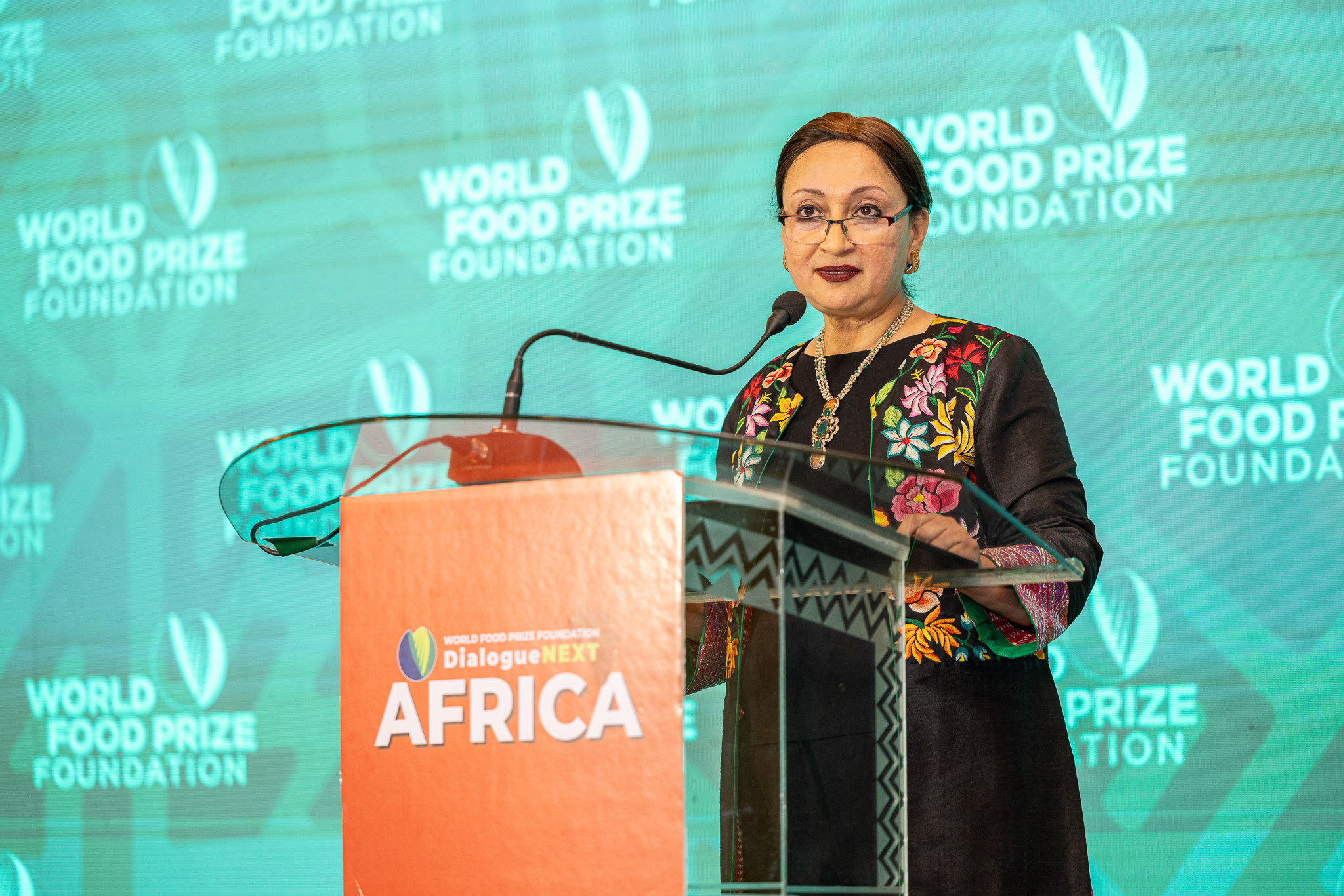
By Miriam Murigi
African Agriculture’s Potential Rests on Scaling Existing Innovations
Africa’s ambition to emerge as a global food basket hinges not on the discovery of new agricultural technologies, but on effectively disseminating current innovations to millions of farmers. This insight emerged during the World Food Prize Foundation’s DialogueNext Africa conference held in Nairobi, Kenya.
The event attracted a diverse group of stakeholders, including policymakers, scientists, farmers, agribusiness leaders, and development partners, who gathered to address the pressing challenges facing African agriculture. Dr. Akinwumi Adesina, member of the World Food Prize Foundation Advisory Council, emphasized that despite decades of research, many effective technologies remain locked within research institutions, leaving farmers to contend with persistent issues such as low yields, climate change, and food insecurity.
Dr. Adesina remarked that the continent possesses a wealth of solutions, yet desperately needs systems to scale them. Africa has made notable advancements in agriculture, including the development of drought-resistant maize, heat-tolerant wheat, disease-resistant cassava, biofortified crops, improved livestock breeds, digital advisory services, and climate-smart farming technologies. “What we need now is scale,” he urged, highlighting the importance of extending established solutions rather than seeking to invent new ones.
Creating a Platform for Agricultural Transformation
At the conference, Mashal Hussain, president of the World Food Prize Foundation, articulated the event’s aim to create a space where discussions can evolve into actionable initiatives and partnerships that drive agricultural transformation. “The World Food Prize Foundation believes in convening important conversations,” Hussain said. When stakeholders from various sectors—scientists, governments, farmers, entrepreneurs, investors, and media—come together, collaborative ideas can flourish into impactful partnerships.
DialogueNext is an evolution of the foundation’s renowned Borlaug Dialogue, traditionally hosted in Des Moines, Iowa. This time, the foundation brought the dialogue to Africa, the region that embodies the legacy of founder Dr. Norman Borlaug, a Nobel Peace Prize laureate. Previous gatherings have taken place in Mexico and India, where advancements in wheat research and crop breeding made significant contributions to global food security.
Overcoming Barriers to Technology Adoption
Dr. Adesina pointed out that while many innovations have thrived in pilot projects, their reach remains limited for smallholder farmers due to fragmented delivery systems, inadequate financing, and weak extension services. He urged governments, research institutions, and development partners to focus on establishing comprehensive systems capable of delivering technologies nationwide, moving beyond a reliance on isolated success stories.
Professor Ruth Onyango noted that despite substantial scientific progress, many farmers have never experienced technologies tailored to their needs, as communication between scientists and farmers often breaks down. “The technology exists,” she stated, emphasizing that many farmers simply aren’t aware of its existence or its potential benefits. To bridge this communication gap, she urged journalists to partner in agricultural transformation by translating scientific research into accessible narratives for farmers.
Rethinking Regulatory Frameworks
Regulatory hurdles also hinder the widespread adoption of agricultural technologies. Dr. Adesina criticized the extensive approval processes that require new crop varieties to undergo repetitive testing, even in regions with similar environmental conditions. He questioned the rationale behind such national barriers, particularly when pests and diseases cross borders freely. Dr. Adesina called for harmonized regulations that recognize shared agro-ecological zones, enabling quicker launches of successful technologies across multiple nations.
Harnessing Climate Change as an Opportunity
Climate change emerged as a significant theme during the conference. Speakers highlighted that increasing temperatures, irregular rainfall, and prolonged droughts threaten agricultural production in Africa. However, rather than framing climate change as an insurmountable challenge, participants focused on scientific innovations that can foster resilience. These innovations include drought-tolerant crops, enhanced livestock genetics, mobile phone weather forecasts, farm insurance solutions, and climate-smart farming practices.
While the discussions emphasized the critical role of science, Dr. Adesina maintained that technological advancements alone cannot reshape agriculture without strong political leadership. “The biggest challenge today is political will,” he stated, calling on African governments to prioritize agriculture through greater investment, improved extension systems, enhanced rural infrastructure, and supportive policies that stimulate private sector engagement.
Seizing the Opportunity for Global Leadership
Hussain underscored the unique opportunity Africa has to transform into a global agricultural powerhouse, especially as global food demand is expected to surge with the approaching population milestone of 10 billion. Capitalizing on this potential will require moving from small-scale pilot initiatives to large-scale technology deployments that boost productivity, enhance resilience, and elevate farmers’ incomes.
“DialogueNext aims to be a platform for measuring that progress,” Hussain concluded. Future meetings will not only discuss commitments but will also evaluate whether these efforts translate to increased access to improved technologies for farmers, bolstered agricultural investments, and strengthened partnerships crucial for accelerating Africa’s agricultural transformation.
