


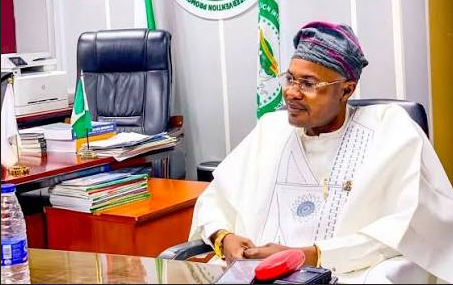
Revelations of a Fake Presidential Council Expose Oversight Weaknesses
Recent disclosures regarding the purported Presidential Council on Foreign Intervention and the Presidential Council of Economic Advisers, allegedly led by Adeniyi Adeyemi, have raised alarm among public sector analysts. They argue that these incidents highlight significant vulnerabilities in the federal government’s oversight mechanisms and the accountability of parliament.
Allegations of Misrepresentation and Budget Mismanagement
The Federal Government has accused Mr. Adeyemi of impersonating the head of a fictitious agency, despite a budget allocation approaching N1.4 billion and the deployment of personnel from the Office of the Accountant General of the Federation (OAGF). This scenario has prompted scrutiny into the financial management practices within government agencies.
Insider Complicity and Governance Challenges
In a discussion with Business Day in Abuja, former Chairman of the Nigerian Electricity Regulatory Commission, Sam Amadi, suggested that the complicity of insiders had likely facilitated these transgressions. He underlined that the budget process inherently requires collaboration among various stakeholders and officials, indicating a deeply rooted corruption problem.
Structural Flaws in the National Assembly’s Oversight
Amadi further emphasized that the situation underscores significant flaws in the National Assembly’s oversight capabilities during the budget process. He posited that the existence of connections within the government could either suggest a broader conspiracy or the alarming ease with which individuals can infiltrate government structures. This reality is troubling, especially given the scale of fiscal malpractice.
Calls for Robust Investigations and System Reforms
Amid ongoing legal proceedings, Amadi has advocated for a comprehensive overhaul of budgetary procedures and prosecutions of those implicated in wrongdoing. Meanwhile, Ayo Teriba, CEO of Economics Associates, urged citizens to permit law enforcement agencies to address the repercussions of these findings. He categorized the situation as a straightforward case of fraud, advocating for a clear demarcation between the investigation and the executive branch.
Concerns Regarding Budget Transparency and Accountability
Vahiyala Kwaga, Country Director at BudgIT, remarked that the scandal epitomizes long-held concerns regarding the lack of transparency in the federal budget process. He stressed that accountability measures are essential, asserting that ministries, departments, and agencies (MDAs) ought to properly report to their respective parent ministries. The absence of robust oversight, alongside collusion among multiple government entities, underscores systemic difficulties.
The Broader Implications for Governance and Corruption
Kwaga asserted that the legitimacy of President Tinubu’s government remains questionable, as widespread suspicion persists that senior political figures were aware of the scandal yet chose to remain silent. He cautioned that such incidents may recur if the current trajectory continues, advocating for an independent inquiry into the chief of staff’s involvement. He criticized the lack of transparency and accountability within Nigeria’s public service culture, emphasizing the need for comprehensive institutional reform.
International Monetary Fund Highlights Fiscal Discrepancies
Adding to the growing concerns, the International Monetary Fund revealed that Nigeria has left an estimated 2 percent of its GDP unaccounted for in recent official budgets, masking the true scope of the nation’s financial distress. Christian Ebuka, head of the IMF in Nigeria, indicated that incomplete reporting could disrupt fiscal and monetary policy coordination, complicating the government’s response to its budget deficit.
Denial of Wrongdoing by Adeniyi Adeyemi
Despite the escalating scrutiny, Mr. Adeniyi has consistently refuted allegations of impropriety, claiming that his appointment received approval from President Bola Tinubu’s chief of staff, Femi Gbajabiamila. This ongoing narrative raises additional questions about accountability in Nigeria’s governance and the complexities involved in ensuring that public officials are held responsible for their actions.
