


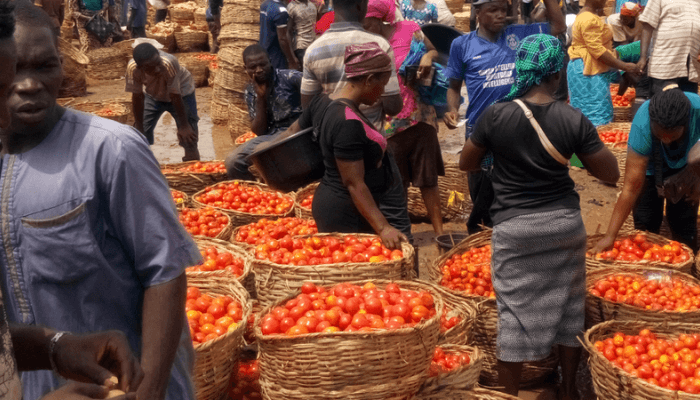
Nigerian Consumers Grapple with Escalating Tomato Prices
Nigerian consumers are facing significant challenges as tomato prices soar, contributing to increased living costs nationwide. This surge has left many households scrambling for affordable alternatives, underscoring the difficulties in accessing this staple vegetable.
Sharp Price Increases Observed in Fresh Vegetables
As of June, fresh vegetable prices have surged nearly 188 percent since the beginning of the year, according to a Business Day analysis of market data. In Lagos, a large basket of fresh tomatoes now fetches an average of N115,000, a remarkable jump from N40,000 in January.
Cost Comparison for Smaller Baskets
Smaller baskets of tomatoes are currently sold for N20,000, up from N7,000 earlier this year. The average price for a box of fresh tomatoes has also risen to N65,000, exacerbating the strain on consumer budgets.
Explosive Prices for Hot Peppers
In addition, the price of a 25kg bag of pepper, commonly known as ‘lodo,’ has skyrocketed to an average of N120,000 in Lagos, a staggering increase from N30,000 in January 2025. This trend reflects the broader inflationary pressures affecting Nigeria’s economy.
Root Causes of Rising Prices
The sharp rise in prices can be attributed to a confluence of issues: pest infestations, elevated logistics expenses, climate variations, and the inherent seasonality of agricultural production. These factors are creating a challenging environment for farmers and consumers alike.
Pest Infestation Threatens Tomato Farms
Farmers have reported severe infestations of Tuta Absoluta, a pest commonly referred to as “Tomato Ebola,” impacting major tomato-producing regions. Musa Idris, a tomato farmer in Kano, revealed that farms are experiencing alarming losses due to this pest, significantly diminishing both supply and demand and driving prices higher.
Rising Transportation Costs Complicated by Fuel Price Increases
Transportation costs have also surged, influenced by a notable rise in fuel and diesel prices—up 89 percent and 115 percent, respectively, since the start of the year. Although recent declines in global oil prices could offer some relief, they have not yet translated into reduced transportation costs. The National Bureau of Statistics has indicated that these elevated fuel prices are exacerbating food inflation, which rose to 16.69% in May, up from 16.06% in April.
Seasonal Factors Affecting Tomato Production
Moreover, tomato production is seasonal, with farmers often reducing their planting during the rainy season, which hinders crop growth. Mohammed Danladi, a farmer from Kano, explains that tomatoes thrive in dry conditions, and many local farmers limit cultivation during this period. This reduction may persist until the onset of the dry season, when production is expected to improve.
