


Data-Driven Agriculture at Blueberry Hill Farm
Loretta Phillips, managing director of Blueberry Hill Farm in South Africa’s Eastern Cape, emphasizes the importance of interpretation in data collection. “Data collection is only valuable if it can be interpreted and used,” she says, highlighting how advancements have improved the speed of response to issues such as wastewater quality, electrical conductivity (EC), and pH levels compared to a decade ago.
Optimizing Existing Infrastructure
Blueberry Hill Farm’s strategy focuses on maximizing the performance of its existing hydroponic pepper production facilities rather than hastily expanding infrastructure. The farm spans 12.5 hectares and comprises ten production plots, each with staggered planting schedules to ensure a consistent year-round supply while minimizing the risk of pest and disease outbreaks.
Daily Operations Supported by Technology
Digital data collection plays a crucial role in daily operations. The farm employs five interns each year who utilize mobile devices to record vital readings of pH, EC, and wastewater. This information is uploaded in real-time for management review during daily production meetings. Additionally, dedicated staff conduct crop scouting twice a week to enable proactive interventions for pest management.
Adapting to Agricultural Challenges
Phillips underscores the necessity of constant adaptation in greenhouse pepper production. “Every year brings new challenges,” she notes, referring to recurring issues such as whiteflies and thrips. This dynamic environment fosters continuous learning within the team. The farm prioritizes biological crop protection and relies on beneficial microorganisms, only considering chemical interventions as a last resort to meet stringent compliance requirements set by major retailers.
Resource Efficiency Through Innovation
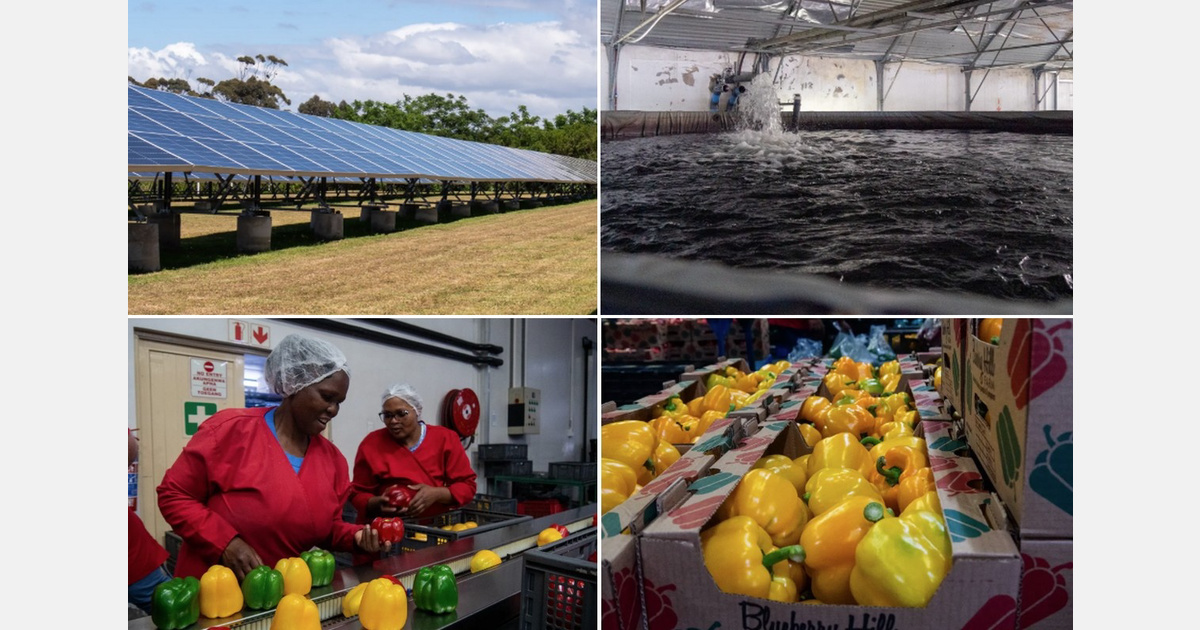
Resource efficiency has become a focal point of investment. In response to a severe drought that occurred between 2020 and 2021, Blueberry Hill Farm installed a UV treatment system to disinfect and recirculate wastewater. This not only reduced dependency on external water sources but also allowed the farm to reuse excess wastewater, saving approximately 30% in both water and fertilizer. Additionally, the introduction of solar energy has further mitigated reliance on grid electricity.
Maximizing Production Cycles
The production cycle at Blueberry Hill is carefully managed, with plants typically yielding produce for about a year before the greenhouse undergoes disinfection prior to replanting. To streamline labor efficiency during extensive harvest periods, the farm has implemented a hydraulic trolley and rail system. The use of greenhouse heat also supports home heating during winter months, a strategy that ensures consistent growth for major retailers.
Investing in Human Capital
With a workforce of 184, Blueberry Hill Farm places a strong emphasis on skills development. The farm not only runs an internship program but also encourages existing employees to pursue further studies. “We do a lot of training and have a very talented young team,” Phillips states, highlighting the commitment to professional growth within the organization.
Responding to Market Demands
While colored peppers remain the farm’s primary product, Blueberry Hill has diversified its offerings by introducing snack and tricolor peppers to meet evolving retailer demands. “I first tried the snack peppers in small sections, and they worked really well,” Phillips explains. Although the yields of these newer varieties are lower than those of traditional peppers, favorable market conditions have resulted in better prices, underscoring the importance of aligning production with consumer preferences.
For more information, contact Blueberry Hill Farm at em***@**************co.za or visit blueberryhill.co.za.
