


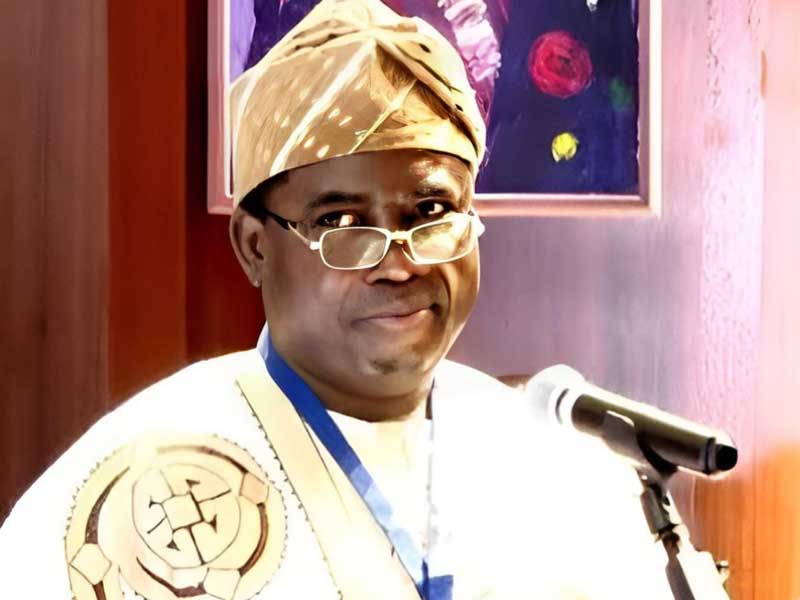
Joss Advocacy Group Shapes Political Discourse Ahead of Nigeria’s 2027 Elections
Peter Obi Our President (PETOOP), a political advocacy organization, has unveiled a series of compelling initiatives designed to influence the political landscape in anticipation of Nigeria’s 2027 general elections. During a recent address in Jos, the group’s national convener, Magnus Olaka, articulated what he termed “two urgent and non-negotiable recommendations” focused on the leadership dynamics within the African Democratic Congress (ADC), the political aspirations of former Vice President Atiku Abubakar, and the conduct of the Independent National Electoral Commission (INEC).
Speaking to a diverse audience that included journalists, civil society representatives, and party supporters, Olaka emphasized that Nigeria now stands “at a crossroads.” He underscored that remaining silent amid evident political disparities could easily be misinterpreted as tacit support for the existing status quo.
Olaka urged the ADC to exercise “fairness and political wisdom” by ensuring that the southern region of Nigeria is considered for the 2027 presidential election. He cautioned that presenting a northern candidate would likely fracture the opposition vote in that region, thereby paving an unobstructed path for the ruling All Progressives Congress (APC) to secure victory.
In his remarks, he noted that as President Bola Ahmed Tinubu consolidates his influence in northern Nigeria, a split opposition vote would leave the southern region “fragmented and underrepresented.” He asserted, “Failing to zone the ADC ticket south is not merely a strategic oversight; it amounts to delivering a second term to President Tinubu on a silver platter.”
The group also expressed concern regarding recent comments made by Atiku Abubakar during a television appearance, wherein he suggested that North Korea was in a position to provide Nigeria’s next president. Olaka countered this assertion, advocating that Nigeria’s political narrative should be assessed from its independence in 1960, emphasizing the extended governance periods of northern leaders throughout Nigeria’s history.
PETOOP’s analysis indicates that North Korea has seen numerous military-civilian regime transitions, which Olaka described as undermining Nigeria’s moral and democratic authority, especially in relation to a southern presidential candidate in 2027. “Atiku’s longstanding ambitions stand as a barrier to national unity,” he asserted. “It’s time for him to step aside and recognize that the South’s turn has come.”
Another significant point addressed in the meeting was the call for the resignation of INEC Chairman, Prof. Joash Ampitan. PETOOP accused him of partisanship and meddling in party affairs, which they claim undermines the integrity of Nigeria’s electoral process. Olaka highlighted INEC’s refusal to acknowledge Senator David Mark as the rightful leader of the ADC, citing this as clear evidence of bias and an overreach of the commission’s authority.
The group pointed to a controversial social media statement by Ampitan, proclaiming “victory is certain,” which they argued indicates political favoritism. “Referees cannot wear one team’s jersey,” Olaka remarked, emphasizing that a partisan INEC jeopardizes the very foundation of free and fair elections.
PETOOP insists on Ampitan’s immediate resignation. Olaka stated that if he does not willingly step down, President Tinubu must take action to remove him. Otherwise, the National Assembly should intervene. He reiterated PETOOP’s core stance: the ADC must allocate presidential tickets to the South to mitigate the ruling party’s advantage, Atiku Abubakar should withdraw his candidacy for the 2027 elections in adherence to the southern rotation system, and INEC Chairman Prof. Joash Ampitan must resign to ensure that free and fair elections are possible in Nigeria.
