


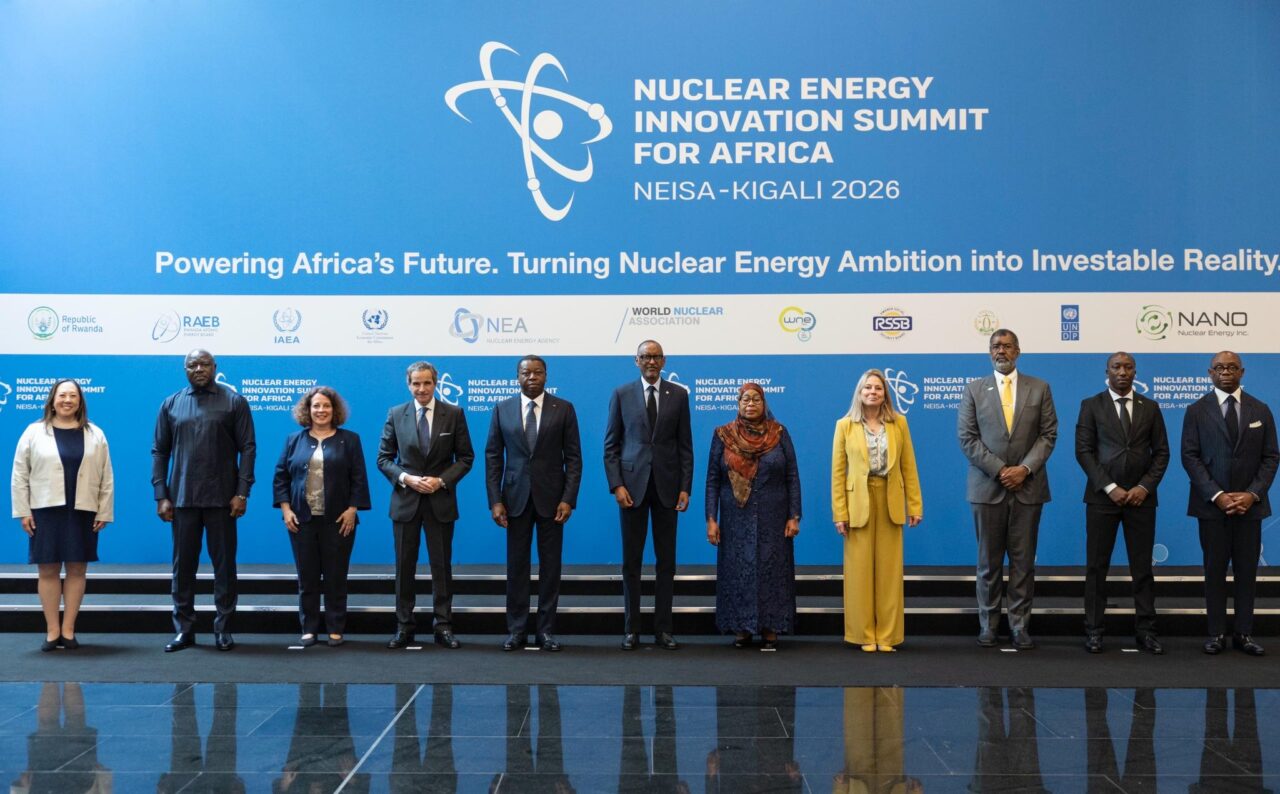
African Leaders Emphasize Nuclear Power’s Role in Economic Progress
Kigali, Rwanda — At the second African Nuclear Innovation Summit (NEISA2026) that commenced on May 19, 2026, African leaders underscored the critical importance of nuclear power for the continent’s industrial and digital evolution.
Summit Focuses on Transforming Nuclear Energy Aspirations into Reality
The summit, themed “Powering Africa’s Future: Turning Nuclear Energy Ambitions into an Investable Reality,” convened heads of state, industry leaders, and representatives from international organizations to discuss the future of energy in Africa.
Regional Leaders Advocate for Nuclear Energy as a Stable Power Source
Prominent voices at the event included Tanzania’s President Samia Suluhu Hassan, Rwanda’s President Paul Kagame, and Togo’s President Faure Nassingbe, all of whom articulated the need for nuclear energy as a dependable baseload power source.
Addressing Africa’s Energy Shortfall
With nearly 600 million people across Africa lacking reliable access to electricity, the discussion around nuclear energy becomes increasingly urgent. Summit presenter Nojiho Shabalala highlighted that the continent is actively paving the way for growth by establishing factories, data centers, hospitals, and entire cities.
Increasing Demand for Energy Amidst Technological Advancements
President Samia pointed out that Tanzania faces rising electricity demands, driven by industrial growth and the national vision of Development Vision 2050. This necessitates a diversified and long-term approach to energy solutions.
“Tanzania is seriously considering nuclear energy as part of our energy diversification strategy,” she stated, while expressing interest in cutting-edge technologies like small modular reactors (SMRs) and micro-modular reactors, which promise enhanced safety and quicker construction timelines compared to traditional nuclear plants.
Nuclear Energy’s Fit for African Conditions
At the summit, it was articulated that “nuclear energy is suitable for African conditions for the first time,” emphasizing the immediate need to make this necessary shift. Africa is rich in strategic resources required for the global energy transition, such as uranium, cobalt, lithium, and graphite, a fact noted by several speakers.
Shaping the Future of Energy in Africa
However, the summit emphasized that the challenges facing Africa extend beyond mere resource extraction; they include effective transformation and leadership in the energy arena. Lassina Zerbo, president of the Rwanda Atomic Energy Commission, stated that Africa must not only participate in the energy landscape but also help shape it. The discourse further touched on the critical energy demands from the advancing digital economy
Dr. Zerbo asserted that without energy sovereignty, true digital sovereignty is unattainable for Africa. As global tech companies ramp up investment in nuclear energy to support data-driven operations, the summit highlighted the urgency of securing reliable energy sources.
Financing Challenges and New Opportunities for Nuclear Projects
Financing remains a formidable barrier for nuclear initiatives in developing nations. However, new agreements are paving the way for progress. Rafael Mariano Grossi, Director-General of the International Atomic Energy Agency (IAEA), announced a historic agreement with the World Bank that eliminates a longstanding ban on nuclear funding from international financial institutions.
Similar arrangements have been established with the Asian Development Bank and the Latin American Development Bank, and negotiations with the African Development Bank are advancing. To tackle financing issues further, the summit unveiled the Global Coalition for Nuclear Philanthropy, spearheaded by the Rockefeller Foundation and Temasek Trust, aimed at mobilizing capital for safe and equitable nuclear energy deployment.
Investing in Human Capital for Sustainable Energy Development
The necessity for human capital development emerged as a crucial theme for realizing Africa’s nuclear objectives. Participants reiterated that engineers must precede reactor deployment, and training is essential before any advancements can be made. The IAEA is actively engaged in providing training and capacity-building programs to nurture local expertise within African countries.
Signing of an Energy Cooperation Agreement
Dramatically showcasing regional cooperation, the summit concluded with Tanzania and Rwanda signing a memorandum of understanding focused on collaborative energy initiatives. This agreement underscores the importance of joint efforts in advancing large-scale energy projects across the region.
As the summit drew to a close, attendees reaffirmed that energy is the cornerstone of sovereignty, which is pivotal for Africa’s prosperous future. Policymakers, industry leaders, and experts unanimously agreed that without the integration of nuclear power, achieving sustainable, large-scale energy solutions on the continent will remain an elusive goal.
