


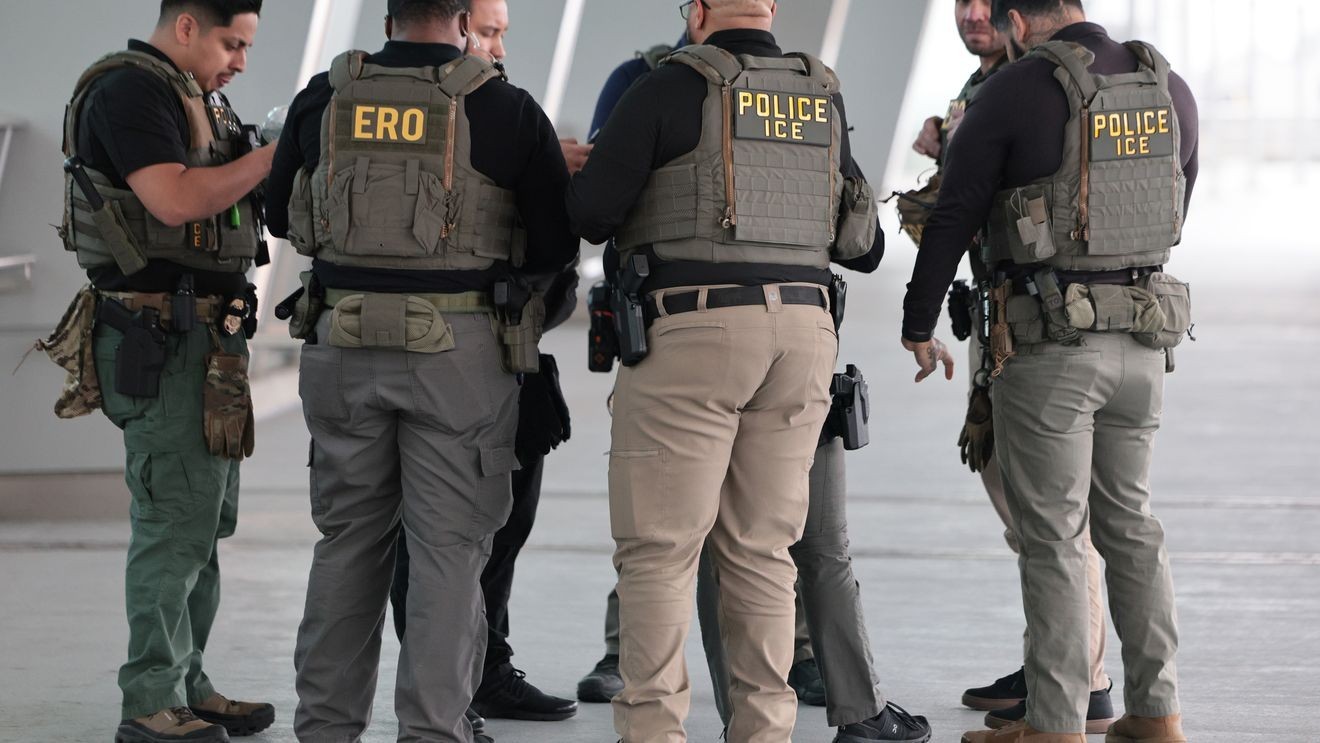
WASHINGTON (TNND) — The Senate has approved a substantial new immigration enforcement package, the Safe America Act, notable for its extensive size and ambitious reach.
Senate Republicans have backed a nearly $70 billion immigration enforcement bill aimed specifically at bolstering funding for Immigration and Customs Enforcement (ICE) and Customs and Border Protection (CBP), which oversees the U.S. Border Patrol.
Proponents argue that the measure is essential for enhancing border security, facilitating deportations, and increasing enforcement efforts. However, critics contend that the bill represents a considerable expansion of immigration enforcement without the robust discussion or oversight typically associated with annual spending legislation.
What are the specific provisions of this package? Is it, in fact, the largest immigration enforcement initiative ever passed?
Financial Allocation of the $70 Billion Package
The bill allocates funding primarily to the federal agency responsible for immigration enforcement within the Department of Homeland Security.
The legislation specifies that funds will be distributed primarily across several critical areas:
- ICE operations, including detention, transportation, and removal initiatives
- Customs and Border Protection, encompassing Border Patrol staffing and border security technology
- Employment and training for personnel involved in enforcement
- Enhancements to detention capabilities and oversight technology systems
In contrast to typical annual spending, this funding represents a multi-year commitment, extending through fiscal year 2029.
Unique Structure of Immigration Funding
Historically, immigration enforcement is funded annually through the federal budget process, with agencies like ICE and CBP receiving tens of billions of dollars yearly as part of a broader spending bill.
The conservative think tank American Action Forum highlights that what distinguishes this package is its unprecedented size and funding structure. Unlike traditional annual allocations, this bill offers nearly $70 billion upfront for immigration enforcement over several years, which means that agencies will benefit from a funding cycle that exceeds the usual annual budget timeframe.
The Significance of the Reconciliation Process
The bill was passed using the budget reconciliation process, a procedural mechanism that enables certain tax and spending legislation to advance in the Senate with a simple majority rather than the customary 60 votes required to counter a filibuster.
This procedural maneuver allowed Republicans to move forward with the legislation without needing bipartisan support, culminating in the Senate passing the bill with a vote of 52-47.
In the aftermath of the bill’s passage, our fact-checking team conducted an investigation to determine whether this legislation indeed represents the largest immigration enforcement package in history, following statements from various members of Congress who supported the bill on social media. The answer, however, hinges on how one defines “largest.”
When assessed as a single, unified enforcement package, analysts agree it likely stands as the most substantial immigration enforcement funding bill ever sanctioned. Yet, it’s important to remember that immigration enforcement has historically been financed through multiple annual appropriations and various Homeland Security appropriations that have collectively contributed to significant federal spending over time.
Thus far, the $70 billion bill signals a considerable, long-term investment in federal immigration enforcement agencies, primarily ICE and CBP. This initiative stands out, not due to the novelty of immigration enforcement itself, but rather due to the scale of funding being allocated at one time and the speed with which it has navigated through Congress under the reconciliation rules.
The bill is now set to be reviewed by the House of Representatives.
