


Updated May 2, 2026 at 8:12 AM PDT
Advocacy for Immigrants by a Resilient Voice
At 82 years old, Rita Siebenaler has emerged as a powerful advocate for immigration rights. As the granddaughter of Irish immigrants, Siebenaler has always believed that individuals seeking a better life in the United States deserve support and opportunities.
Personal Connection to Caregivers
Living in an independent facility in Northern Virginia, Siebenaler is part of the faith-based nonprofit Goodwin Living. Her late husband, a U.S. Army expert on Russia, spent his final days in the facility’s Alzheimer’s ward, where he received dedicated care from staff members hailing from Ghana, Sierra Leone, and Haiti. Siebenaler fondly recalls their compassionate support during her husband’s illness.
Understanding Temporary Protected Status
As Siebenaler observes the challenges faced by her caregivers, she highlights the importance of Temporary Protected Status (TPS), a designation for immigrants unable to return to their home countries due to unsafe conditions. While TPS allows individuals to live and work in the U.S., it does not provide a pathway to permanent residency or citizenship. With the Supreme Court deliberating on a case that affects over one million TPS holders—whose status was threatened during the Trump administration—Siebenaler is lending her voice to the cause.
The Aging Population and Caregiver Demand
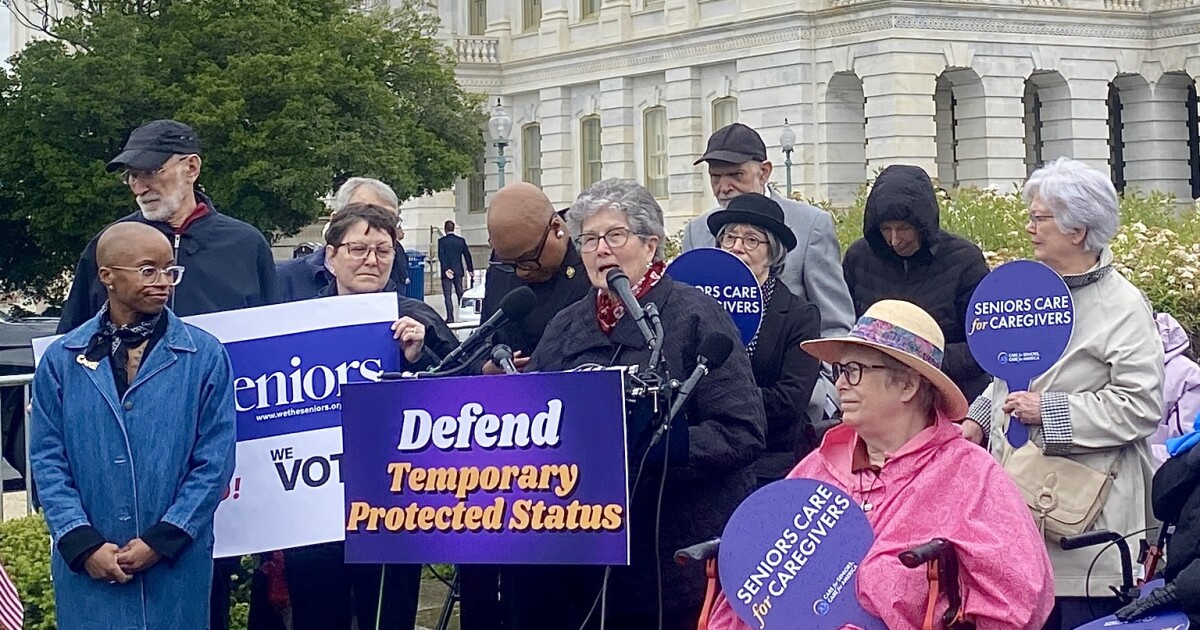
This year, outside the U.S. Capitol, Siebenaler emphasized the growing need for caregivers as the U.S. population ages rapidly. Research from the advocacy group PHI predicts that the nation will require nearly 10 million nursing care jobs over the next decade. With this overwhelming demand, Siebenaler questions the rationale behind reducing the workforce available to provide care.
Supreme Court Examines TPS Termination
In recent arguments, the Supreme Court focused on whether the Trump administration acted appropriately in terminating TPS for over 300,000 Haitians and 6,000 Syrians. Originally instituted following the catastrophic 2010 Haiti earthquake and updated in response to the ongoing Syrian civil war, TPS has been a vital lifeline for many immigrants. Advocates argue that the decision to end TPS could have devastating consequences for the workers and the families reliant on them.
Human Cost of Policy Changes
Siebenaler underscores the human impact of potentially displacing valuable caregivers, noting that more than 20,000 Haitian TPS holders work as nursing assistants and caregivers across the United States. Moreover, statistics reveal that over a quarter of home health aides, personal care aides, and nursing assistants in the country are immigrants—a figure that continues to rise. With staffing shortages already impacting facilities like Goodwin Living, Siebenaler stresses the need for stability within this workforce.
Legislative Progress and Future Hurdles
During a rally outside the Capitol, Siebenaler stood alongside Rep. Ayanna Pressley, D-Mass., who recently championed a bill to extend TPS for Haitians for an additional three years. Passing the House with a vote of 224-204, the bill now faces the challenge of navigating a Republican-held Senate that requires 60 votes for approval. As the Supreme Court decision looms, Siebenaler remains hopeful yet anxious about the future of TPS.
“I will say a prayer,” she shared, reflecting her determination to advocate for those whose lives hinge on the policies at play.
Copyright 2026 NPR
