


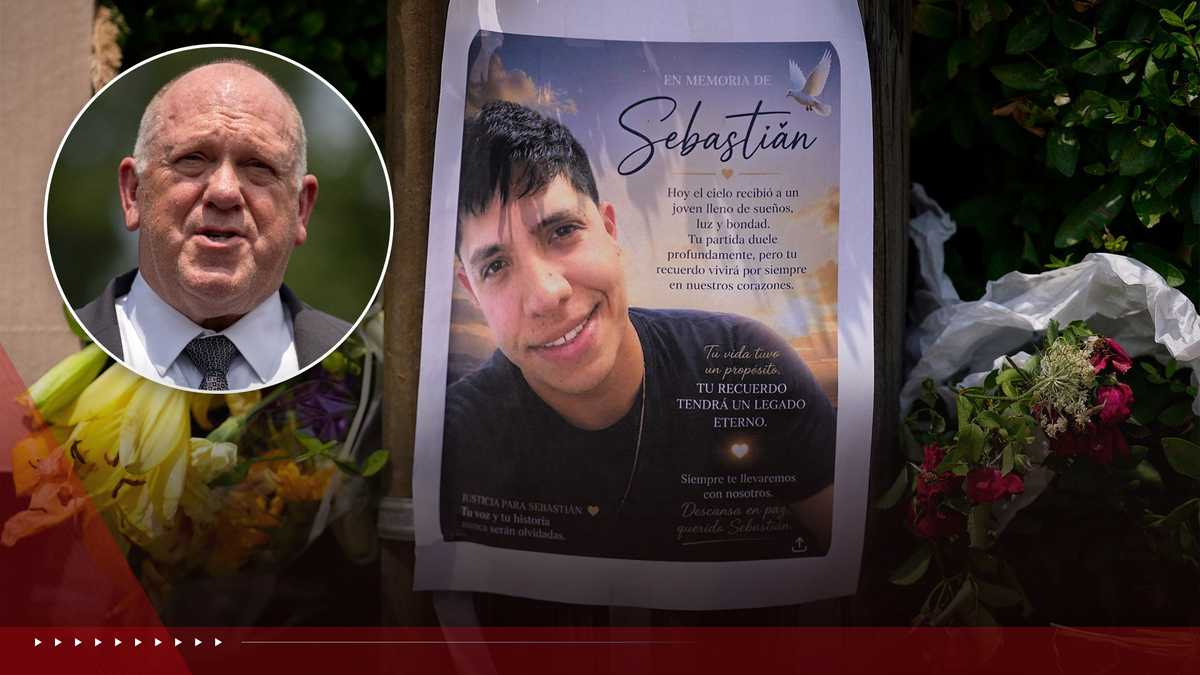
Internal Review Underway for ICE Agents Involved in Biddeford Shooting
Biddeford, Maine —
Tom Homan, President Donald Trump’s border advisor, announced on Sunday that an internal investigation is underway concerning an Immigration and Customs Enforcement (ICE) officer involved in the fatal shooting of a Colombian man in Maine. Relatives contended to The Associated Press that the victim had significant mental health challenges and a history of violent behavior.
Homan expressed his concern regarding the allegations, stating that if proven true, the officer should not have been part of the process. He indicated that the training and oversight related to this matter are currently under review by the Department of Homeland Security.
The scrutiny comes amid a troubling series of deadly incidents involving immigrants in Maine and Houston, prompting questions about the speed at which the Department of Homeland Security is hiring, training, and deploying new ICE agents as part of Trump’s stringent immigration enforcement strategy.
In response to the shooting in Maine, Homeland Security Secretary Mark Wayne Mullin temporarily suspended vehicle stops. However, President Trump quickly reversed this decision, insisting that such stops were essential to his campaign for the apprehension and removal of undocumented immigrants.
As of now, the Department of Homeland Security has not publicly commented on the ongoing internal review.
New Body-Worn Camera Requirements for ICE Officers
In light of ongoing concerns, Homan noted that significant changes have been made regarding how ICE conducts vehicle stops. Acting ICE Director David Venturella has issued a new directive mandating that officers must employ body-worn cameras during all traffic stops.
“Every vehicle stop will now include at least one body camera to capture the entire incident,” Homan stated. He emphasized that the aim is to ensure comprehensive documentation of interactions with the public.
It remains to be seen whether these measures will adequately address the concerns raised by some members of Congress regarding the tactics and training employed by the Department of Homeland Security to meet the administration’s aggressive deportation objectives.
Congressional Inquiry Raises More Questions than Answers
Members of Congress from both sides of the aisle, including Maine’s independent Senator Angus King, have voiced unease regarding ICE’s operations. During a closed session of the House Homeland Security Committee last week, Democrats sought clarity from ICE officials but left with more questions than answers.
Lawmakers learned that there are currently 56 complaints regarding excessive force by ICE agents, with only 32 resolved and one leading to disciplinary action. Deputies mentioned that no disciplinary measures had yet been implemented for the remaining cases, which are still under investigation.
Intense Scrutiny Amid Calls for Increased Deportations
The Department of Homeland Security is facing heightened scrutiny while simultaneously being pressed to escalate its deportation efforts. The Trump administration has struggled to meet its target of deporting 1 million individuals annually, despite attempts to enforce tough immigration policies that have incited violence in cities nationwide.
Since the commencement of the mass deportation campaign, at least ten individuals have lost their lives during encounters with immigration officials. Although the administration claims it focuses on the “worst of the worst” offenders, the reality has proven to be more complex, with deaths including those of American citizens.
In one incident, ICE agents fatally shot Johan Sebastian Duran Guerrero, a 25-year-old Colombian national, in his vehicle near his home in Biddeford. Meanwhile, another tragic event occurred recently in Houston, where Lorenzo Salgado Araujo was pursued and shot while inside his work van.
This past year has seen other distressing incidents, including the deaths of Americans Renee Good and Alex Preti during protests against ICE actions in Minneapolis, further escalating national outrage.
As lawmakers continue to grapple with the implications of these incidents, earlier efforts to restrict funding for the Department of Homeland Security and demands for significant reforms have often met with resistance, complicating any attempts to enforce policy changes within the organization.
