


BUA Cement Identifies Factors Behind Rising Cement Prices in Nigeria
BUA Cement has attributed the escalating prices of cement in Nigeria to increased energy, transportation, and currency-related costs. Despite recent improvements in exchange rate stability, the cement industry continues to face substantial production cost pressures.
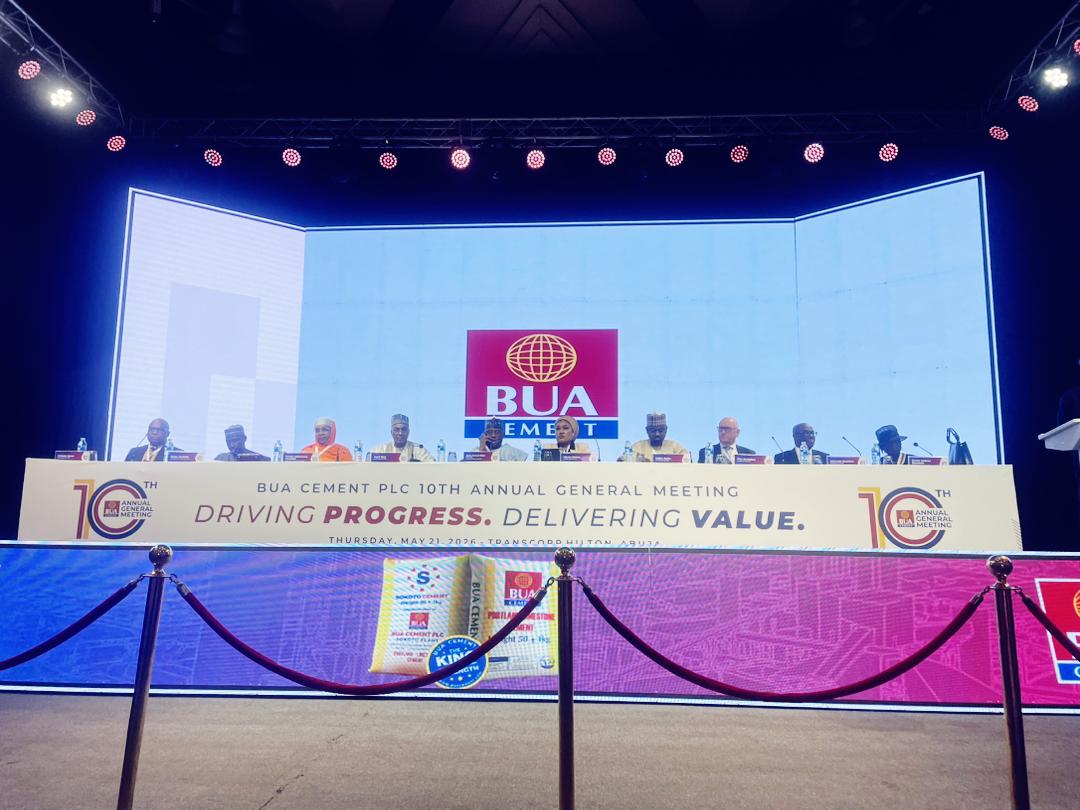
During the company’s 10th annual general meeting in Abuja on Thursday, BUA Cement Chairman Abdul Samad Rabiu remarked that recent economic reforms, particularly in the foreign exchange market, have started to enhance manufacturers’ strategic planning.
Rabiu emphasized that the cement industry is heavily reliant on imported spare parts, equipment, and energy inputs, rendering it vulnerable to fluctuations in exchange rates.
While acknowledging that the weak naira has posed significant challenges for the manufacturing sector, Rabiu noted that recent stabilization in the foreign exchange market has alleviated some of the pressures, particularly regarding transportation and logistics costs.
He expressed optimism, stating that the situation is gradually improving due to increased market stability. “Prices are coming down, especially transportation costs,” he said.
Rabiu further noted that although the reforms initially presented challenges, they have ultimately facilitated improved access to foreign currency for manufacturers and fostered a more transparent market.
He pointed out that the predictability of exchange rates has enabled businesses to plan effectively for the months ahead.
BUA remains committed to reducing operating costs by investing in energy infrastructure, promoting local production, and enhancing logistics efficiency. Rabiu highlighted the company’s long-term strategy, which aligns with Nigeria’s industrialization goals through expansion and improved operational efficiency. He reported a substantial increase in revenue, rising from N876.5 billion in 2024 to N1.2 trillion in 2025, alongside a pre-tax profit surge from N99.6 billion to N465.3 billion.
Profit after tax also saw a remarkable increase, climbing from N73.9 billion in the prior year to N356 billion. As a result, shareholders approved a final dividend of N10 per common share for the financial year 2025, amounting to a total dividend distribution of N338.64 billion.
Impact of Input Costs on Cement Pricing
Director and CEO Yusuf Binji elaborated on BUA’s pricing structure during a press conference following the meeting, stating that energy accounts for approximately 60% of cement production costs.

He explained that cement pricing is closely linked to input costs, noting that the price of natural gas at one of the company’s plants in Edo State has surged significantly following the naira’s devaluation.
Binji observed that monthly expenses for natural gas escalated from approximately N4 billion to an astonishing N16 billion, creating substantial difficulties in managing these costs.
He also attributed rising diesel prices to recent geopolitical tensions in the Middle East, stressing that these increases have a profound impact on transportation and distribution expenses. Diesel prices at BUA’s facilities rose from about N930 per liter in March to nearly N1,850 in just two months.
“Given that we must rely on our own diesel-powered trucks for delivering cement, transportation costs make up a significant portion of the total price,” he added.
In response to circulating claims regarding cement prices ranging from N13,000 to N15,000 per bag, Binji clarified that prices vary regionally, with the northern region recently seeing prices at N11,100 per bag.
Despite the economic challenges, Binji assured consumers that BUA will continue to adapt its pricing in response to current economic conditions and fluctuating input costs.
“The economic landscape in Nigeria is improving regarding input costs, setting the stage for us to provide fair prices,” he affirmed.
He also highlighted the company’s ongoing expansion projects, which aim to enhance production capacity. BUA’s new production line in Ososo, Edo State, is nearing completion, with plans for an additional line in Sokoto State, projected to increase the company’s annual production capacity by around 6 million tonnes by 2027.
Moreover, BUA has invested significantly in bulk cement distribution, including acquiring 500 dedicated trucks to facilitate major infrastructure projects throughout Nigeria.
Focus on Domestic Supply Amid Rising Demand
In response to escalating domestic demand, the company has temporarily scaled back exports to prioritize local supply. Binji reiterated BUA’s commitment to expanding operations despite prevailing security challenges and broader economic pressures.
“Our primary objective is to deliver affordable cement to every corner of Nigeria, and we remain steadfast in that mission,” he concluded.
