


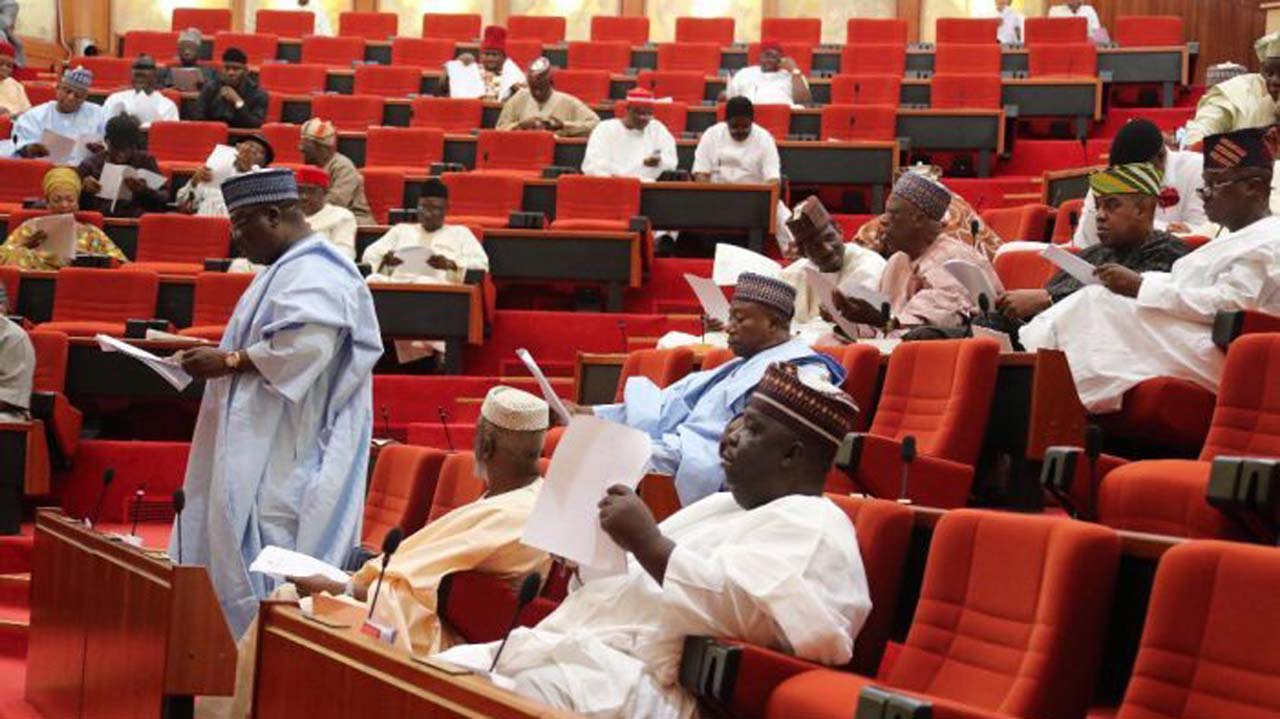
Senators Revive Controversial Hate Speech Legislation
A contentious hate speech bill is once again making headlines as Nigerian senators push for its revival. Initially proposed by Information Minister Lai Mohammed in 2017, the bill gained traction in March 2018 but was swiftly dismissed by then-Senate President Bukola Saraki. Aware of the public backlash, Saraki recognized that the Senate would struggle to navigate the overwhelming sentiment against such measures, understanding that Nigerians would not easily surrender their fundamental freedoms.
Details of the Proposed Law
The proposed legislation, titled the “National Commission Against Hate Speech,” outlines severe penalties for individuals engaging in what is classified as hate speech. The bill stipulates that any individual who distributes written or visual content deemed abusive or threatening with the intent to incite ethnic hatred could face life imprisonment or, in cases resulting in loss of life, the death penalty by hanging.
Penalties and Provisions
Additionally, the bill includes provisions for reduced penalties, indicating that anyone convicted of ethnic harassment could face a minimum prison sentence of five years and/or a fine of not less than ₦10 million. The Deputy Leader of the Senate, Abdullahi Aliu Sabi, who introduced the legislation, stated that its goal is to eradicate all forms of hate speech, advocating for the protection of individuals and ethnic groups.
Sweeping Powers Under the Bill
The bill also seeks to address harassment on ethnic grounds, declaring that any conduct violating another’s dignity or creating a hostile environment based on ethnicity would constitute an offense. Such sweeping powers raise concerns about the implications for personal freedoms and expression, highlighting a history of politicians being intolerant of dissent.
A Historical Context of Censorship
Nigerian politicians have often responded to public discourse with increased restrictions on freedoms, particularly the right to free speech. This legislative push bears similarities to past instances where governments have attempted to control narratives, reminiscent of the Newspaper Reform Act of 1964 enacted during the Balewa administration, which targeted journalists attempting to report the truth. Such historical patterns indicate a troubling trend of lawmakers sidelining public debate on critical issues.
Potential Conflicts with Constitutional Rights
Critics argue that the bill conflicts with Nigeria’s constitution, which guarantees freedom of expression. The haste with which senators are attempting to pass the legislation without extensive public discourse raises alarms among civil rights advocates. Lawyers and media professionals are being called upon to defend the constitutional rights that could be jeopardized by this bill, reinforcing the notion that media accountability is essential in a functioning democracy.
The Role of Media in Upholding Freedom
The media serves a crucial role in holding the government accountable, a function that senators appear to undermine with this proposed legislation. Freedom of speech transcends mere citizenship rights; it is an inalienable human right. The current environment necessitates vigilance against attempts to curtail journalistic freedoms, especially in a country facing numerous socioeconomic challenges. Critics assert that instead of prioritizing this divisive bill, lawmakers should focus on addressing pressing national issues that impact the lives of ordinary citizens.
