


Chicago’s U.S. Attorney’s Office Faces Crisis Amid Immigration Enforcement Backlash
The U.S. Attorney’s Office in Chicago, renowned for its legacy of high-profile prosecutions from Al Capone to former Illinois Governor Rod R. Blagojevich, is currently under intense scrutiny. A recent immigration enforcement operation has sparked a crisis that has shaken the office to its core.
In the wake of last fall’s immigration sweep, the office has pursued a troubling number of cases against protesters and immigrants accused of assaulting federal officers. This has resulted in a mass exodus of seasoned prosecutors, many of whom expressed feeling undue pressure to bring charges, according to interviews with former staff.
Over the past year, all seven section heads of the criminal division in the Chicago bureau have either retired or resigned, along with numerous successors and lieutenants. Such turnover is indicative of deeper issues within the office.
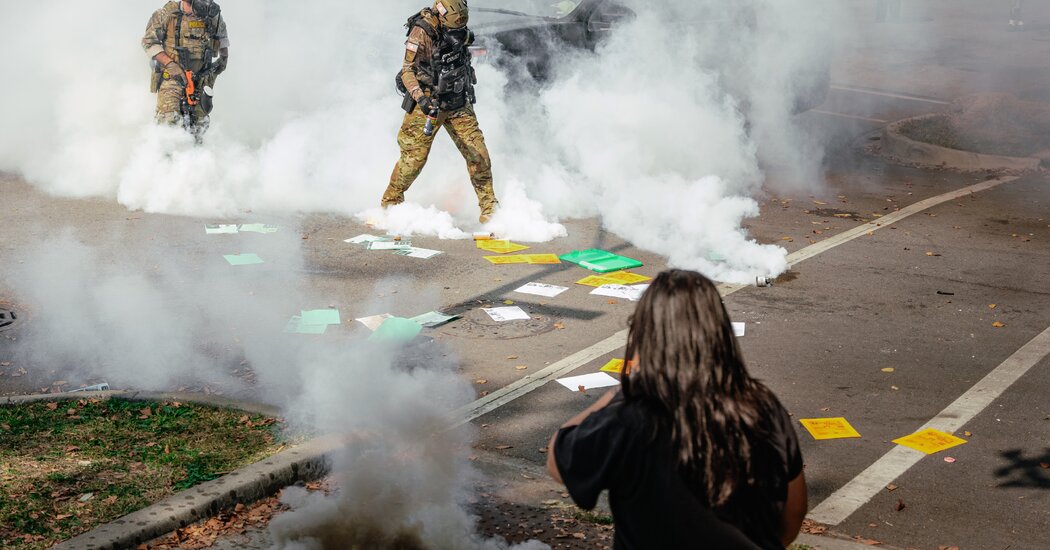
Recently, more than 100 former federal prosecutors signed a letter criticizing Andrew S. Boutros, the U.S. attorney for the Northern District of Illinois. They expressed that the recent actions of the leadership have tarnished the office’s reputation significantly. Under Boutros’s direction, the office has filed numerous federal assault charges stemming from protests against the controversial Operation Midway Blitz immigration sweep, forcing staff to redeploy from various divisions to cope with the case load.
The New York Times reported that Boutros’s office pursued 62 assault cases under the federal statute, 18 U.S.C. 111, with a staggering 98% ending in dismissal or being thrown out. Only one case resulted in a guilty plea, contrasting sharply with the Justice Department’s historical win rate of over 90% in criminal prosecutions.
These failed prosecutions from the Chicago office account for over 25% of the total 213 similar cases nationwide that federal prosecutors have abandoned or lost since the Trump administration intensified its crackdown on illegal immigration last year.
Justice Department spokesperson Win Hornbuckle defended the agency’s actions, emphasizing the protection of federal employees “to the fullest extent of the law,” while also noting that prosecutors must inform the court of any identified “mitigating factors.” Criticism has also been directed at Boutros from various quarters, including a notable instance where he pressured a grand jury regarding the charges against protesters, prompting a judge to admonish the office for shattering public trust.
Political Pressure and Discontent Within the Office
Debate surrounding the office’s direction has intensified, with two Illinois senators publicly calling for Boutros’s resignation. Yet, Assistant Attorney General Todd Blanche commended Boutros for his commitment to advancing the Trump administration’s objectives in Chicago and northern Illinois.
Boutros has attributed the turmoil in his office to a combination of early retirements, hiring freezes, and management issues under the Biden administration, asserting that efforts are underway to reform and improve the organizational structure. The U.S. Attorney’s Office in Chicago is not alone in facing challenges related to immigration enforcement; similar turmoil has arisen in other regions, as evidenced by significant resignations in the Minneapolis office.
The implications of these staffing issues are profound; the Chicago office, with its esteemed history—including significant prosecutions against terrorism and corruption—faces an uphill battle. Barry Jonas, a veteran prosecutor, noted that much essential work done in the past never gained public recognition, further highlighting the contrasting environment today.
In a concerted effort to redefine the agency’s mission, Boutros insists that national security remains a top priority, underlining ongoing transformative changes within the office. However, morale remains low as veterans reflect on workplace dynamics, increasingly viewing recent actions as politically driven rather than anchored in legal integrity.
Moving forward, the Chicago U.S. Attorney’s Office must navigate a landscape fraught with scrutiny and discontent among its prosecutors, while reestablishing its credibility in federal law enforcement amidst a contentious political backdrop.
