


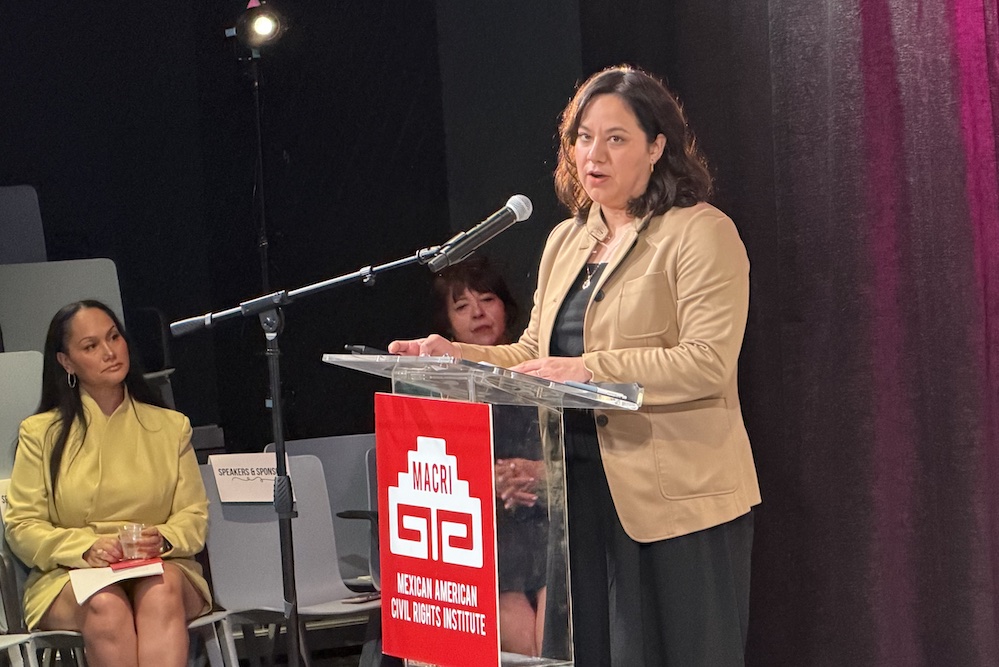
Speakers Call for Action at San Antonio Civil Rights Symposium
This weekend’s 2026 Symposium at the Mexican American Civil Rights Institute in San Antonio featured passionate appeals from speakers urging the audience to confront the Trump administration’s immigration policies. The event took place at the Mar & Carlos Alvarez Theater and gathered scholars, activists, artists, and policymakers to explore the current landscape of civil liberties and the evolving identity of Mexican Americans.
Activist Emphasizes Historical Roots in Civil Rights Work
Opening the program, Carmen Perez-Jordan, a prominent human rights activist and co-chair of the 2017 Women’s March, highlighted the importance of understanding ancestral roots in civil rights advocacy. She asserted that true progress in civil rights must begin with a recognition of the community’s history.
Perez-Jordan Challenges Outsider Perception of Mexican Americans
In her address, Perez-Jordan emphasized that Mexican Americans—who represent over 11% of the U.S. population—should not be viewed as outsiders. “We were here before there were borders,” she stated, stressing that their stories have long been politicized and distorted.
Personal Loss Catalyzes Activism
Perez-Jordan also shared her personal journey into activism, recounting the deep impact of losing her sister at a young age. She underscored the peril of silence, urging attendees to speak out without waiting for external validation. “This country is still unfinished,” she declared, framing each generation’s duty to define the essence of freedom.
Need for Interdependence in Advocacy
Reflecting on her experiences from the Women’s March, Perez-Jordan noted the recurring theme of interdependence. She argued that true independence cannot exist without mutual support, urging the audience to recognize that the fight for one form of freedom is tied to the fight for all freedoms.
Rochelle Garza Addresses Broader Patterns of Exclusion
Following Perez-Jordan’s dynamic presentation, Rochelle Garza, chair of the U.S. Commission on Civil Rights and president of the Texas Civil Rights Project, connected her early experiences with discrimination faced by her brother to the broader challenges confronting Mexican Americans today. “Civil rights are not abstract,” she emphasized, reflecting on the ongoing struggle for dignity and legal protection for marginalized communities.
Truth-Telling as a Form of Resistance
Garza’s keynote centered on the revolutionary power of truth-telling in a climate of widespread misinformation. In her role on the Civil Rights Commission, she moderates forums where communities document their experiences with racial profiling and immigration enforcement. She warned of the pervasive surveillance tactics employed by authorities, concluding that speaking truthfully in these complicated times is not just an act of resistance but a pathway toward liberation.
