


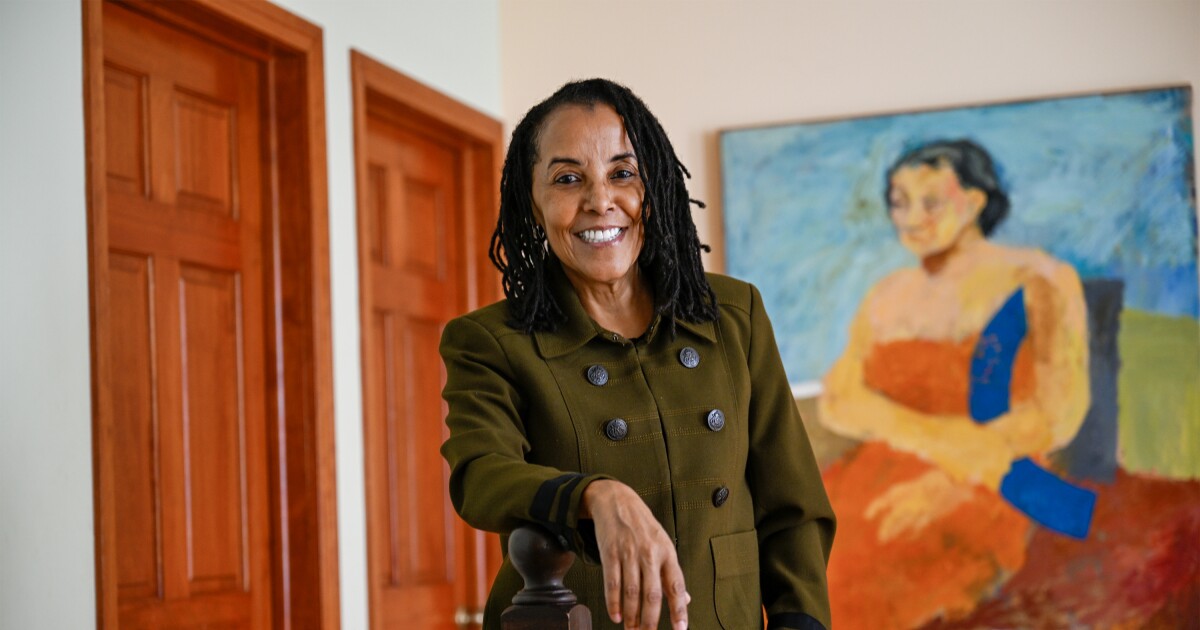
Kika Matos Balances a Busy Life of Advocacy and Family
Kika Matos, widely recognized for her efforts in immigration and racial justice, begins each day in New Haven, Connecticut, with a ritual that resonates deeply with many in the Latino community: sipping cafecito and engaging in what she affectionately refers to as “light bocinci”—essentially good-natured gossip. “I love hearing updates like ‘So-and-so got married’ or ‘So-and-so went to college.’ It’s about sharing interesting stories, not just gossip,” she explains.
A Proud Mother and Acclaimed Advocate
When the conversation turns to personal milestones, Matos beams with pride about her son, who is currently studying at Cornell University, her own alma mater. Notably, Matos herself has been recognized as one of Time magazine’s 100 Most Influential People of 2026 for her longstanding commitment to racial justice, a journey that began during her childhood as a Black Boricua.
Understanding Identity Through Personal Experience
Born in Cerro Gordo, Puerto Rico, as the youngest of four, Matos grew up during a time when “color-blind” racism was prevalent. Despite Puerto Rican culture’s portrayal of a unified racial identity, she learned that lived experiences can differ significantly based on race. “As a child, I was affectionately called ‘La Negrita,’ but I also heard derogatory remarks about Black people,” Matos recalls, noting societal preferences for whiteness across various domains, from media representation to politics.
The Journey Towards Advocacy
At just nine years old, her family relocated due to her father’s environmental work, leading her to spend her formative years in Trinidad and Tobago and later in Fiji. It wasn’t until Matos attended university in New Zealand that she became genuinely immersed in social justice, grappling with the harsh realities of a predominantly white society during instances of global protests and crises.
Finding Purpose in Advocacy
Upon returning to the United States for law school, Matos faced stark contrasts. “Arriving in New York at 21, amid a snowstorm, was such a shock,” she laughs, reflecting on her early days in a new environment. Her professional journey began with Amnesty International, where she encountered the death penalty, an experience that solidified her commitment to fighting racial injustices.
Building a Legacy in Connecticut
As a federal defense attorney for those on death row, Matos forged a path that led her to Connecticut, where she became actively involved with the local Latino nonprofit, Junta for Progressive Action. Later appointed deputy mayor, she played a crucial role in implementing the country’s first municipal ID card—a significant step toward inclusivity.
Responding to the Needs of Immigrants
Currently, as the director of the National Immigration Law Center, she is tackling the increasing ICE activities affecting Connecticut immigrants. Matos’s advocacy surged following the high-profile detention of a New Haven mother, Nancy Martinez, who was taken by ICE while preparing her children for school. Matos stood with the children, highlighting the role of everyday leaders like them in the fight for justice. “Their experiences often catalyze their strength and leadership,” she asserts.
Encouraging Others to Follow Their Passions
Despite the challenges her role presents, Matos embraces her work wholeheartedly, urging other Latinos to pursue their passions beyond societal expectations. “Life is fleeting. You can’t start over, so do what truly resonates with you,” she emphasizes, even if the journey is often fraught with emotional challenges. This narrative is part of “Poderosas: Portraits of Purpose,” a series centered on celebrating Latinx leaders within Connecticut communities.
