


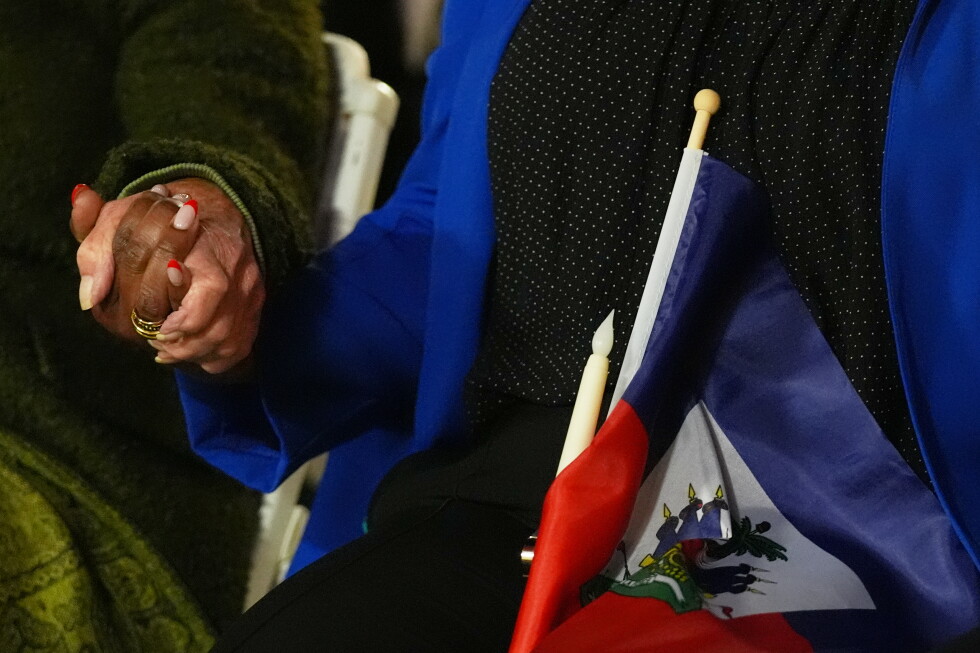
Uncertainty for Haitian Immigrants After Supreme Court Ruling
MIAMI (AP) — A 35-year-old nurse from Kentucky has taken the precaution of drafting a will, naming legal guardians for her four children and transferring her assets into their names. The single mother feels compelled to prepare for potential deportation back to Haiti, the country she fled at the age of nine.
Following a recent Supreme Court decision, anxiety has rippled through immigrant communities in the United States, particularly among those affected by the Trump administration’s efforts to terminate legal protections for individuals escaping violence and natural disasters in Haiti and Syria. Hundreds of thousands now face the possibility of deportation.
Living with a constant sense of dread is a daily reality for many. One nurse, who requested anonymity out of fear of being deported, conveyed her emotional turmoil: “I’ve prepared for what feels like a funeral, constantly worried I might not return safely if I leave the country.”
This nurse is among approximately 350,000 Haitians granted Temporary Protected Status (TPS), many of whom have resided and contributed to the U.S. for decades, with some having U.S.-born children. The Supreme Court ruling, effective July 27, will impact about 6,000 Syrians as well as potentially revoking protections for 1.3 million individuals from 17 countries.
Temporary Protected Status: A Lifeline for Many
Temporary Protected Status was established in 1990 to avert forced deportations to countries deemed unsafe due to disasters, civil unrest, or instability. While TPS allows individuals to work legally in the U.S., it does not lead to citizenship. The status can be renewed for up to 18 months should the Secretary of Homeland Security affirm that conditions in the home country remain hazardous.
The Biden administration has expanded TPS eligibility nearly twofold, contrasting sharply with the approach of the Trump administration, which sought to end these protections by arguing that the countries in question had stabilized. Critics, however, claim that the Biden administration’s expansion has not involved sufficient vetting.
As TPS beneficiaries navigate this precarious situation, their futures are increasingly fraught with uncertainty, especially in light of the recent Supreme Court ruling which threatens their ability to live and work legally in the U.S.
Continued Challenges for the Haitian Community
The Haitian community in Springfield, Ohio, has been under scrutiny before. During the 2024 campaign, President Trump disseminated unfounded rumors claiming that Haitians were engaging in bizarre, violent acts, such as eating pets. These statements lack any basis in reality, yet they have intensified pressure on the community, according to Biles Dorsainville, the executive director of the Haitian Community Help and Support Center.
The recent Supreme Court decision has deepened feelings of panic and confusion within the community. Dorsainville noted that many individuals are unsure whether to withdraw their money from banks or if their children can continue attending school. For many, the fear extends to the possibility of being separated from their U.S.-citizen children if deported.
Dorsainville emphasized the importance of reassuring the community, urging individuals not to succumb to panic or make hasty decisions that could jeopardize their safety and that of their children.
Impact on Care Workers and Nursing Sector
A Haitian mother living in Florida woke up to troubling news on Thursday morning. After a decade of living in the U.S., she cannot shake off the anxiety that overwhelms her. “For a moment, I felt as if I couldn’t breathe. I questioned the reality of it all,” she shared, requesting anonymity out of concern for her safety.
She immigrated to the U.S. in 1995 and graduated high school but could not pursue higher education due to her lack of legal status. In 2010, however, TPS provided her and other Haitians refuge after a catastrophic earthquake, and the U.S. has consistently extended this status in light of ongoing gang violence that continues to destabilize Haiti.
Now poised to start a new job in just two weeks, the possibility of deportation looms over her, casting doubt on her right to work. Many TPS holders are integral to the nation’s care workforce, particularly in nursing homes and disability facilities, and their potential removal could be catastrophic for an already strained industry.
A nurse in Kentucky expressed her focus on her duties caring for individuals with disabilities while grappling with the thought of being separated from her children. Imagining being sent back to a country she has not lived in for over 20 years evokes fears of gang violence and societal instability. “I don’t want to go there; I am very Americanized now,” she said. “It feels like a horror movie.”
As the plight of TPS holders unfolds, the implications of their uncertain status resonate not only within their families but across the broader care system in the United States.
