


Candidates Address Key Issues at Yakima Forum
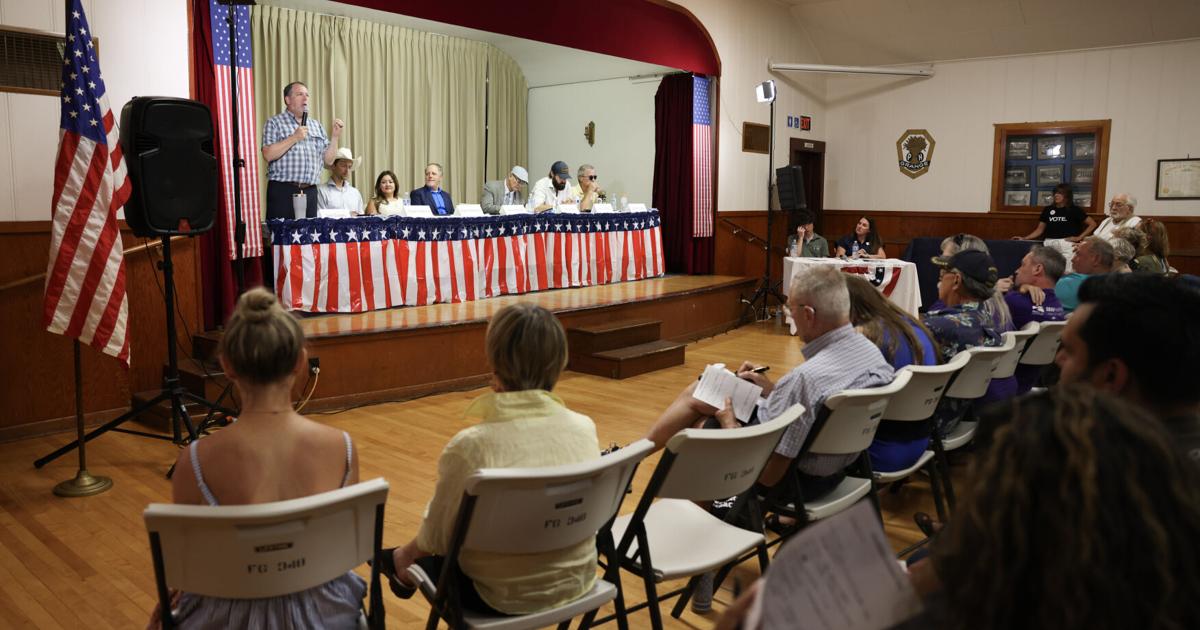
Seven of the eleven candidates vying for the 4th Congressional District in Washington State participated in a forum held in Yakima on Tuesday evening. The event primarily focused on pressing issues, including agriculture, health care, and immigration policy.
As the August 4 primary approaches, Central Washington voters will have the opportunity to narrow down the candidate list. Washington employs a top-two primary election system, allowing the two candidates with the highest votes, irrespective of their party affiliation, to advance to the general election in November. This election marks a significant turning point, as it’s the first time in a decade that voters are contending for an open seat, heightening competition within the district.
Republican Dan Newhouse, who has represented the district since 2014, announced he would not seek re-election, paving the way for new contenders. The conservative district extends from the Oregon border to the Canadian border and encompasses parts of Douglas, Okanogan, Grant, Yakima, Benton, Klickitat, Adams, and Franklin counties.
At the forum, candidates included Democrat John Duresky, independent Fabian Valencia, and Republicans Elpidia Saavedra, Jerrod Sessler, John Hughes, and Jacek Kobieza, who identifies as unaffiliated. Notably absent were Yakima County Commissioner Amanda McKinney and state Sen. Matt Behnke, both Republicans, due to scheduling conflicts, along with candidates Ken Vaz and Zach Rossi.
The event was organized by Fruitvale Grange, Yakima Indivisible, the Yakima Chapter of the Washington Youth Alliance, and the League of Women Voters of Yakima County. Preliminary ballots are expected to be mailed to voters’ homes next week.
Addressing Water Issues in Central Washington
This year has seen Washington State grappling with record low snowfall, and the Yakima Basin is facing its fourth consecutive year of drought, raising grave concerns for the agriculture-dependent economy. Candidates expressed differing views on the causes of these water supply challenges, yet unanimously agreed on the urgency for action. Duresky, Valencia, and Poulet attributed the water crisis partly to climate change.
Duresky stated, “Climate change is real. Addressing it requires a collective effort, and we must invest in renewable energy solutions such as wind, solar, and small modular nuclear power.” Valencia emphasized the importance of expanding water storage capacity, advocating for infrastructure improvements despite disagreements on climate change attribution. Poulet echoed the call for investments in renewable energy, suggesting infrastructure upgrades to reduce water loss, like converting open canals to piped systems covered with solar panels.
Conversely, Sessler dismissed much of the climate change narrative, referencing natural temperature fluctuations and focusing on securing funding for the Columbia Basin Project and expanded water storage. He stressed the need to better utilize regional financial resources, as only around 60% of returned funds are allocated to local projects.
Meanwhile, Kobieza supported Sessler’s cyclical view of climate change and advocated for water conservation measures. Saavedra, while less definitive about solutions, expressed a commitment to consulting experts and farmers to establish actionable plans for protecting water resources.
Health Care Perspectives
The candidates presented a wide array of ideas on tackling the health care and insurance coverage issues disproportionately affecting the 4th District. Following the passage of President Trump’s One Big Beautiful Bill Act, which could cut around $1 trillion from Medicaid over ten years, Washington officials estimate that as many as 250,000 residents may lose coverage. By 2023, nearly half of Yakima County’s population relied on Apple Health, the state’s Medicaid program.
Valencia highlighted the need for innovation to address rising drug costs and monocultures in the pharmaceutical industry, urging collaborative dialogue to improve the health care landscape. Saavedra, a dental hygienist, suggested a comprehensive overhaul of the system prioritizing seniors, veterans, and children, adding that able-bodied individuals should seek employment instead of relying on government assistance. Hughes, who specializes in medical therapy management, shared concerns for working-class individuals who cannot access care, calling for a more inclusive health care system.
Other candidates, such as Cobieza and Poulet, criticized the inefficiencies ingrained in the current health care model, advocating for transparency in hospital pricing and a transition toward universal health care. Duresky echoed this sentiment, asserting that the time for universal health care has arrived.
Immigration Policy and Agricultural Workers
Immigration emerged as a contentious topic at the forum, where most candidates agreed on the necessity for secure borders but also emphasized the importance of providing undocumented agricultural workers with pathways to legal status. Valencia and Poulet voiced concerns about perceived overreach by Immigration and Customs Enforcement, calling for a return to focusing on serious criminal activity rather than targeting hardworking immigrants.
During rapid-fire polling on various issues, all candidates except Kobieza supported providing legal status for undocumented workers. Kobieza, who immigrated legally from Poland, argued for the enforcement of existing laws instead of creating new pathways. Despite the differing views, the candidates unified on crucial topics such as prohibiting members of Congress from making individual stock trades while in office, receiving enthusiastic applause from the audience.
