


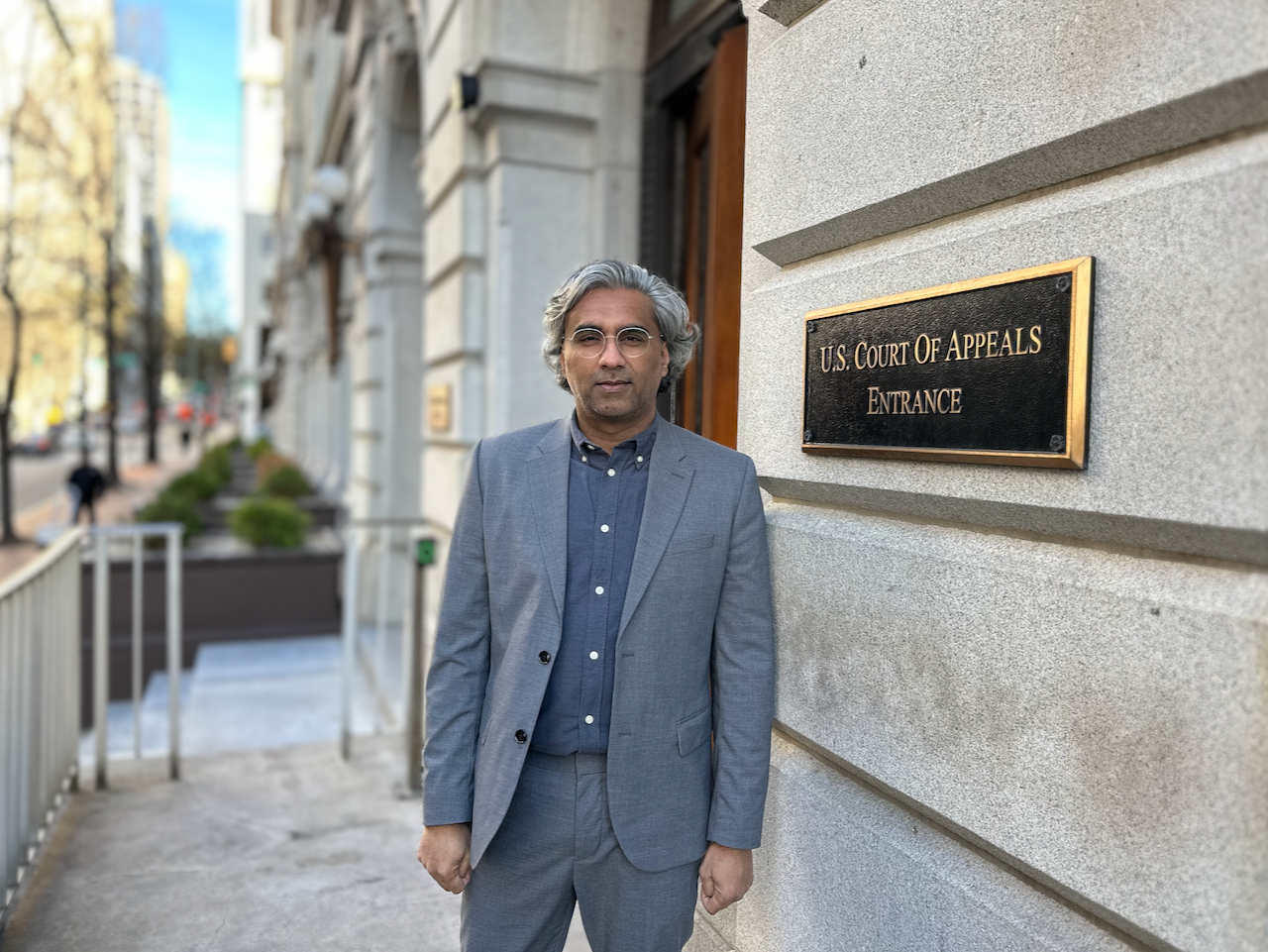
Court Rules Against Georgetown University’s Actions in Immigration Case
A federal appeals court delivered a significant ruling on July 23, finding that Georgetown University acted unlawfully in a case involving postdoctoral researcher Badal Khan Suri. The court rejected the Trump administration’s attempts to detain him again and affirmed his right to challenge his detention in federal court.
The 2-1 decision upheld a Federal District Court’s May 2025 ruling, which allowed Khan Suri to remain free while his immigration matter is pending. The justices emphasized the constitutional right of noncitizens to contest their detention in federal courts, as opposed to solely within immigration courts.
Judge DeAndrea Benjamin, writing for the majority on the Virginia-based 4th Circuit Court of Appeals, indicated that the district court is indeed equipped to hear constitutional claims related to immigration. She asserted that there is “no provision in the immigration law” that could diminish the district court’s jurisdiction in such matters.
The ruling also highlighted that the government violated the First Amendment by targeting Khan Suri and the values of free speech and familial relationships. While government lawyers argued before the 4th Circuit that detainees like Khan Suri should only have recourse in immigration court, they received pushback. The independent federal judiciary stands distinct and separate from the Department of Justice’s controls over immigration court.
Khan Suri’s legal representation raised urgent concerns during oral arguments about the shortcomings of relying on immigration courts for such constitutional challenges. Noor Zafar, one of his attorneys, noted that waiting for an immigration hearing might render relief “too late,” leaving Khan Suri in detention throughout an extended immigration process.
Khan Suri’s detention, which began when federal immigration officers apprehended him in March 2025, sparked broad concern within the Georgetown University community. Following the district court’s ruling, he was released after 58 days in a Texas detention center. He had previously filed a habeas petition to contest the legality of his detention.
In a statement following the judgment, Khan Suri expressed that a democracy that prohibits immigrants from asserting their constitutional rights in federal court is merely “a democracy in name only.” He reaffirmed his faith in an independent judiciary as a guardian of freedom and the rule of law. As he continues to navigate his complex legal battles, Khan Suri remains committed to achieving justice through lawful means.
The recent ruling serves as a critical touchpoint regarding the Trump administration’s immigration policies, igniting discussions throughout the Georgetown community. As he confronts both federal cases linked to his detention and a parallel immigration process, Khan Suri’s next hearing is expected in September, where his legal team aims to challenge the government’s deportation efforts.
The department’s attorney, Drew Ensign, criticized the district court’s ruling, asserting that it represents an “illegal detour” from proper judicial procedure. However, Benjamin contended that the government’s interpretation of immigration law was flawed, allowing courts to routinely exercise jurisdiction over such cases. She emphasized the importance of addressing constitutional questions related to Suri’s detention within federal court.
In light of these developments, the ruling by the 4th Circuit not only highlights conflicting interpretations of immigration law across appellate courts but also underscores the challenges faced by immigrants in securing their rights. Georgetown University’s ongoing assistance in Khan Suri’s legal matters, alongside widespread support from students and faculty, further illustrates the case’s significance beyond the courtroom.
As Khan Suri prepares for his upcoming immigration hearings, uncertainty looms. His poignant reflections on the ordeal reveal both gratitude for the support received and a persistent awareness of the uphill battle that lies ahead in his quest for justice.
