


Immigrant Community Voices Concerns Amid Legal Challenges
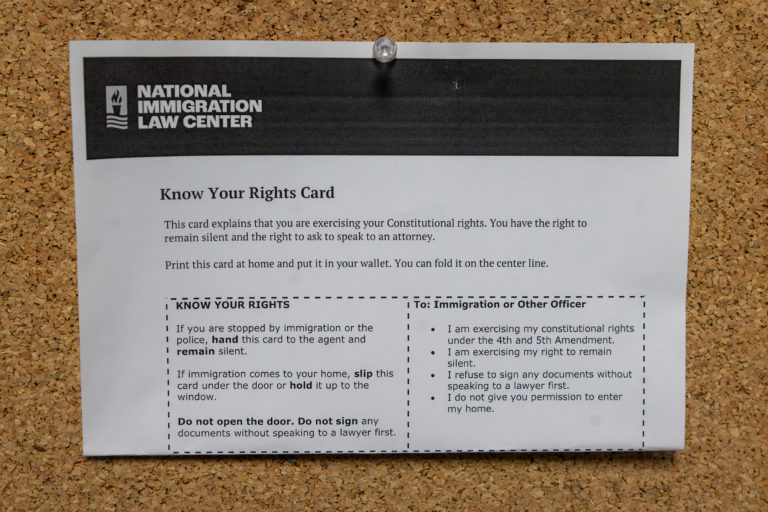
During a “Know Your Rights” presentation last fall, members of the immigrant community shared their anxieties regarding detention, deportation, and family separation with students from the UCLA School of Law. One exchange during this event, held at South Central Church in Los Angeles, particularly resonated with Caitlin Zou, a recent law graduate.
“A woman expressed deep concern for her family,” Zou recalled. “In desperate situations, individuals often prioritize seeking help despite their privacy concerns, revealing their vulnerabilities.” This powerful interaction spurred Zou to continue her advocacy for immigrants in Los Angeles through volunteer efforts.
The Immigrant Rights Project, a student-led initiative developed under the El Centro Legal Project, aims to bolster immigrant communities by offering legal education and accessible information about immigration processes. Established in 1973, El Centro places over 200 law students in attorney-supervised projects addressing immigration, worker rights, and education. The organization provides legal aid to individuals in Los Angeles County who cannot afford legal representation.
The current climate has intensified challenges for immigrants, particularly under the Trump administration, which has escalated immigration enforcement. According to the U.S. Immigration Council, U.S. Immigration and Customs Enforcement agents apprehended approximately 1,264 individuals daily from December 2025 to January 2026. Notably, Los Angeles has been a focal point for large-scale raids initiated in June 2025, although arrest rates have since diminished.
Hayden Fuchino, a law student and volunteer director of the El Centro Legal Project, noted shifts in project focus stemming from policy changes. “We previously concentrated on aiding asylum seekers and immigrants pursuing citizenship,” Fuchino explained, “but those efforts were curtailed after the Trump administration restricted longstanding asylum pathways.”
In response to ongoing changes, the Asylum Seeker Advocacy Project reported significant revisions to the asylum system proposed by the administration, such as new security screenings and an upcoming asylum fee.
The palpable fear within immigrant communities has made attendance at public group presentations increasingly rare, prompting El Centro to transition its outreach efforts online. Fuchino explained, “People are apprehensive about leaving their homes. We’re adapting by using Zoom to deliver vital information, ensuring it reaches those who might feel exposed in public settings.”
Despite the challenges of meeting local residents’ needs while providing adequate support, Zou observed a persistent demand for assistance. “It’s disheartening to witness so many fearful individuals seeking guidance,” she said, acknowledging that while law students can offer general advice, it often falls short of immediate aid.
In response to this gap, Zou mentioned an innovative initiative by law students that delivers direct client services. The students are currently working on legal manuals regarding U visas, which offer immigration relief to specific crime victims who have endured mental or physical abuse and are willing to cooperate with law enforcement.
Clare Proctor Murphy, an executive director at El Centro and fellow law student, highlighted the project’s expansion as a testament to students’ enthusiasm for practical immigration advocacy. “This initiative allows us to apply our legal education in meaningful ways, impacting the community directly,” Proctor-Murphy said.
Zou concluded, “Although the Immigrant Rights Project is student-run and our capacity to provide direct legal advice is limited, there is a real desire among law students to engage with the community, uphold the rule of law, and be present for those in need.”
