


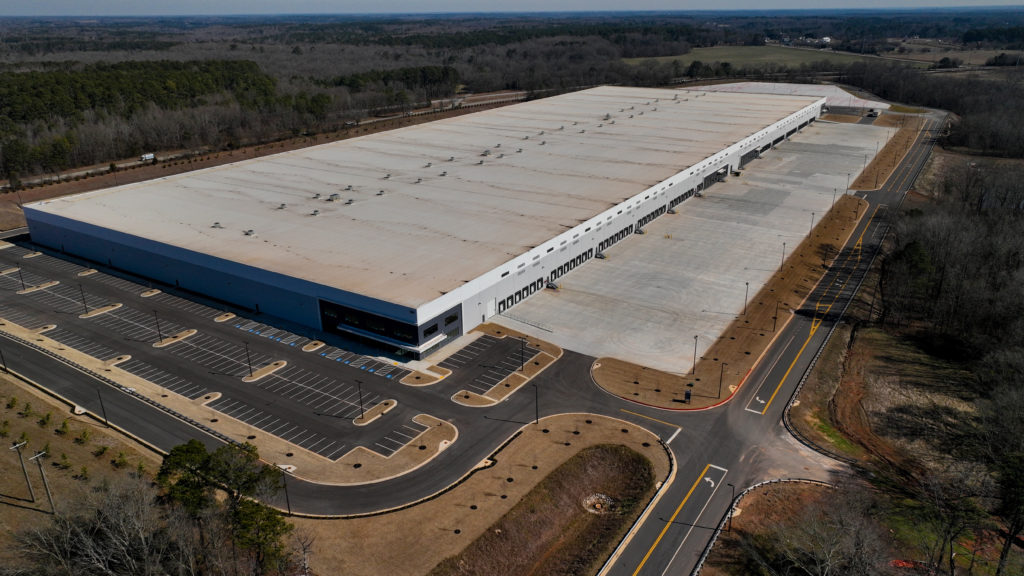
The U.S. Immigration and Customs Enforcement (ICE) is stepping back from its controversial initiative to use warehouses for detaining up to 10,000 individuals at a single location. This shift marks a significant departure from the $38 billion capacity expansion plan initiated by former Homeland Security Secretary Kristi Noem.
In a recent court filing, the federal government announced its intention to sell a warehouse in Romulus, Michigan, following legal action taken by the state and a local suburb. Additional plans in Social Circle, Georgia, and Socorro, Texas, are also being reconsidered, as reported by local officials.
The government had invested approximately $1.074 billion across 11 cities to secure warehouse spaces for this initiative. However, according to a report by The New York Times, ICE now intends to transfer seven of the 11 warehouses to other federal agencies or sell them altogether. Although the Department of Homeland Security (DHS) did not explicitly confirm the report, it stated that it is “working quickly with state and county partners to utilize existing detention space.”
Community Pushback and Immediate Opposition
Claire Trickler McNulty, a former ICE official who served under the Obama, Trump, and Biden administrations, criticized the plan to convert warehouses into detention centers as “reckless.” The rollout was met with immediate backlash, particularly from local communities caught off guard by the agency’s acquisition of the spaces.
Following Noem’s dismissal, her successor, Markwayne Mullin, swiftly halted any further warehouse purchases. The opposition spanned political lines; some community members resisted ICE’s presence based on ethical considerations, while others voiced concerns over the potential strain on local resources, such as water and sewer systems.
Legal Challenges and Financial Scrutiny
The situation has escalated to seven federal lawsuits, and increasing regulatory hurdles have complicated efforts. An internal audit has been triggered by concerns surrounding DHS’s financial decisions, particularly noting that the agency paid excessively for certain warehouses—twice the tax-assessed value in New Jersey and nearly five times in Georgia.
Trickler McNulty highlighted that while ICE has some inherited facilities from its predecessor, the Immigration and Naturalization Service, the agency typically relies on outsourcing for its detention needs. She cautioned that operating large facilities for over 2,000 detainees presents significant management challenges.
Leadership Changes and Infrastructure Concerns
Mullin, who transitioned from overseeing his family plumbing business to a role in the U.S. House, acknowledged the infrastructure issues during his confirmation hearing. Municipalities often lack the necessary capacity to develop adequate water and waste systems—a fact that has become glaringly evident in discussions about the costly Salt Lake City warehouse, purchased for $145.4 million. Here, officials indicated that water and wastewater services might need to be transported as a temporary solution.
Plans for Warehouse Utilization Are Reevaluated
Recent reports suggest that the Salt Lake City facility is among those ICE may relinquish or sell. Standout warehouses include the one in Romulus, which Michigan Attorney General Dana Nessel indicated would have been “abhorrent” as a detention center, given its $34.7 million price tag. Nessel described the ICE proposal as “cruel and unnecessary,” expressing relief at the plans being reconsidered.
Social Circle, Georgia, has also confirmed through Representative Mike Collins that ICE is no longer pursuing a detention facility there. In El Paso, Acting ICE Director David Venturera informed officials that the agency will alter its plans for three warehouses valued at $122 million, intending to repurpose them into a dedicated ICE campus rather than a detention site for 8,500 immigrants.
Clarification Sought Amid Community Frustration
Despite these developments, community members continue to express frustration over the lack of transparent information regarding potential sales. In Pennsylvania, local officials reported that there had been no updates from DHS about two warehouses acquired earlier this year, currently held up due to state concerns over the adequacy of drinking water and wastewater services.
U.S. Representative Dan Muser stated that while he met with DHS officials, no decisions have been made regarding the future utility of the warehouses as detention centers or for sale. Meanwhile, the city manager of Oakwood, Georgia, is in talks with state congressional representatives to clarify rumors concerning the potential sale of local warehouses.
Continued Activity and Local Opposition
In Maryland, a judicial block remains on the conversion of a large warehouse into an immigrant processing facility, though ICE is currently soliciting public input on its environmental impact. Recently disclosed plans include the inclusion of six secure recreation yards within the facility.
Patrick Dattilio, who leads Hagerstown Rapid Response—a group opposing the housing of ICE detainees—has reported minimal communication beyond the ongoing lawsuit, yet he remains firmly against the warehouse initiative, emphasizing that it does not prioritize the needs of individuals.
Contributions to this report were also made by Associated Press writers Marc Levy and Ed White.
