


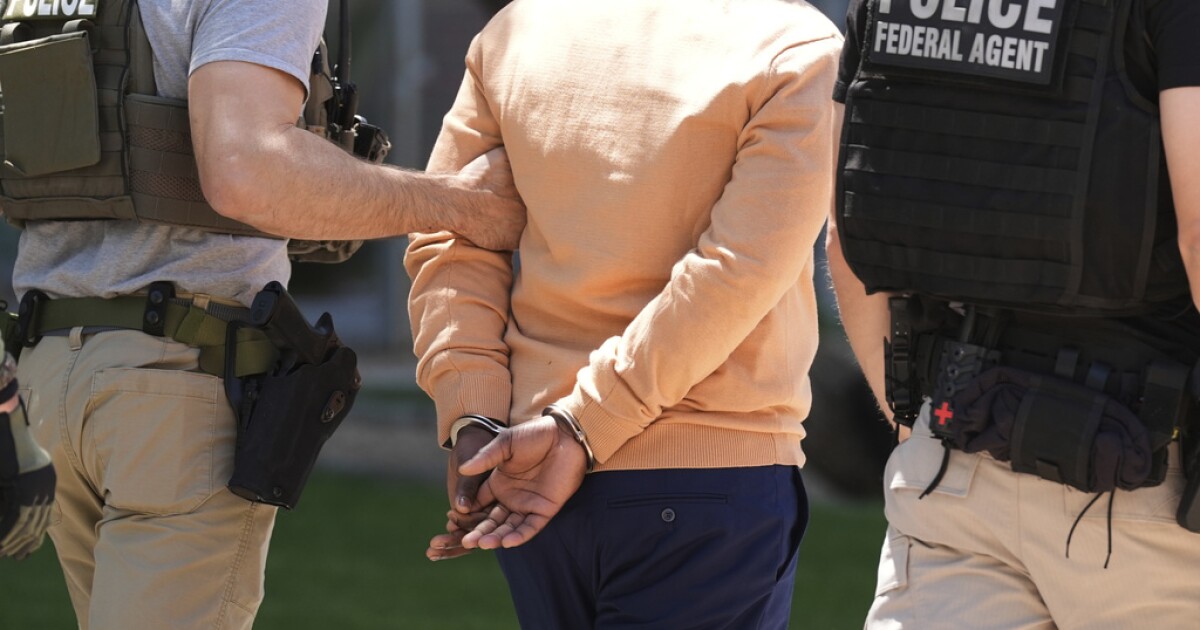
Florida Law Enforcement Faces Pressure to Enforce Immigration Laws
For over a year, Florida law enforcement agencies have been mandated by state law to assist in federal immigration enforcement efforts. However, several agencies, including the state’s largest sheriff’s offices and police departments, have yet to fully comply with these requirements.
Inconsistent Engagement with Federal Policies
During a recent meeting of the state’s Immigration Executive Council, law enforcement leaders acknowledged that many local police departments have not actively engaged with the immigration policies espoused by former President Donald Trump—an initiative championed by Governor Ron DeSantis. Of Florida’s 394 law enforcement agencies, only 272 have established active 287(g) task force agreements with federal authorities, as reported by the Florida Department of Law Enforcement (FDLE).
Active Agencies and Compliance Issues
Among the 272 agencies, 163 are classified as “active,” indicating they have made at least one 287(g) arrest. Conversely, 109 agencies have yet to conduct any arrests under this program, raising questions about compliance and active engagement with immigration enforcement.
Calls for Increased Compliance
The Immigration Executive Council plans to send a formal letter to these law enforcement agencies urging them to adhere to state laws, enhance cooperation with federal efforts to combat illegal immigration, and provide monthly data reports to the FDLE. Polk County Sheriff Grady Judd, who also serves as the Council President, emphasized the importance of encouraging, rather than publicly shaming, agencies that have yet to fully comply.
Incentives for Certification and Reporting
Council members are allowing agencies time to obtain necessary certifications, initiate arrests, and learn the intricacies of entering data into Florida’s Illegal Alien Encounters Suspects Dashboard. Sheriff Bob Gualtieri of Pinellas County remarked on the need for law enforcement to adapt to legal requirements: “We have to follow the law and do what we have to do,” he stated, reinforcing the call for law enforcement to take immigration status checks seriously.
Local Variations in Compliance
Florida law mandates that all county sheriff’s departments secure a 287(g) agreement; however, some counties maintain only minimal arrangements. For instance, Broward County holds an “active management” agreement, yet only two of its 1,745 law enforcement officers are designated as immigration officials, and it does not submit monthly reports, according to FDLE data.
Funding and Future Implications
Despite police departments not being obligated to enter into 287(g) agreements, state law encourages them to assist in enforcing federal immigration laws. The Fort Lauderdale Police Department, which comprises 543 officers, currently lacks a 287(g) agreement with Immigration and Customs Enforcement (ICE). Notably, only 17% of the 9,026 state-designated immigration officers are police officers. Anthony Coker, director of the State Immigration Enforcement Council, stated that law enforcement agencies without a 287(g) agreement or those failing to report data will not receive immigration enforcement grants. The State Immigration Executive Board has allocated approximately $148 million to support local law enforcement’s collaboration with federal immigration initiatives, with about $13.6 million already disbursed to 34 agencies, as reported by Transparency Florida.
