


Body Camera Footage Reveals Arrest Tactics Used by ICE Agents
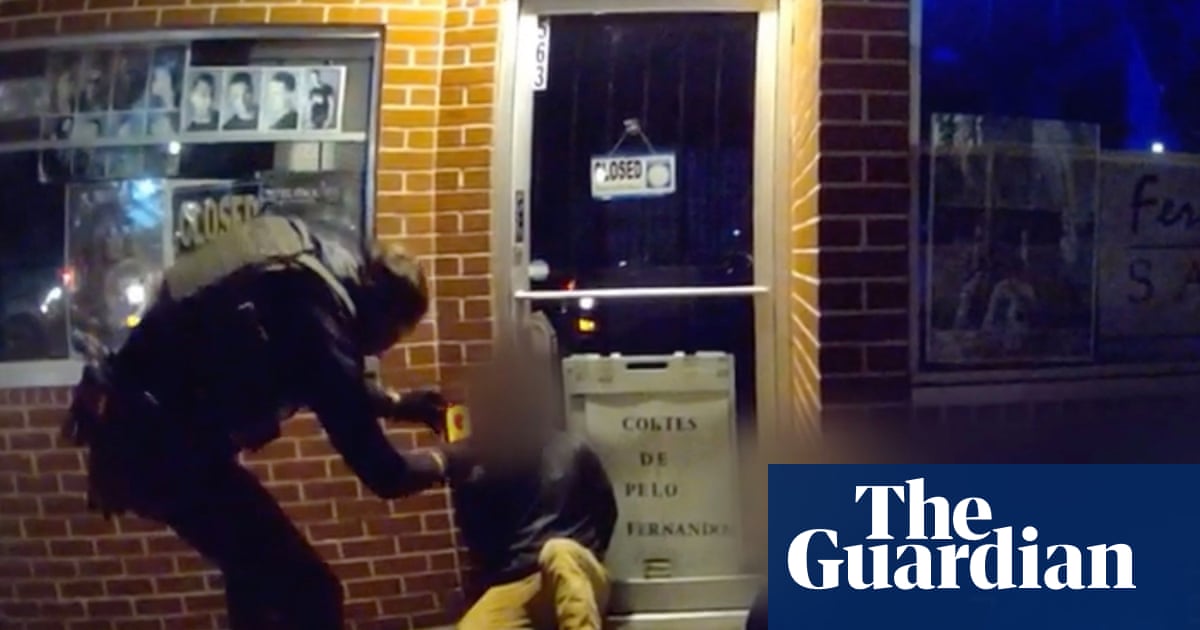
Recently released body camera footage has documented U.S. immigration officers intercepting a van filled with farmworkers in Oregon. The agents were seen breaking the vehicle’s windows and employing facial recognition technology in an attempt to identify one of the individuals inside.
The video, recorded during an operation on October 30, 2025, was presented in court as part of a class action lawsuit challenging the tactics of Immigration and Customs Enforcement (ICE) and allegations of racial profiling by its agents. A lawyer representing one of the detained farmworkers provided the footage to the Guardian newspaper.
Without a warrant, the immigration officers detained the workers, leading a federal judge to ultimately declare the arrests illegal and unwarranted. The footage displayed investigators using a mobile device to photograph the face of one of the farmworkers, who later confirmed in court that they utilized a facial recognition app during the operation. As ICE broadens its reliance on surveillance technologies across the nation, significant concerns about privacy and civil liberties are arising, particularly since the app can generate inaccurate results.
On the morning of the operation, a team of ICE agents was observed surveilling an apartment complex in Woodburn, a city south of Portland populated by many agricultural workers. An officer, referenced in court as J.B., testified that the location was chosen partly due to data accessed through an ICE mobile application called Elite, developed by Palantir Technologies. This app purportedly aids officers in identifying potential targets for arrest.
Following the issuance of a license plate number, agents decided to track a white van as it departed from the complex, suspecting its owner might be an immigrant who entered the U.S. without authorization. While J.B. testified he had not confirmed whether the van’s driver was the vehicle’s owner, he voiced concerns based on the driver’s repeated stops to pick up passengers, suggesting potential involvement in human trafficking or smuggling.
However, lawyers from Innovation Law Lab, an immigrant rights organization representing one of the farmworkers, contended that the van was simply engaged in carpooling. The body camera footage begins with the officer pulling the van over around 5:30 AM, in dim lighting. The video was edited to blur the faces of the residents for privacy protection.
Use of Force Raises Legal Questions
In the footage, an officer can be heard aggressively commanding, “Smash it! Smash it!” referring to the van’s window. Another officer shouted in Spanish for the window to be opened, but before the occupants could comply, the side window was shattered.
A 45-year-old woman featured in the video, identified as MJMA, a farmworker and the lead plaintiff in the lawsuit, asserted her right to remain silent, stating in Spanish, “I don’t have to answer,” and requested a lawyer. She also advised her fellow passengers to refrain from speaking when she called 911.
An officer, known in court as CM, documented the encounter with his body camera and informed another officer, “She wants a lawyer. She doesn’t want to identify herself. Just take her away.” Despite MJMA’s request for legal representation, CM demanded she shut off her phone while making the call.
As the situation escalated, CM remarked, “We have to get them out. They’re on the phone, they’re making calls,” and forcibly removed MJMA from the vehicle while she protested in Spanish, “This can’t happen to us! They’re using force. No, no, no!” She later testified that the officer had broken her cell phone during the altercation. Eventually, seven occupants from the van were detained, with six placed in handcuffs and seated on the sidewalk, and an elderly woman restrained to a bench.
Concerns About Facial Recognition Reliability
The video reveals one officer using a cellphone to scan a man’s face, while another officer illuminated it with a bright flashlight as the farmworkers were held against a wall. The scanning continued for about twelve seconds, intended to identify the individual.
Subsequent discussion among the officers indicated an inability of a facial recognition app called Mobile Fortify to match the individual. This tool is employed by the Department of Homeland Security (DHS) to cross-reference scanned faces with various databases.
In court, a key officer admitted uncertainty regarding the database’s accuracy or the technology’s specifications. Testimony from a handpicked female agent, MK, during the incident suggested that a “facial recognition mobile query” for MJMA led to an uncertain match with another individual named Maria. Despite attempts to draw a response from MJMA, she remained silent.
Cross-examinations revealed that CM had no concrete identification of the passengers when the officers initiated the stop. It also emerged that J.B.’s team operated under verbal directives targeting an arrest quota of eight cases daily, emphasizing the potential pressure on officers to make arrests.
Four of the detained individuals were later deported, as confirmed by a DHS spokesperson. At the same time, asylum claims associated with MJMA are currently underway, underscoring the ongoing complexities of the immigration situation.
A ruling issued by U.S. Judge Mustafa Kasbai against ICE cited “unlawful conduct” during the Woodburn operation, extensively restricting warrantless arrests in Oregon. The judgment criticized the factual inaccuracies within the officers’ reports about MJMA, particularly claims suggesting her illegal entry into the U.S., when in fact, she held a valid temporary visa. The judge condemned the use of facial recognition technologies, asserting their reliance on potentially flawed data and emphasizing the lack of reasonable time afforded to the van’s driver before agents resorted to breaking the window.
Although the DHS did not address specific inquiries about the use of facial recognition technologies during these arrests, a spokesperson defended Mobile Fortify as a legitimate law enforcement resource. It was described as a tool developed to enhance identification and immigration status verification within enforcement operations.
In response to ongoing criticisms, a DHS representative reiterated that ICE’s warrantless arrests are conducted under reasonable suspicion and have garnered the support of the U.S. Supreme Court. Three of the deported workers were reported to have accepted voluntary departure after receiving due process. However, the Justice Department has not responded to inquiries related to this case.
Legal representatives from Innovation Law Lab expressed that the footage starkly highlights the aggressive tactics employed by ICE, where agents disregard fundamental legal protections in favor of rapid enforcement. Observing MJMA’s insistence on her legal rights, advocates highlighted the need for agents to comprehensively understand their targets, reinforcing the principle of due process.
Stephen Manning, Executive Director of the Innovation Law Lab, emphasized that the footage unearths a troubling “arrest first, justify later” methodology, applauding MJMA for her composure while defending her rights. “She was well-informed about the law and advocated for her rights, while the officers acted in violation of legal standards. This scenario should never have transpired,” he stated.
Maanvi Singh contributed to this report.
