


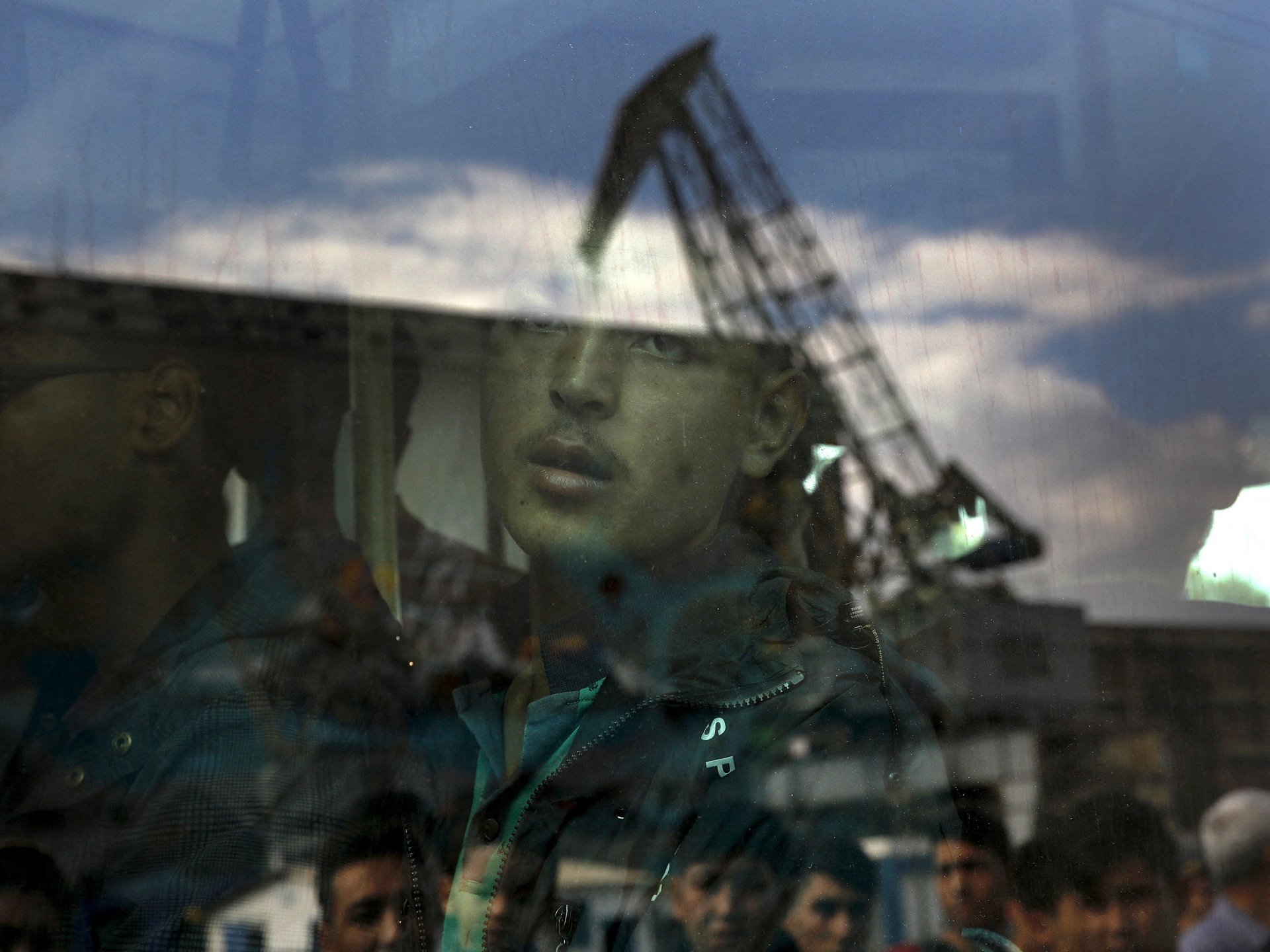
Athens, Greece – Bashir, a Syrian Muslim who has lived in Greece since 2014, recently experienced a significant setback. Married to a fellow Syrian and a new father, Bashir’s life appeared to be on an upward trajectory after years of hard work, learning the Greek language, mastering the metalworking trade, and establishing himself as an independent trader. However, two months ago, authorities handed him a notice asking him to justify his continued stay in Greece and explain why he should not return to Syria.
Concerns Over Asylum Reassessments
Bashir, who requested anonymity for security reasons, was granted asylum in Greece in 2015 due to the civil war in Syria. Following the war’s official end in December 2024, his asylum claim was reopened along with those of approximately 1,200 other Syrians in February. “This is a disaster,” he stated, expressing confusion over the rationale behind such a decision. “If they decide I should leave, should my family stay here?”
Interestingly, Bashir’s case is not isolated. His lawyer noted that similar notices have been issued predominantly to men from Syria and Afghanistan, both countries having undergone significant shifts after prolonged conflicts. Specifically, the Taliban’s takeover of Afghanistan in August 2021 has contributed to this policy change.
Safety Concerns for Returnees
However, returning to either Syria or Afghanistan poses significant risks, as highlighted by lawyer Angeliki Teodoropoulou. “We believe this stems from the European Union’s position on the situation in Syria and Afghanistan, which is prompting authorities to reassess refugee claims,” she explained. “While a strengthening international protection framework exists, asylum is being denied to many.” Bashir echoed these concerns, questioning by what standards officials have deemed Syria a safe environment.
Recent clashes in Syria between government forces and the Kurdish-led Syrian Democratic Forces (SDF) add further tension, as Israel continues sporadic attacks. Others, like Bilal, who has spent the last 15 years away from Syria, struggle with the thought of returning due to cultural and political fears. Meanwhile, Jihad, a clothing store owner who has lived in Greece since 2001, fears potential repercussions for his past political affiliations, expressing his concerns about being unfairly treated due to his opinions.
Greece’s Shift in Immigration Policy
In February, Greek Immigration Minister Thanos Plevris publicly addressed a directive to review potentially revoked asylum cases, a move that may signal changing immigration policies. Last year alone, nearly 200 asylum applications were denied, with many other cases currently under review. This shift appears to disproportionately affect applicants from Muslim-majority countries.
Plevris has indicated a preference for non-Muslim migrant workers, stating, “There are countries where we don’t share common values, primarily due to religion.” Greece’s immigration policies are tightening further, with new legislation allowing authorities to deport individuals who refuse voluntary repatriation and subjecting them to monitoring. Such stringent measures reflect a growing concern about the refugee situation in the region.
The Broader European Context
The evolving situation in Greece occurs against the backdrop of the upcoming Refugee and Migration Agreement, set to be implemented next month. This agreement mandates strict border controls and sets rules for member states regarding the processing of rejected asylum seekers. Christine Fabbe, a professor at the European University Institute, emphasized that Europe is on the brink of a significant change in its approach to migration, but noted that large-scale returns of migrants remain a challenging prospect.
Greece, as a key frontline state in the EU’s migration struggle, currently has around 938,000 legally resident migrants, a sizable portion of its 10.3 million population. Among these, over 137,000 individuals are in asylum processes or receiving international protection. The ongoing instability in the Middle East and North Africa raises concerns about another wave of refugees, reminiscent of the more than 1 million that entered Greece in 2015.
In light of these complexities, Greece’s stringent immigration policy can be seen as a response to both internal and external pressures. Fabbe suggested that while the legality of the proposed returns is under scrutiny, there is a likelihood these new mechanisms will garner public support as the situation unfolds.
