


Community in Springfield Faces Uncertain Future Following Supreme Court Decision
The Haitian community in Springfield, Ohio, is among the many groups left reeling from a recent Supreme Court ruling that removes legal immigration status from hundreds of thousands of Haitians residing in the United States. This decision poses a potential threat to over one million individuals, casting a shadow of uncertainty over their futures.
Springfield’s residents have been striving to rebuild their community after facing disparaging remarks from former President Donald Trump during the 2024 campaign, which continued even after his return to the presidency. The community’s efforts are now jeopardized by the court’s decision, which critics argue furthers an agenda of systemic racism.
Just weeks prior, many Haitians were filled with optimism, inspired by the national soccer team’s recent endeavors. In a modest atmosphere at Keket restaurant, about 35 patrons gathered to watch Haiti’s return to the World Cup after over 50 years, sharing joyous moments despite a narrow defeat. Conversations in Haitian Creole flowed freely, creating a spirit of camaraderie as children played and food was served with enthusiasm.
However, the jubilation abruptly transformed into despair with the court’s ruling on Thursday morning. Approximately 350,000 Haitians, along with thousands of Syrians on Temporary Protected Status (TPS), now face the imminent risk of deportation by Immigration and Customs Enforcement (ICE).
Frankie Pierre, a Haitian native who fled to the United States in 1992, expressed the harrowing consequences of this ruling. He noted that many of his friends with TPS status are contemplating flight from the country, emphasizing the impact this would have on Springfield’s economy, which has seen a rise in the establishment of Haitian businesses over the years.
The Supreme Court, in a 6-3 decision, voted to suspend previous judgments that had blocked the Trump administration’s intent to end TPS for Haitians and Syrians. Since 2010, TPS has provided vital protection for Haitians affected by a devastating earthquake, and its continuance had been repeatedly extended amid ongoing instability in the country.
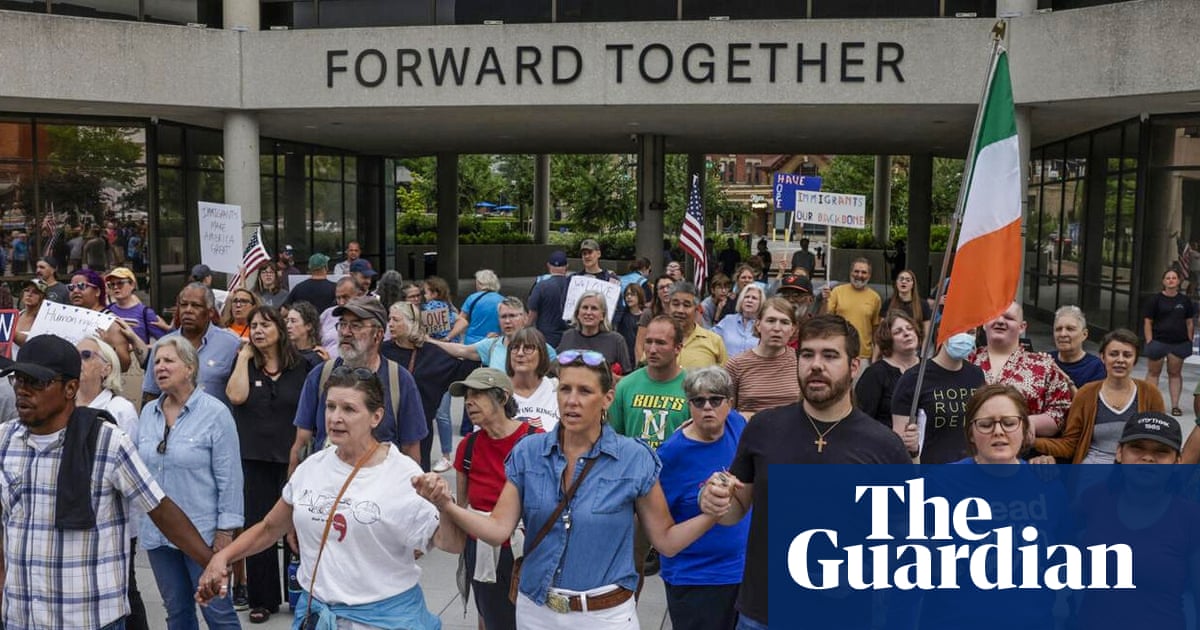
Clara Copeland, a Springfield resident and wife of a former mayor, attended a vigil outside City Hall that highlighted the emotional weight of this decision. Clutching a small Haitian flag, she reflected on the importance of the Haitian community in Springfield, highlighting the detrimental effects this ruling could have on local schools and society. Copeland described the ruling as “hateful and wrong,” pointing out the resilience of newcomers who are adjusting and contributing to the community.
Concerns are growing among immigration advocates about the larger implications of the Trump administration’s push to repeal TPS across various countries. This initiative could impact up to 1.3 million individuals legally living in the U.S., marking a historically significant shift in immigration policies.
While some Springfield residents express frustration over the influx of Haitians, particularly following a tragic accident involving an immigrant without a driver’s license, political figures within the state are urging a reassessment of this ruling. Ohio’s Republican Governor Mike DeWine denounced the decision, emphasizing the dire situation in Haiti where gangs wield considerable power and the economy is in disarray.
