



Deepening Divisions Among House Republicans Over Immigration Reform
House Republicans are grappling with significant divisions regarding the bipartisan immigration reform bill, with some members urging President Donald Trump to take a stand. The Dignity Act, championed by Republican Representative Maria Elvira Salazar, has been a focal point of intense debate, with calls for it to be reviewed in committee and brought to a vote on the House floor.
Opposition emerged swiftly from conservatives within the Republican conference, who labeled the proposed legislation a “mass amnesty” and a stark rejection of Trump’s established immigration policies. Representative Brandon Gill (R-Texas) expressed his discontent, stating that the Dignity Act contradicts the core principles that garnered Republican support in the last election cycle, emphasizing a commitment to mass deportations.
Rep. Brandon Gill (R-Texas) criticized the Dignity Act, labeling it as a betrayal of the party’s commitments ahead of the 2024 elections. (Tom Williams/CQ-Roll Call, Inc. via Getty Images)
Contrasting Perspectives on Immigration Policy
In contrast, Salazar, who secured a narrow victory in a predominantly Latino district in the 2024 election, advocates for a compassionate reform approach. She argues that with borders now secure, the focus should be on the status of individuals with clean records who have made contributions to the economy. “What happens to those who have no criminal record? The economy still needs them,” Salazar remarked at a recent press conference.
The ongoing conflict over immigration reform sheds light on the fractures within the Republican coalition that emerged victorious in 2024. Salazar has not only been a target for Democrats heading into the November midterm elections but also represents a pivotal point of contention within her party.
Although Salazar has consulted with the White House regarding her proposal, she refrained from revealing any direct communication with President Trump. “It’s ultimately his decision on timing,” she stated. “No president in the last 40 years has had the political courage to take on this issue.”
Dignity Act’s Provisions and Challenges Ahead
The Dignity Act does not pave a pathway to citizenship but aims to enable millions of immigrants, who entered the United States prior to Biden’s administration, to work without the fear of deportation. The bill also seeks to enhance border security measures, mandate the use of E-Verify by employers, and establish a pathway to permanent residency for Deferred Action for Childhood Arrivals (DACA) recipients.

Rep. Maria Elvira Salazar (R-Fla., left) seeks Trump’s support for the Dignity Act, while Rep. Brandon Gill (R-Texas) opposes it, claiming it contradicts Trump’s immigration agenda. (Alexander Tamargo/Getty Images for Latino Wall Street, Kevin Dietsch/Getty Images)
Support and Opposition Within the Party
Proponents of the bill argue that it resonates with middle-class constituents who desire legal protections for long-term immigrants with no criminal histories contributing positively to their communities, while simultaneously addressing the concerns surrounding individuals who have entered the U.S. illegally since 2021. “This is what America needs,” asserted Representative Don Bacon (R-Neb.), a co-sponsor of the bill. “It addresses a wide range of concerns from both sides of the aisle.”
On the other hand, conservative Republicans firmly oppose the legislation. Immigration hawk Representative Ralph Norman (R-S.C.) dismissed it as a mere form of amnesty. Following a lengthy discussion with Salazar about the Dignity Act, Gill reinforced his strong opposition, labeling the proposal as a policy that they cannot reconcile with their values.
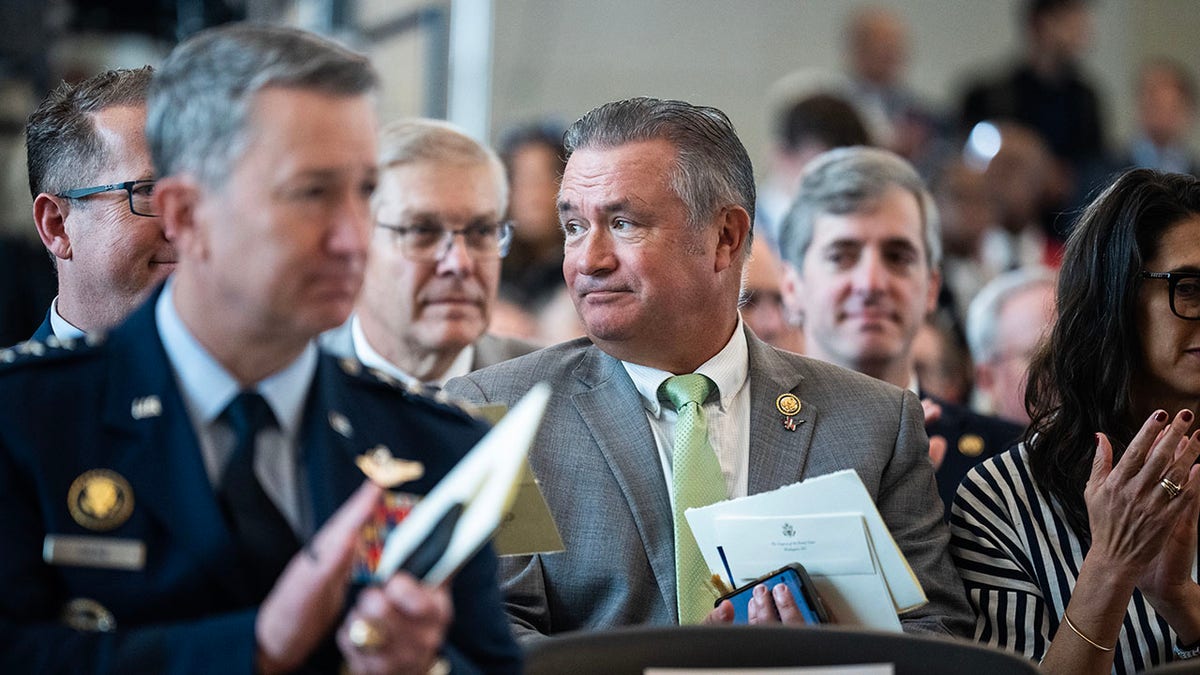
Rep. Don Bacon (R-Neb.) is among the Republican co-sponsors advocating for the Dignity Act. (Tom Williams/CQ-Roll Call, Inc. via Getty Images)
Future Prospects for Immigration Reform
Despite facing significant opposition, Salazar remains committed to engaging skeptics regarding the Dignity Act. She has ruled out working with Democrats to expedite the legislative process and intends to navigate the proposal through traditional channels. “I’m going to do it the hard way,” she shared, expressing confidence that immigration issues can be resolved during the Trump administration, while waiting for the right timing to take action.
