


Declining Immigrant Workforce Strains North Carolina’s Urban Economy
A significant shortage of immigrant labor is adversely affecting North Carolina’s urban economy. A recent report from the Kennan Institute for Private Enterprise at the University of North Carolina at Chapel Hill highlights how a downturn in international net migration is diminishing labor supply in essential, labor-intensive sectors, and outlines potential solutions.
Census data indicates that in 2025, the Raleigh-Durham-Charlotte-Greensboro metropolitan area will see a decrease of tens of thousands of foreign-born residents compared to the previous year. Specifically, the Triangle area is projected to lose nearly 10,000 overseas immigrants, exacerbating challenges faced in sectors heavily reliant on immigrant labor, including construction, hospitality, manufacturing, and elder care.
Current trends suggest that fewer foreign workers are choosing to migrate to the United States for employment, while an increasing number are leaving North Carolina, often through voluntary deportations. This trend is attributed to stricter federal immigration enforcement measures introduced during the Trump administration, along with state-level laws such as House Bill 10 and Senate Bill 153.
Sarah Dickerson, a research professor at the Kennan Institute for Private Enterprise and the report’s author, stated that these factors are likely to contribute to a sustained labor shortage. She believes the dual issue of decreasing immigration inflows and rising outflows will persist, continuing to challenge the state’s economy.
Data from the U.S. Census Bureau illustrates a historical decline in international immigration to the United States, which dropped from 2.7 million in 2024 to 1.3 million in 2025, compounding the labor issues facing the region.
Notably, foreign-born individuals tend to participate in the labor force at higher rates than their U.S.-born counterparts. According to the North Carolina Department of Commerce, the labor force participation rate for foreign-born individuals was 68.6% in 2022, contrasted with 59.8% for native-born residents.
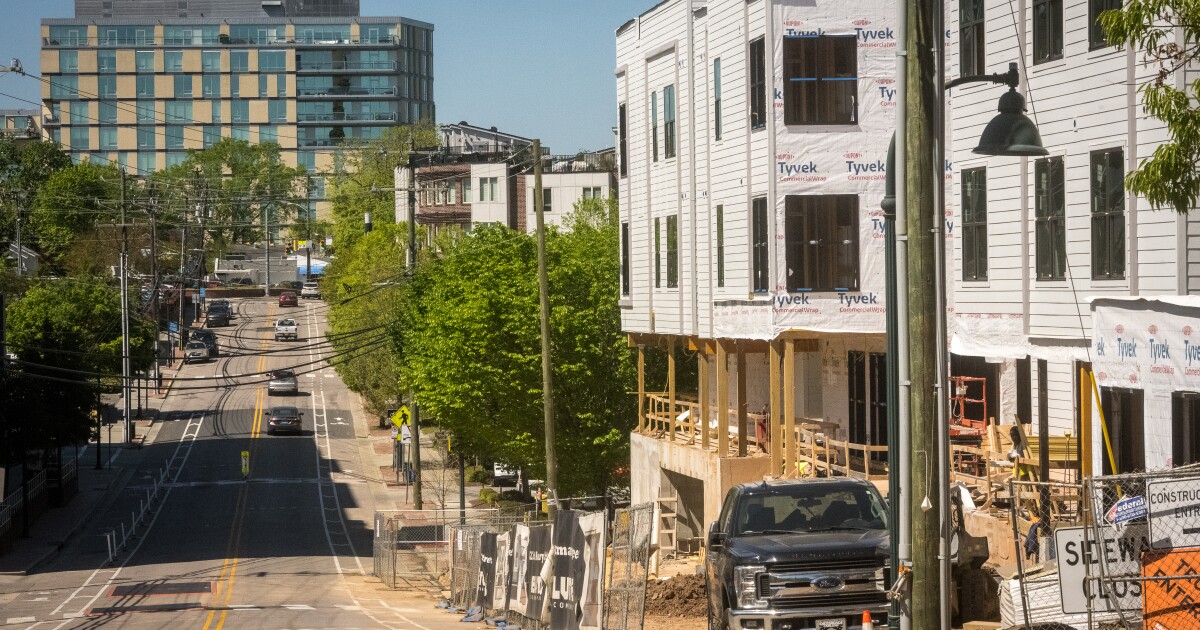
The impact of this shortage could be felt by businesses and consumers alike, with tighter labor markets driving up costs. Immigrants represent a substantial portion of the workforce in critical fields like construction, which accounts for 5.7% of employment and 4.7% of the gross domestic product (GDP) in the Raleigh-Durham metro area—exceeding national averages based on federal labor data from the Kennan Institute.
To address this labor crisis, the report suggests that automation and artificial intelligence may offer immediate respite, particularly in logistics. Upgrading training programs for American workers to fill high-demand roles could also be essential, although challenges remain. Dickerson noted that many native-born workers may not be interested in available positions, particularly in homebuilding, potentially leading to further strains on the housing market.
Brian Termeer, representing the Associated General Contractors of America, has warned of these challenges, indicating that not only might higher no-show rates become common, but the labor shortages could hinder the ability of firms to compete for construction projects effectively.
