


Immigrant Rights
Immigrant Rights Groups Express Relief and Caution After Supreme Court Affirms Birthright Citizenship
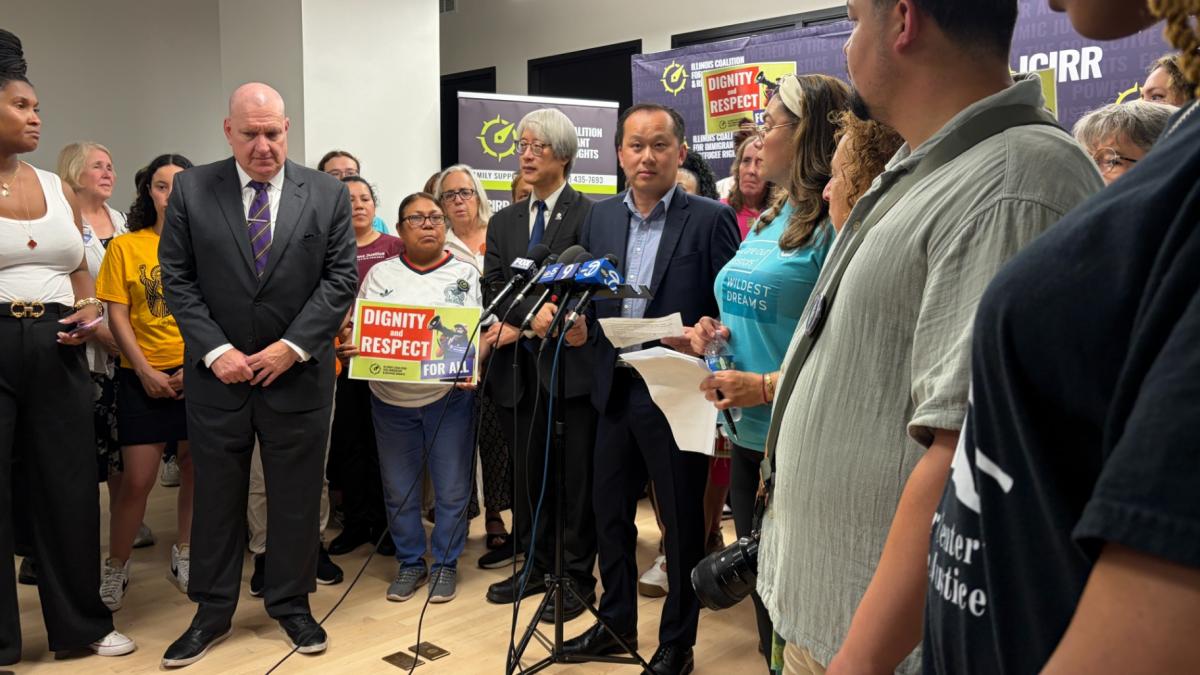
Paul Lu, CEO of the Chinese American Service League, at a press conference about the Supreme Court’s decision on birthright citizenship. (Eunice Alpasan/WTTW News)
Immigrant rights advocates in Chicago expressed a mix of relief and apprehension on Tuesday following the U.S. Supreme Court’s ruling that upheld the principle of birthright citizenship. The landmark decision affirming that all individuals born on U.S. soil are citizens came amidst growing concerns over immigration policies under the previous administration.
“While we are grateful that the rights of these children remain protected, it is crucial to remember that we did not achieve a victory today; this right was always ours,” stated José Muñoz, co-chair of the Illinois Latino Agenda. The Supreme Court’s 6-3 decision effectively nullified an executive order from former President Donald Trump aimed at denying citizenship to children born in the U.S. to parents without legal status.
Despite the favorable ruling, advocates voiced confusion regarding the previous administration’s questioning of birthright citizenship and the dissent of three justices who sought to challenge this long-established principle. Fred Tsao, senior policy advisor for the Illinois Coalition for Immigrant and Refugee Rights, expressed concern, emphasizing the need for vigilance in the face of ongoing threats to immigrant rights.
Press conference attendees highlighted a series of troubling Supreme Court rulings that have previously permitted racial profiling in immigration cases and weakened the Voting Rights Act. Additionally, developments from just last week allowed the Trump administration to terminate Temporary Protected Status for Haitian and Syrian immigrants while enabling the rejection of asylum seekers at the border.
Chief Justice John Roberts, in the court’s opinion majority, articulated that the interpretation of the Fourteenth Amendment regarding citizenship is clear and should apply broadly, with few exceptions. He asserted that this provision ensures all individuals born in the United States are granted citizenship, a right that has endured since the amendment’s inception in the post-Civil War era.
In a rapidly changing legal environment, the U.S. Department of Justice wasted no time distributing guidance following the Supreme Court’s ruling. The memo urged federal prosecutors to prioritize investigations into “birth tourism” schemes, signaling an intent to limit unlawful attempts to exploit birthright citizenship.
Amid ongoing debates over immigration and citizenship, Paul Lu, CEO of the Chinese American Service League, emphasized the significance of the Supreme Court’s ruling as a reinforcement of historical legal principles. He stated, “Our responsibility is to ensure that no child born in this country ever has to question their belonging.” Lu vowed to protect this essential right for future generations, reaffirming the community’s commitment to immigrant rights.
This report was supplemented by contributions from the Associated Press.
Contact Eunice Alpasan: (email protected)
